Highlights
May 1, 2026
Big Idea: Synthetic Materials Biology
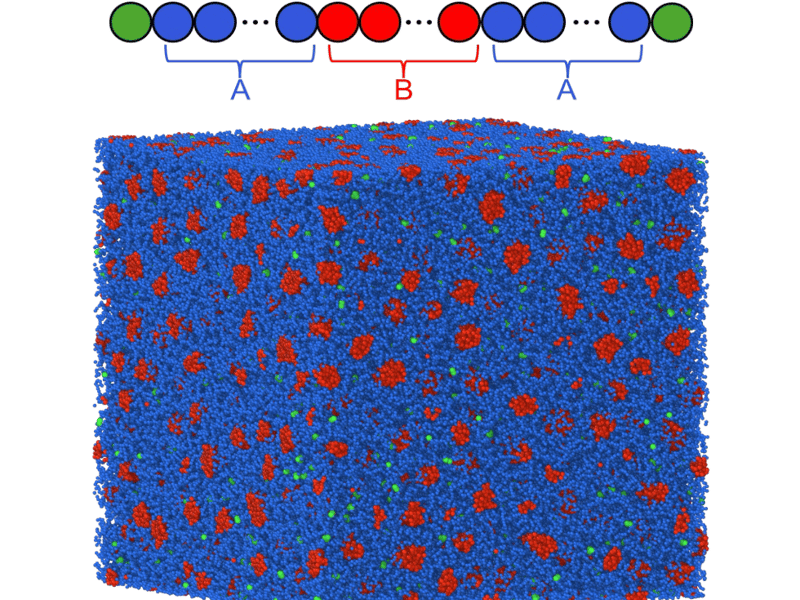
Toughening Pluronic Hydrogels by Increasing Micellar Connectivity
Pluronic-based hydrogels are promising materials for hosting polymer and protein-based microcompartments that can act as artificial cells. However, their limited mechanical strength and toughness limits practical applications as tissue scaffolds or media for transport and storage of molecules or microcompartments. Creating densely connected molecular network structure can improve the network toughness by allowing for uniform load distribution among micelles.
May 1, 2026
Big Idea: Future of Work at the Human-Technology Frontier
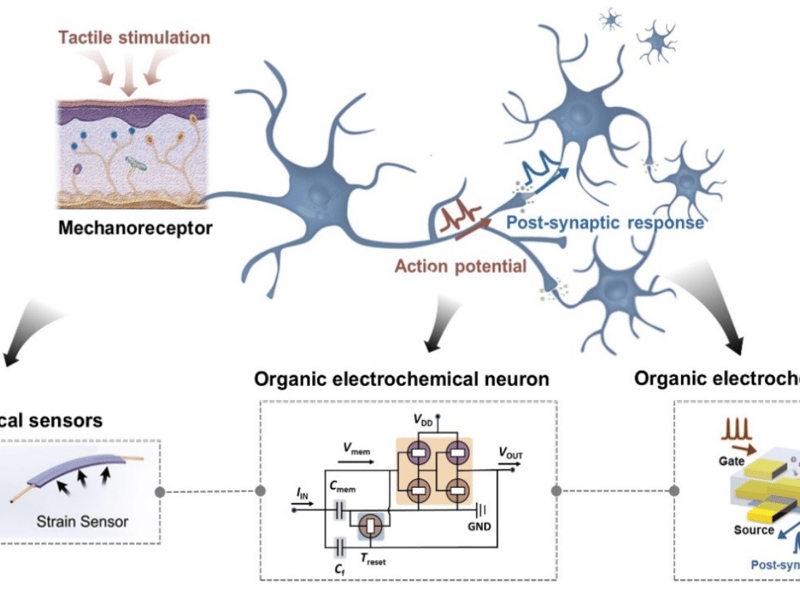
Organic Electrochemical Neuron Emulating Neuromorphic Perception
Northwestern University IRG-2 has developed a novel “leaky integrate-and-fire” organic electrochemical neuron for neuromorphic perception systems based on vertical organic electrochemical transistors (vOECTs). Essential to this realization is the introduction of a new n-type ionic electronic conductive material that provides a balanced response to p-type vOECTs, thereby enabling high-performance complementary circuits.
Apr 14, 2026
Big Idea: Harnessing the Data Revolution
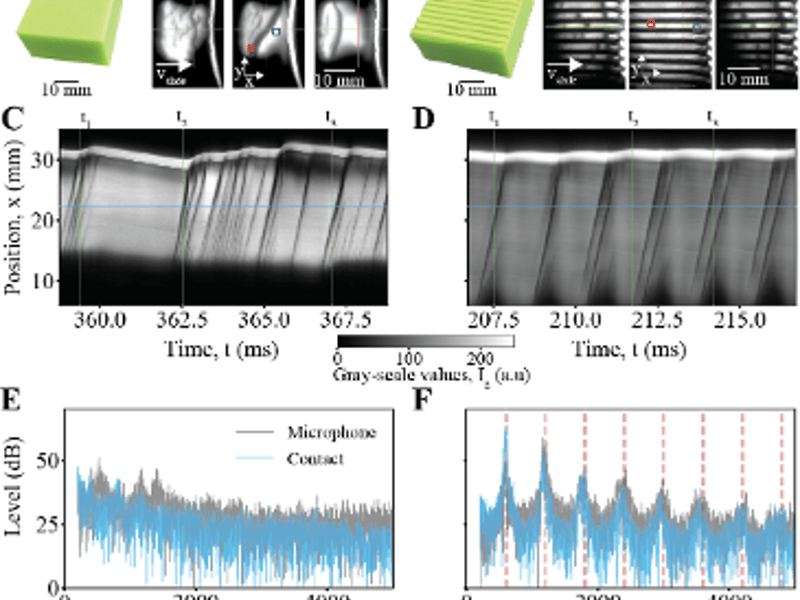
Squeaking at Soft-Rigid Frictional Interfaces
Katia Bertoldi, Dave Weitz and Shmuel Rubinstein (Hebrew Univ.)
Squeaking often occurs when two bodies slide against each other, yet its mechanisms are not fully understood, especially at soft–rigid interfaces. Bertoldi, Weitz, and Rubinstein used high-speed imaging and acoustic analysis to reveal that, at squeaking velocities, opening pulses propagate at approximately the shear wave speed of the soft material and mediate local slip.
Apr 14, 2026
Big Idea: Future of Work at the Human-Technology Frontier
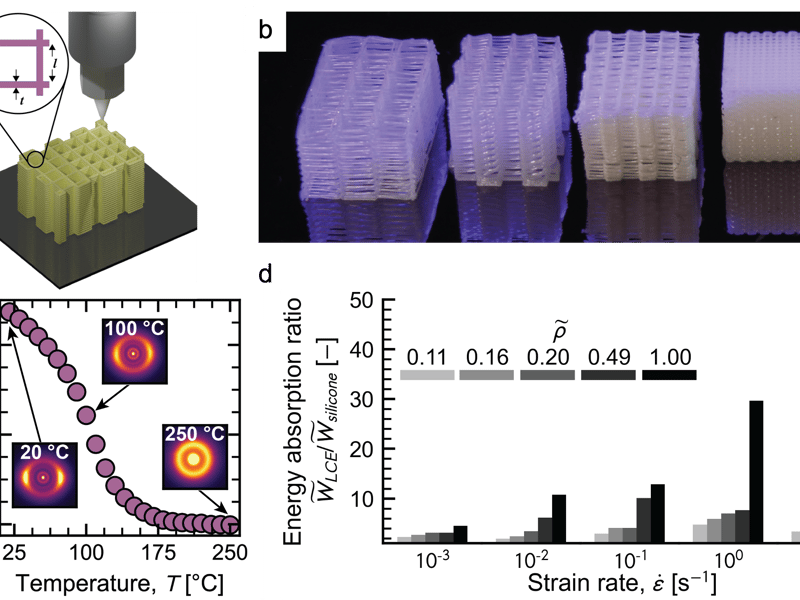
Architected Liquid Crystal Elastomer Lattices with Programmable Energy Absorption
Jennifer Lewis, Caitlyn Cook (LLNL), and Elaine Lee (LLNL)
Soft, energy absorbing materials are widely used in protective gear, biomedical devices, and robotics. Lewis and her collaborators at Lawrence Livermore National Laboratory (LLNL), demonstrated that printed and aligned liquid crystal elastomer (LCE) lattices exhibit superior energy absorption compared to silicone elastomers.
Apr 10, 2026
The University of Tennessee - Knoxville
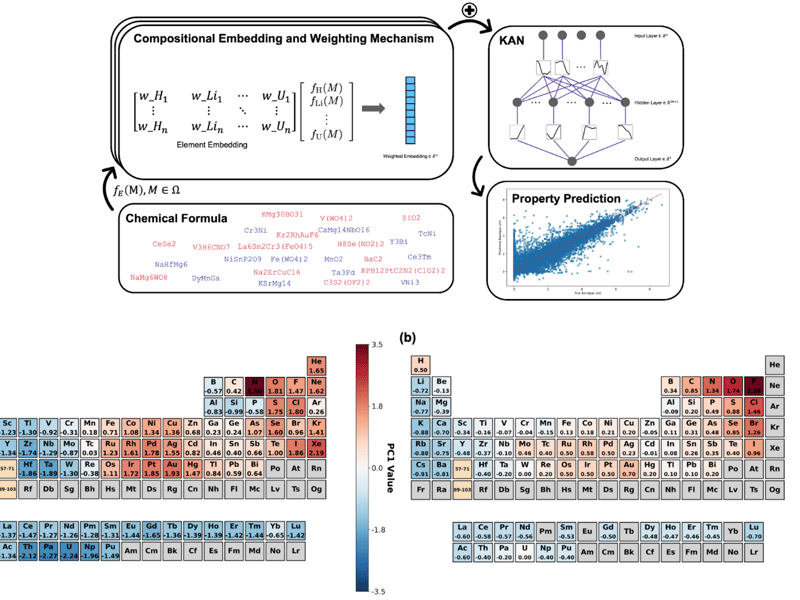
Interpretable ML for Crystal Energy Landscapes Using Kolmogorov-Arnold Networks
The University of Tennessee, Knoxville's Center for Advanced Materials and Manufacturing has introduced the Element-Weighted Kolmogorov–Arnold Network, a novel interpretable ML architecture that predicts crystal energy landscape properties — formation energy, band gap, and work function — directly from chemical composition. EWKAN achieves state-of-the-art accuracy across large-scale databases, matching or exceeding GNN-based models that require full 3D atomic structure inputs, while using orders of magnitude fewer parameters.
Apr 2, 2026
The University of Tennessee - Knoxville
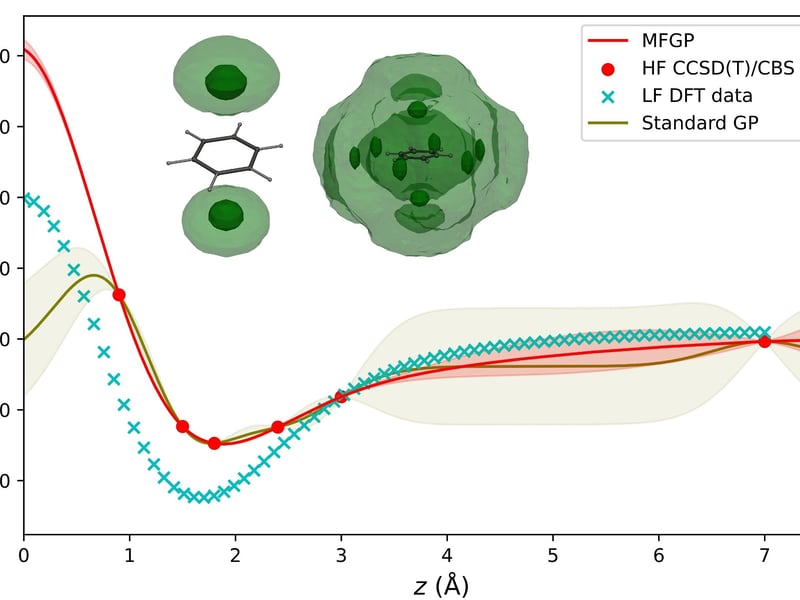
AI Enabled Quantum Chemical Accuracy for Helium-Benzene Interactions
An interdisciplinary team of CAMM IRG1 researchers developed a quantitatively reliable helium-benzene potential energy surface with quantum chemical accuracy by combining CCSD(T)/CBS electronic-structure and a multifidelity Gaussian process model that merges sparse high-accuracy data with dense lower-cost DFT data. This is an important result for a weakly bound quantum system in which small errors in the interaction potential lead to materially different many-body predictions.

Mar 5, 2026
Machine Learning for Materials Discovery: Hackathon
The Center for Advanced Materials & Manufacturing (CAMM) launched a biweekly “Machine Learning for Materials Discovery” Hackathon, bringing together students and researchers from materials science, physics, and data science to explore how AI can accelerate materials design. Over 5 intensive sessions since October 2025, participants worked through hands-on problems that linked real experimental data to modern machine learning workflows.
Mar 2, 2026
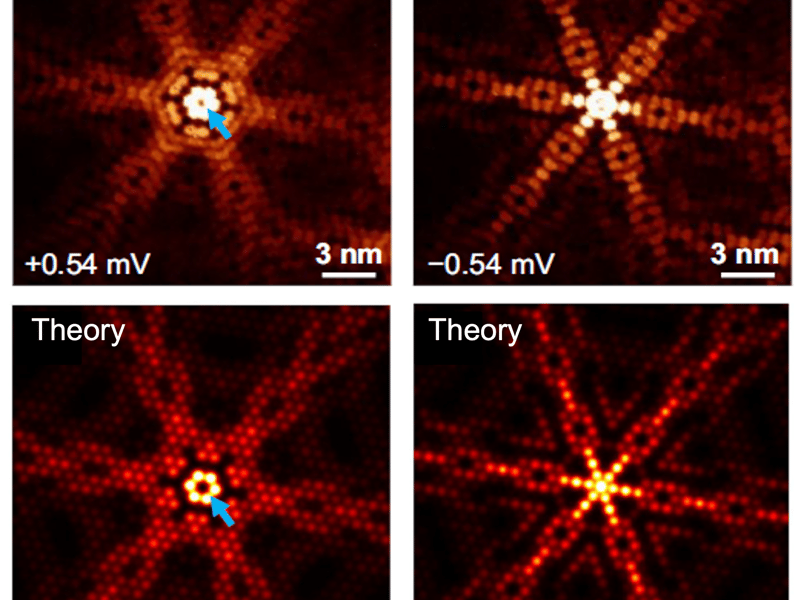
Microscopic Fingerprint of Chiral Superconductivity
Chiral superconductivity — a long-sought quantum phase with potential applications in quantum technologies — has eluded definitive microscopic confirmation for decades. While several candidate materials exhibit signatures of time-reversal symmetry breaking, such evidence alone does not prove chiral Cooper pairing.
Oct 22, 2025
Big Idea: Harnessing the Data Revolution
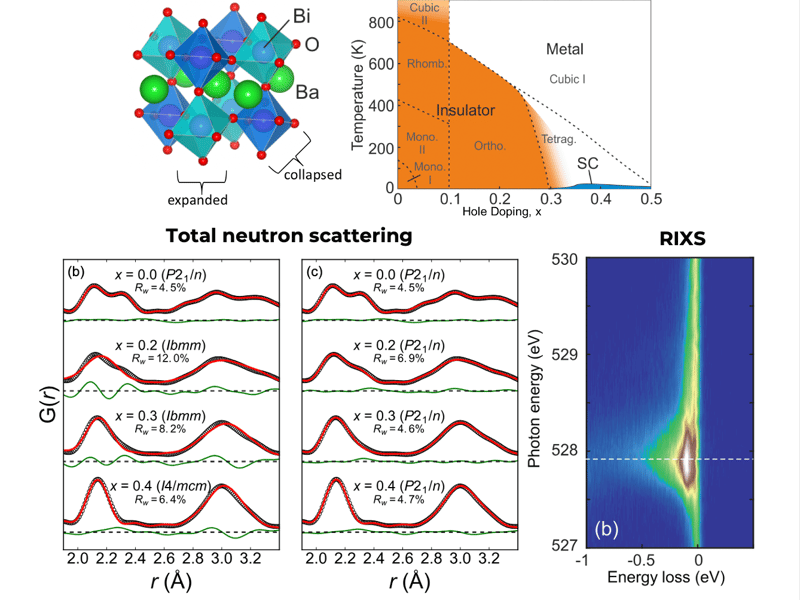
Persistence of Small Polarons in Doped Bismuthate Superconductors
University of Tennessee, Knoxville (UTK) Center for Advanced Materials and Manufacturing (CAMM)
In a paper titled Persistence of Small Polarons in Doped Bismuthate Superconductors, researchers study Ba1−xKxBiO3, which becomes a high-Tc superconductor when doped into a charge-density-wave insulator. They show that short-range lattice distortions and strong electron-phonon coupling persist into the metallic phase. Using resonant inelastic x-ray and neutron scattering plus modeling, the team suggests BKBO’s metallic state is an unusual bipolaronic liquid with persistent polarons.
Aug 28, 2025
The University of Tennessee - Knoxville
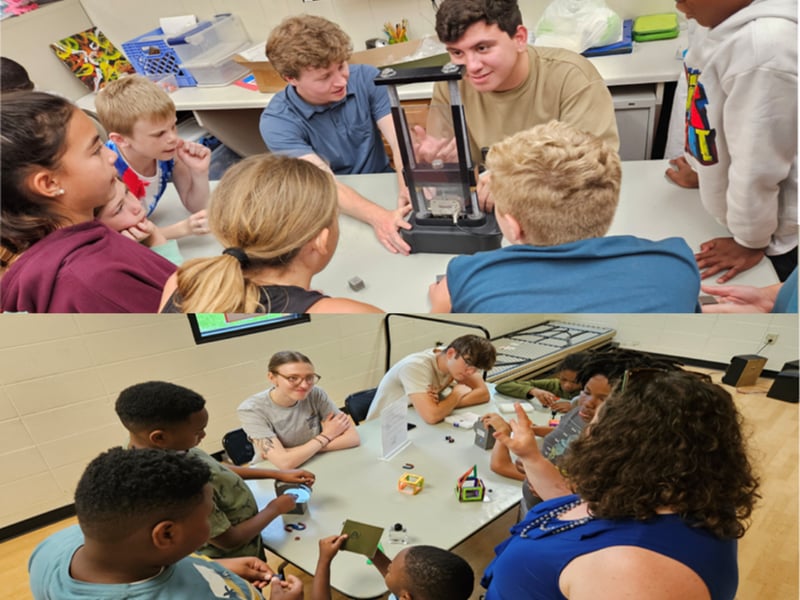
Expanding CAMM’s Impact: REU Summer Outreach with Knoxville Youth
University of Tennessee, Knoxville (UTK) Center for Advanced Materials and Manufacturing (CAMM)
The Center for Advanced Materials and Manufacturing (CAMM) engaged hundreds of high school students through lab tours and discussions during the 2024-2025 school year. Over the summer, CAMM expanded its outreach to younger students in Knoxville, working with local community centers to host hands-on STEM workshops. Activities included tensile testing, materials games, and demonstrations with ferrofluids and shape memory alloys. This initiative not only educated local youth but also enhanced awareness of CAMM’s programs while providing valuable experience for student participants.
Showing 51 to 60 of 1452