Highlights

Solid-phase epitaxy produce magnetic oxides with novel magnetic properties
May 21, 2020
University of Wisconsin - Madison

Solid-phase epitaxy produce magnetic oxides with novel magnetic properties

Chang-Beom Eom, University of Wisconsin-Madison

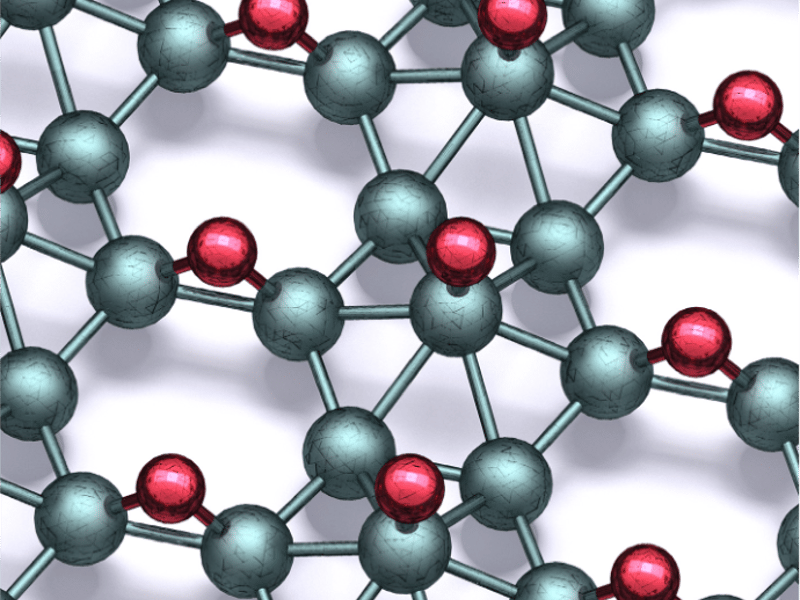
The Wisconsin MRSEC has created thin films of a fascinating magnetic material, Pr2Ir2O7, in which the magnetic moments are frustrated: No matter how they are arranged, some of the moments are always fighting to change their direction, like two bar magnets with their north poles shoved together. Frustration creates a rich landscape for discovery and manipulation of new magnetic effects and of electronic phenomena linked to magnetism.
Wisconsin MRSEC Excellence in Open Science Prize
May 21, 2020
University of Wisconsin - Madison

Wisconsin MRSEC Excellence in Open Science Prize

Dane Morgan and Victor Zavala, University of Wisconsin-Madison

This year the Wisconsin MRSEC launched the first Wisconsin MRSEC Excellence in Open Science Prize. The winner was graduate student Bradley Dallin for his work on molecules interacting with water, with potential applications from understanding human blood to protein folding diseases like Alzheimer’s. Bradley shared his results in papers, but also shared all his simulations and tools in an open accessible format for the community, increasing the impact of his work.
Disassembling 2D van der Waals crystals into macroscopic monolayers
May 21, 2020
Columbia University in the City of New York

Disassembling 2D van der Waals crystals into macroscopic monolayers

Xiaoyang Zhu, Columbia University Center for Precision Assembly of Superstratic and Superatomic Solids (PAS3)

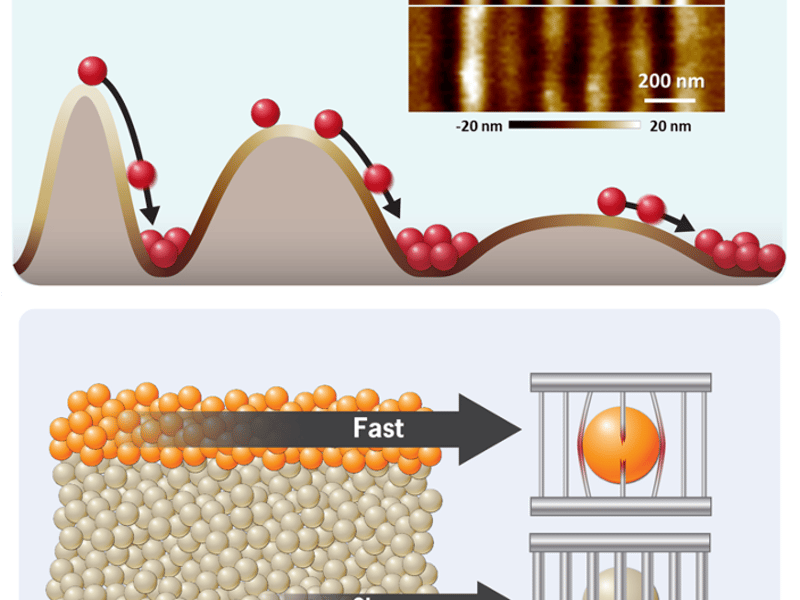
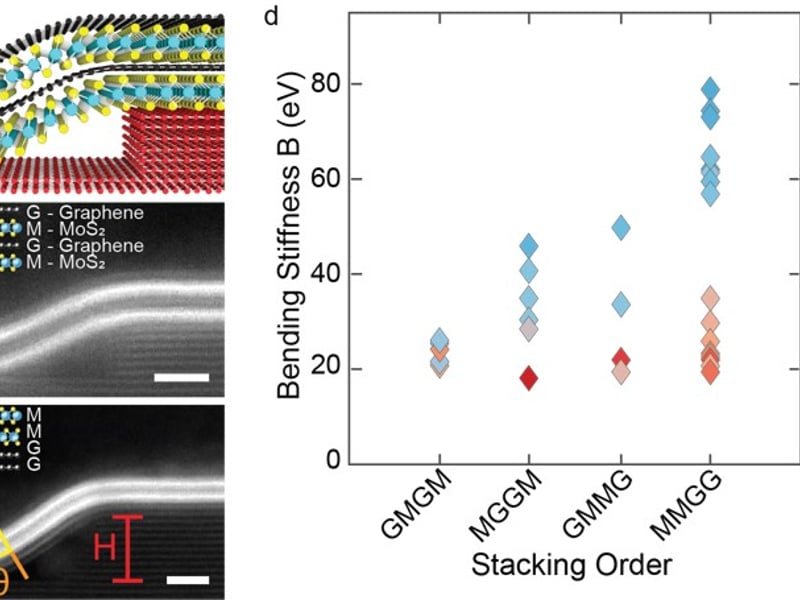
The Zhu group developed a facile method to disassemble vdW single crystals layer by layer into monolayers with near-unity yield and with dimensions limited only by bulk crystal sizes (scheme shown on top). The macroscopic monolayers are comparable in quality to microscopic monolayers from conventional Scotch tape exfoliation.
Bio-materials for Fashion Introduced to Broad Audience at NY Times Sustainability Summit
May 21, 2020
Columbia University in the City of New York

Bio-materials for Fashion Introduced to Broad Audience at NY Times Sustainability Summit

Theanne Schiros, Columbia University Center for Precision Assembly of Superstratic and Superatomic Solids

Professor Theanne Schiros spoke to a full house of over 700 as part of a Sustainability Summit focused on the environmental impact of the fashion industry and positive solutions. She is in engaged in sustainable development for economic empowerment of women and artisans in Guinea and Cote d’Ivoire, providing trainings on natural dyes and biofabrication.
(a) High-resolution transmission electron micrograph showing the interface between PbSe and an InAs substrate. (b) Mid-infrared photoluminescence spectra from IV-VI/GaAs heterostructures overlapping with absorption of methane
May 20, 2020
University of California, Santa Barbara

Interfacing with Topological Crystalline Insulators

B. Haidet, UC Santa Barbara E. Hughes, UC Santa Barbara K. Mukherjee, UC Santa Barbara

We demonstrate a route to high quality interfaces between IV-VI PbSnSe and conventional III-V semiconductors, offering means to host and manipulate electronic states that arise at this interface. We can now clarify the extent to which topological protection from backscattering persist in systems at relevant length scales for logic and interconnects using these novel materials. Heterostructures between IV-VI and III-V materials may enable mid-infrared on-chip environmental and biological sensing.
Point Defects in hexagonal BN for Quantum Information Science
May 20, 2020
University of California, Santa Barbara

Point Defects in hexagonal BN for Quantum Information Science

M. E. Turiansky, UC Santa Barbara A. Alkauskas, Kaunas University of Technology L. C. Bassett, Unversity of Pennsylvania C. G. Van de Walle, UC Santa Barbara

Hexagonal boron nitride is a suitable host for single-photon emitters and single-spin centers.  Strong single-photon emission has been observed, but the source was not identified.  Based on advanced first-principles simulations, the origins have now been pinpointed: the 2 eV emission has been attributed to boron dangling bonds, and 4 eV emission to carbon-carbon dimers.
Modeling liquid-liquid phase separation to control polymer architecture.
May 20, 2020
University of California, Santa Barbara

Microstructure modeling in nonsolvent induced phase separation (NIPS) 

Tree, BYU Dos Santos, UC Santa Barbara Wilson, UC Santa Barbara Scott, UC Santa Barbara Garcia, UC Santa Barbara Fredrickson, UC Santa Barbara

NIPS is a non-equilibrium liquid-liquid phase separation phenomenon used to make polymer membranes through solvent-nonsolvent exchange. Newly developed phase-field simulations allow investigation of coupled mass transfer, flow and thermodynamic instability during processing and the corresponding microstructures that result from variations in film composition and thickness. These simulation tools provide critical insight into the nonequilibrium processing of complex fluids to make architectured, resilient solids and soft materials.
Left: Crystal structure of FePd1−xPtxMo3N. Right: Magnetic phase diagram of FePtMo3N showing the emergence of a skyrmion state in the “A” region.  FD shows the fluctuation disordered regime.
Left: Crystal structure of FePd1−xPtxMo3N. Right: Magnetic phase diagram of FePtMo3N showing the emergence of a skyrmion state in the “A” region. FD shows the fluctuation disordered regime.
May 20, 2020
University of California, Santa Barbara

Controlling skyrmion size in the alloy FePd1−xPtxMo3N

Kautzsch, UC Santa Barbara Bocarsly, UC Santa Barbara Felser, MPI-CPFS, Dresden Wilson, UC Santa Barbara Seshadri, UC Santa Barbara

After discovering a new magnetic host of skyrmion states, UC Santa Barbara IRG-1 researchers were able to show that chemically alloying the compound FePd1−xPtxMo3N allows for the size of the skyrmion defects to be controlled while still preserving their stability.  Skyrmion states are broadly sought in new materials due to their potential uses in low power memory devices and other spin-based electronics.
Image source: M. K. Mahanthappa, M. A. Hillmyer, T. M. Reineke, T. P. Lodge and J. I. Siepmann
May 15, 2020
University of Minnesota - Twin Cities

Computational Design of Triblock Amphiphiles with 1-nm Domains

M. K. Mahanthappa, M. A. Hillmyer, T. M. Reineke, T. P. Lodge and J. I. Siepmann

Block polymers are a class of versatile self-assembling soft materials that can form exquisite nanostructures for applications including ion transport membranes for batteries and fuel cells, and templates for inorganic oxide catalysts. Using molecular dynamics simulations and transferable force fields, we designed a series of symmetric triblock amphiphiles (or high-χ “block oligomers”) comprising incompatible sugar-based (A) and hydrocarbon (B) blocks that can self-assemble into ordered nanostructures with full domain pitches as small as 1.2 nm.
Image source: C. Leighton and C. Daniel Frisbie
May 15, 2020
University of Minnesota - Twin Cities

From Semiconductor to Metal in Two-dimensional Tellurium

C. Leighton and C. Daniel Frisbie, University of Minnesota

Atomically-thin sheets of semiconductors have been of immense interest since the Nobel-Prize-winning discovery of graphene or two-dimensional (2D) carbon. Such materials represent the ultimate limit of “scaling” to small sizes, of vital importance in the semiconductor device industry. A particularly exciting recent (2017) finding is that the elemental semiconductor tellurium can be created in 2D sheets, with highly mobile electrons.