Highlights
May 26, 2016
University of Pennsylvania
Plate Mechanical Metamaterials
I. Bargatin & P. K. Purohit (Seed 5)
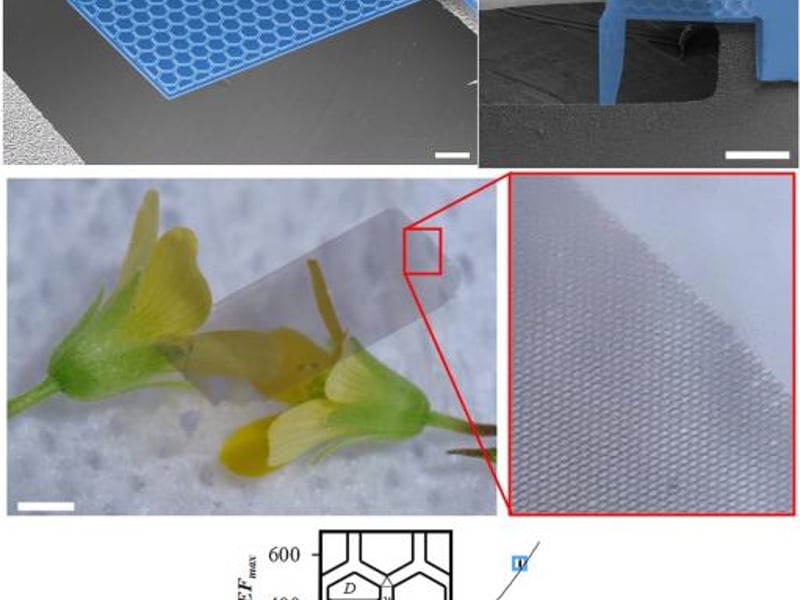
We introduced the concept of plate mechanical metamaterials [1] and its initial realization in the form of freestanding corrugated plates made out of ultrathin films. We used atomic layer deposition (ALD) and microfabrication techniques to make robust plates out of a single continuous ALD layer with lateral dimensions of up to 2 cm and a thickness as low as 25 nm, creating the thinnest freestanding plates that can be picked up by hand [1].
May 26, 2016
University of Pennsylvania
Helium Conservation in the Property Measurement Facility (SEF)
J. M. Kikkawa
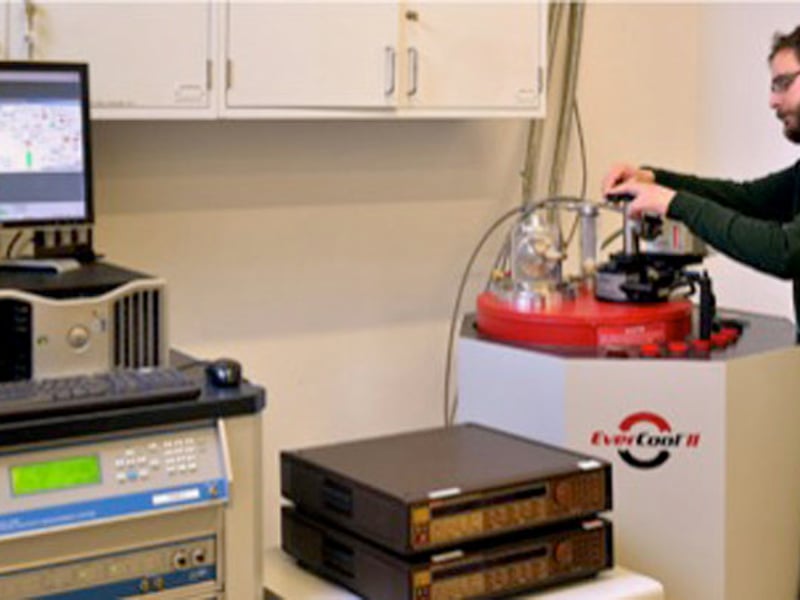
The U.S. National Science Foundation has awarded additional funds to support helium conservation in the Property Measurement Shared Experimental Facility (SEF). The SEF hosts over a dozen low temperature measurement capabilities requiring liquid helium.
May 26, 2016
University of Pennsylvania
Dendrimer-Nanocrystal Building Blocks
L. Hough, C. B. Murray, & B. Donnio (IRG-4)
Optimum function of plasmonic nanocrystal in assembly requires precision control of separation.
Often, larger separations are desired while still maintaining order.
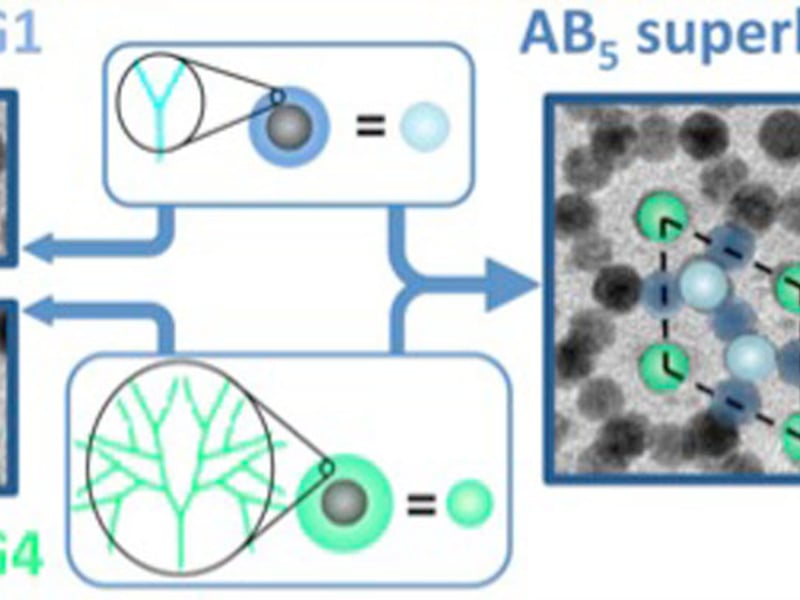
With our COMPASS collaborators, Hough and Donnio, IRG-4 has developed a new class of building blocks that incorporate dendrimer ligands.
Dendrimer-nanocrystal building blocks have diameters controlled by dendrimer “generation.”
This work was published in J. Am. Chem. Soc. 137, 10728–10734 (2015).
May 26, 2016
University of Pennsylvania
Universality of Microscopic Structure and Macroscopic Mechanical Response in Disordered Packings Across Length Scales
P. E. Arratia, R. W. Carpick, D. J. Durian, D. S. Gianola, D. Lee, A. J. Liu, R. Riggleman, A. G. Yodh (IRG-3)
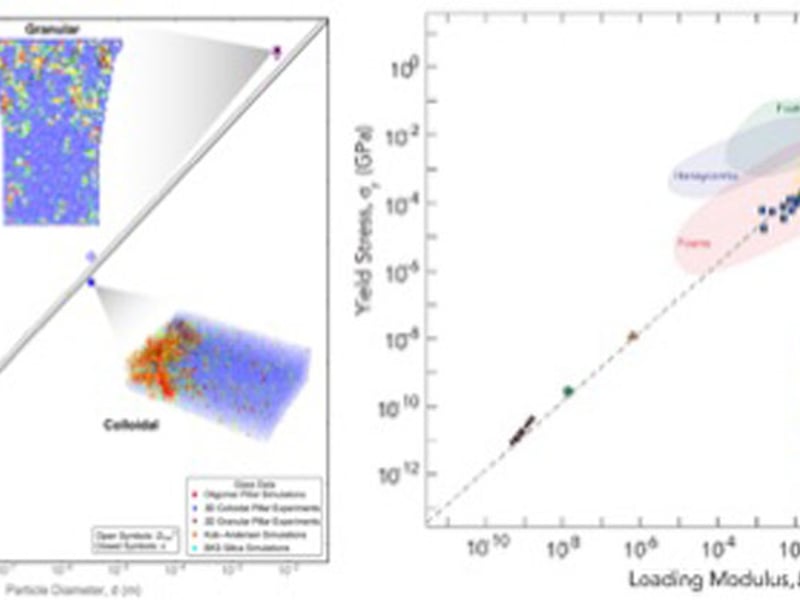
A metal spoon can bend in half without breaking because of defects in its crystalline structure. By contrast, a metal spoon with atoms in a disordered structure—a metallic glass spoon—would break via a catastrophic brittle fracture. Here we show that disordered packings of particles ranging in size from atoms, as in a metallic glass, to nanoparticles to micron-sized colloids to centimeter-sized granular particles, show universal behavior in their microscopic structure and dynamics and in their macroscopic mechanical response, even for systems with extremely different interactions between
May 25, 2016
University of Pennsylvania
Video Archives of Outreach Presentations
A. R. McGhie & M. W. Licurse
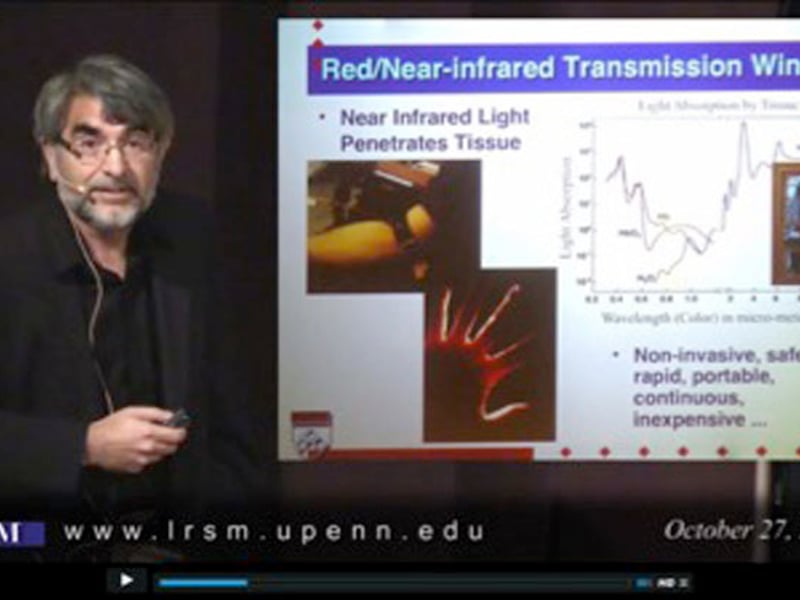
To increase our online presence, we are recording nearly all outreach presentations and making them available on our website (www.lrsm.upenn.edu/outreach/videos). These include Science Cafes, PREM seminars (given usually in Spanish), and various other events.
May 25, 2016
Harvard University
Top Chefs at the NSF MRSEC
Michael Brenner and David Weitz (School of Engineering and Dept. of Physics)
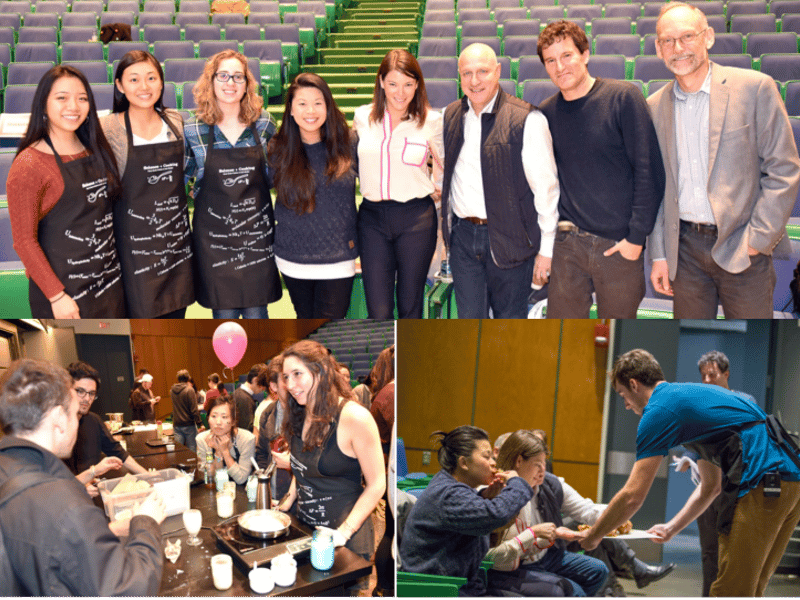
Harvard hosted its first ever “Top Chef” competition, as part of Science and Cooking: From Haute Cuisine to Soft Condensed Matter, now in its sixth year as a highly popular undergraduate course at Harvard. Created and taught by Michael Brenner and David Weitz, the course enrolls several hundred undergraduates each fall, and is also offered as a free online course through the EdX portal.
May 25, 2016
Harvard University
Biomimetic 4-D Printing
Jennifer Lewis and Lakshiminarayanan Mahadevan (School of Engineering)
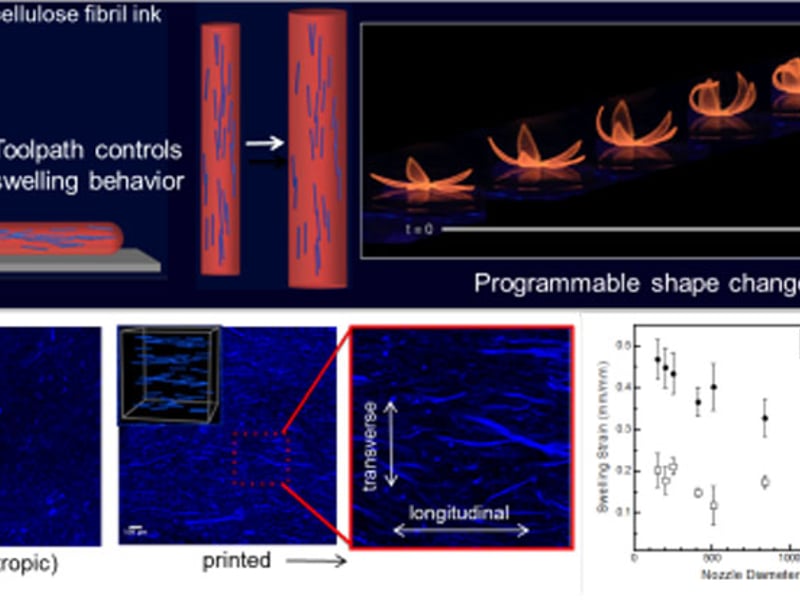
Shape morphing systems may find potential application in smart textiles, autonomous robotics, biomedical devices, drug delivery and tissue engineering. Lewis and Mahadevan at the Harvard MRSEC have developed 4-D printing by creating a hydrogel-cellulose fibril ink that could be printed to induce a programmable shape change as recently reported in Nature Materials.
May 25, 2016
University of Pennsylvania
Glycodendrimers Can Sense Variants of Lectins by Agglutination
V. Percec, M. L. Klein, & D. A. Hammer (IRG-2)
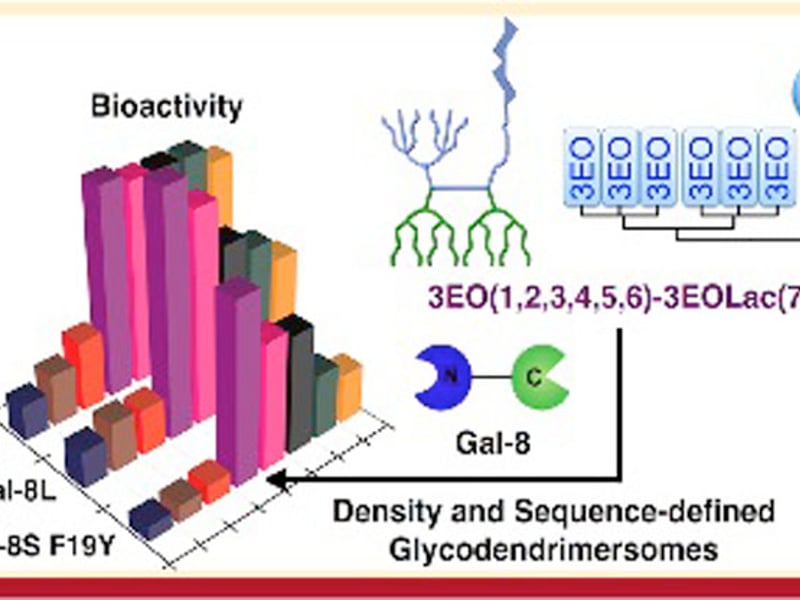
A dendrimer is a synthetically made branched molecule. In this work, a family of amphiphilic Janus dendrimers bearing precise carbohydrate residues arranged in a defined sequence – glycodendrimers – were used to make vesicles that could be agglutinated by naturally occurring lectins that binds to carbohydrates. The lectins, called galectins, are human adhesion and growth regulatory lectins. Very small differences in the chemistry of different galectin were detected through differences in agglutination with different Janus glycodendrimers.
May 25, 2016
University of Pennsylvania
6th Annual Philadelphia Materials Day
A. R. McGhie & M. W. Licurse
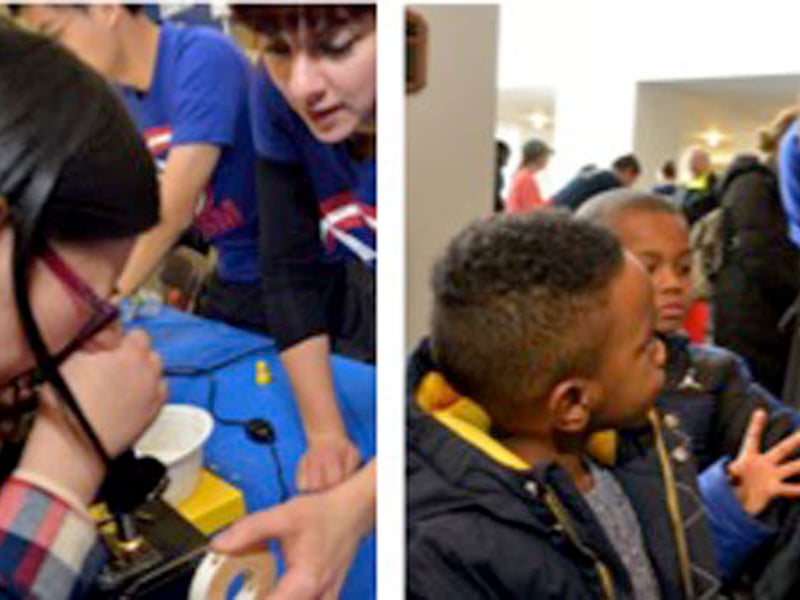
The 6th annual Philadelphia Materials Day was held on Saturday, February 6, 2016 at the Bossone Research Center at Drexel University. This joint venture between Penn and Drexel Universities was attended by over 1100 students and parents. Each year faculty and their students present demos on materials-related themes of interest to K-12 students. The themes this year were: Communications, Earth, Environment, Energy, and Sports.
May 25, 2016
University of Pennsylvania
Dirac Line Nodes in Inversion Symmetric Crystals
C. L. Kane & A. M. Rappe (SuperSeed 1)
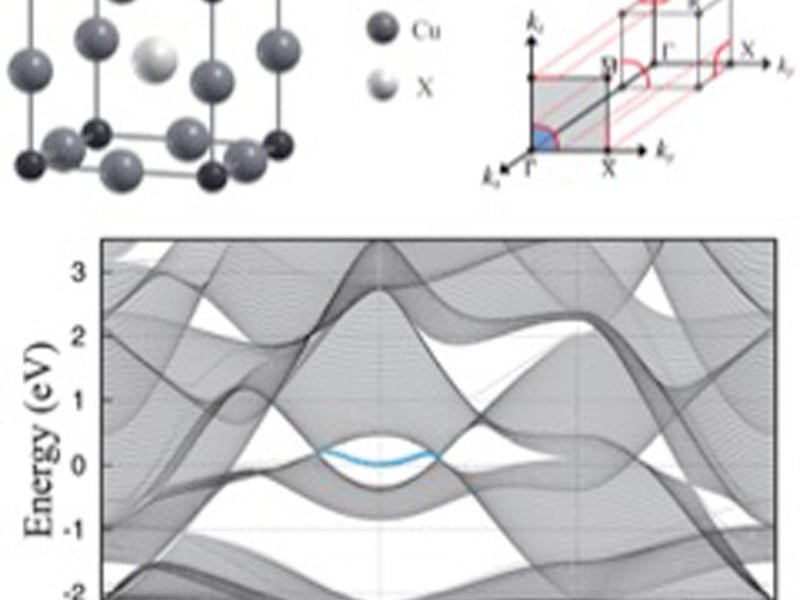
Topological insulators, which were first introduced at Penn, are new materials with novel features such as protected states that hold potential for quantum computing. We have identified a class of 3D crystals that feature a new kind of topological band phenomena: Dirac line nodes (DLN). These are lines in momentum space where the conduction band and valence band touch, and their degeneracy is required by inversion symmetry even in the absence of spin orbit interactions.
Showing 591 to 600 of 1452