Highlights
May 14, 2026
Brandeis University
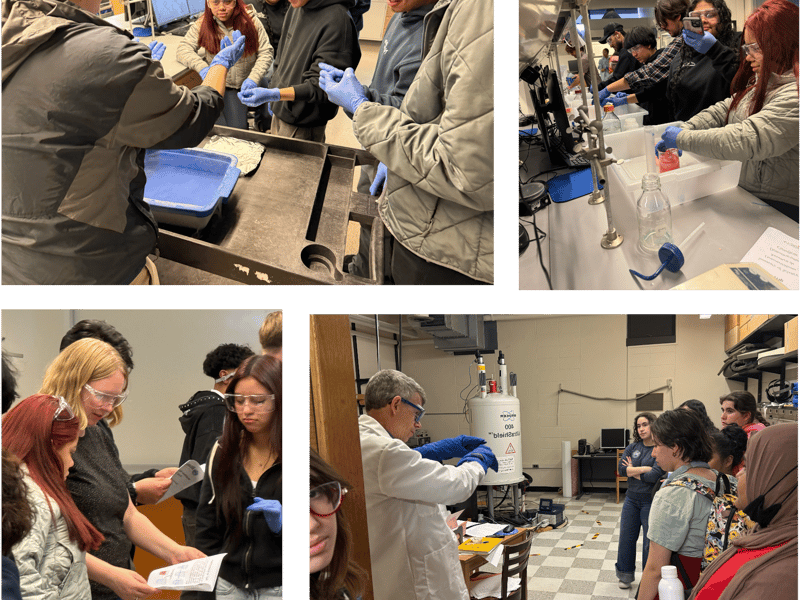
Waltham High School Bilingual Field Trip
A. Zare
The Waltham High School Bilingual Chemistry Field Trip marked the fifth year of this NSF MRSEC-supported outreach program and expanded its scope through the inclusion of AP Chemistry students and a new collaboration with the MEL Community Foundation. This year, 30 students from SEI and AP Chemistry courses, who had been engaged in bilingual chemistry learning throughout the academic year, visited Brandeis University for a culminating field trip featuring lab tours, hands-on chemistry experiments, and exposure to the research landscape in chemistry and materials science.
May 14, 2026
Brandeis University
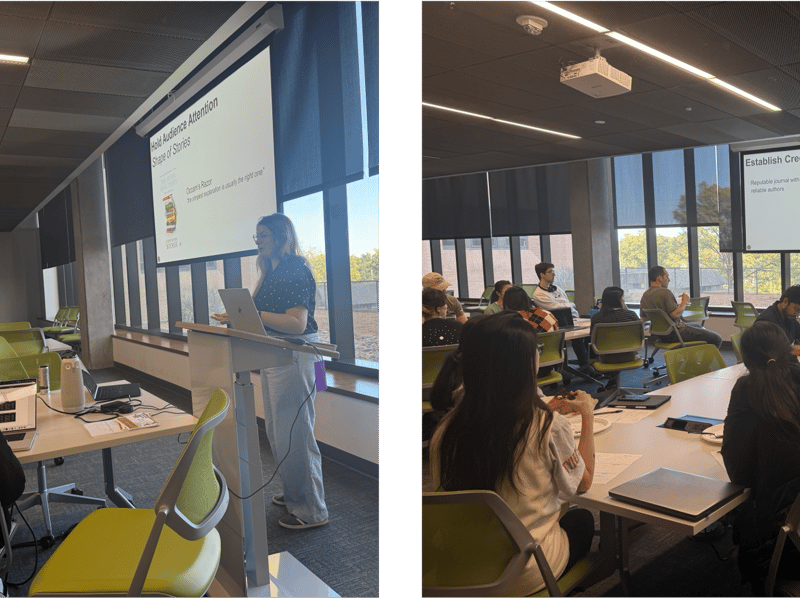
SciComm Lab: A National MRSEC Resource
A. Zare
The Brandeis SciComm Lab expanded its impact beyond its home institution to serve the broader MRSEC community nationwide, providing science communication training through individual coaching, targeted workshops, and specialized programming. This year, the Lab delivered its Talk So People Will Listen workshop to the University of Texas at Austin MRSEC in a hybrid format, reaching 30 graduate students and researchers.
May 14, 2026
Brandeis University
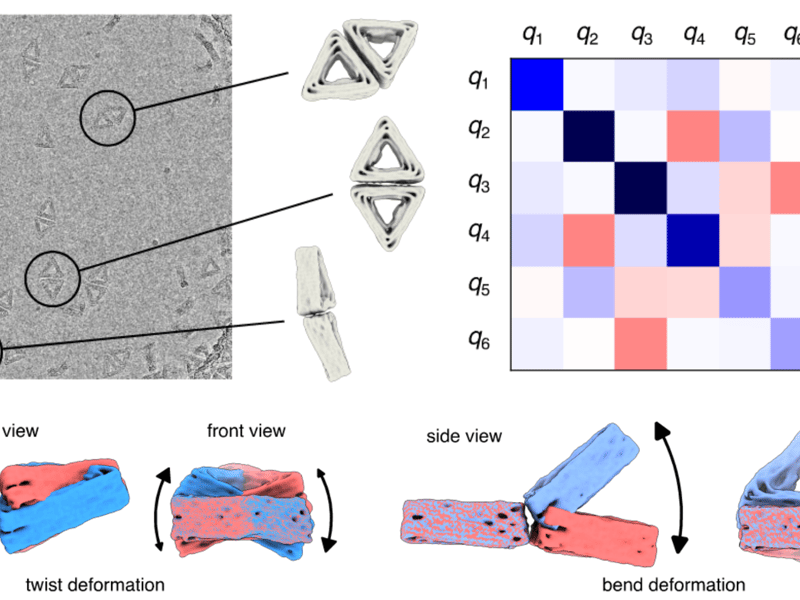
Measuring multisubunit mechanics of colloidal assemblies
TE Videbaek, D Hayakawa, MF Hagan, GM Grason, S Fraden, and WB Rogers
Going beyond the self-assembly of static structures necessitates the design, measurement, and control of the local flexibility of the building blocks as well as their assemblies. In this study, Rogers, Fraden,Grason, and Hagan demonstrated a method to infer the mechanical properties of multisubunitassemblies using cryogenic electron microscopy (cryo-EM).
May 14, 2026
Brandeis University
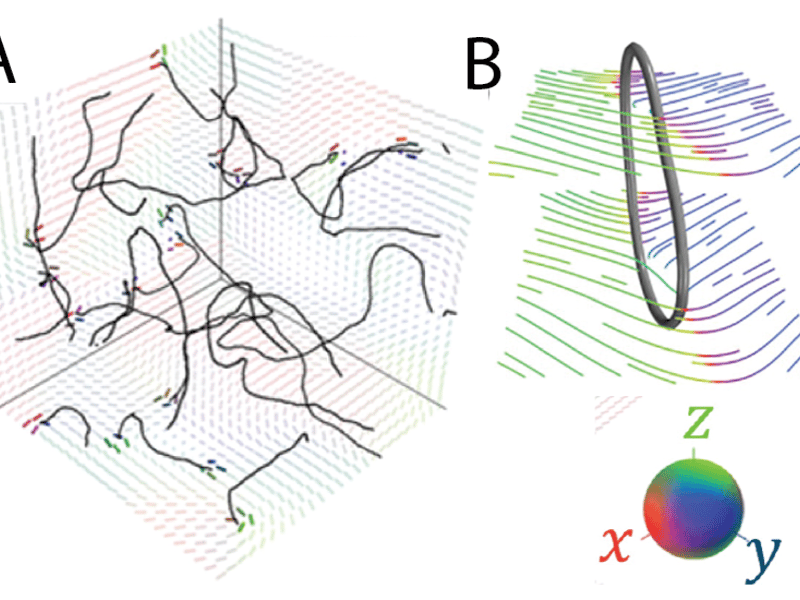
Mechanics of disclination emergence in three-dimensional active nematics
Yingyou Ma , Christopher Amey, Aparna Baskaran, and Michael F. Hagan
One specific objective of IRG2 is to design novel composite materials where both active and passive stresses are tunable by dispersing active building blocks in diverse passive soft materials. Here, Baskaran and Hagan performed simulations of 3D active nematics, inspired by experiments in which active polymers were dispersed in a passive colloidal liquid crystal by Duclos and Dogic.
May 14, 2026
Brandeis University
Self-limiting assembly of self-closing curved crystals
M Price, D Hayakawa, TE Videbaek, R Saha, B Tyukodi, S Fraden, MF Hagan, GM Grason, and WB Rogers
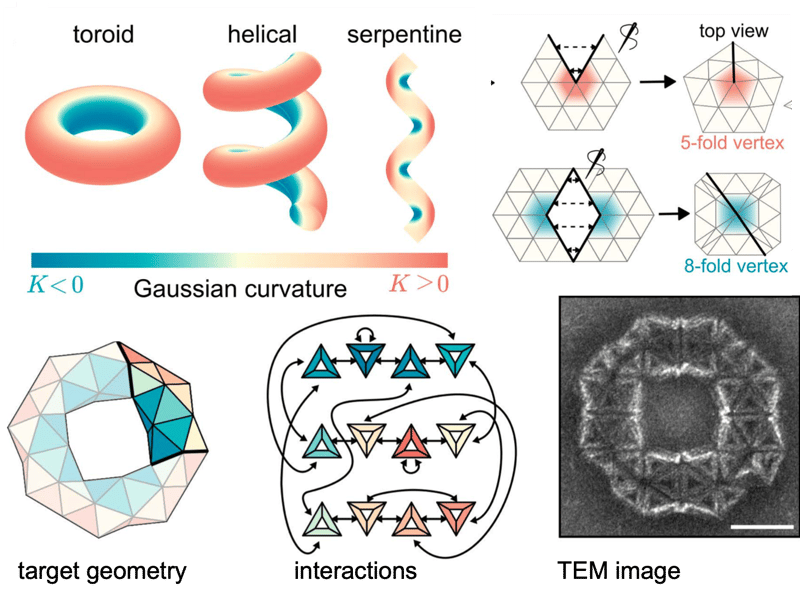
A goal of IRG1 is to create economical design principles to target families of curved tubules with prescribed bend and writhe. In this study, Rogers, Fraden, Grason, and Hagan developed and implemented a design strategy to program the self-assembly of a complex spectrum of two-periodic curved crystals with variable periodicity, spatial dimension, and topology, spanning from toroids to achiral serpentine tubules to both left- and right-handed helical tubules.
May 14, 2026
Brandeis University
Coarsening of liquid droplets in an active fluid
Guillaume Duclos, Ben Rogers, and Aparna Baskaran
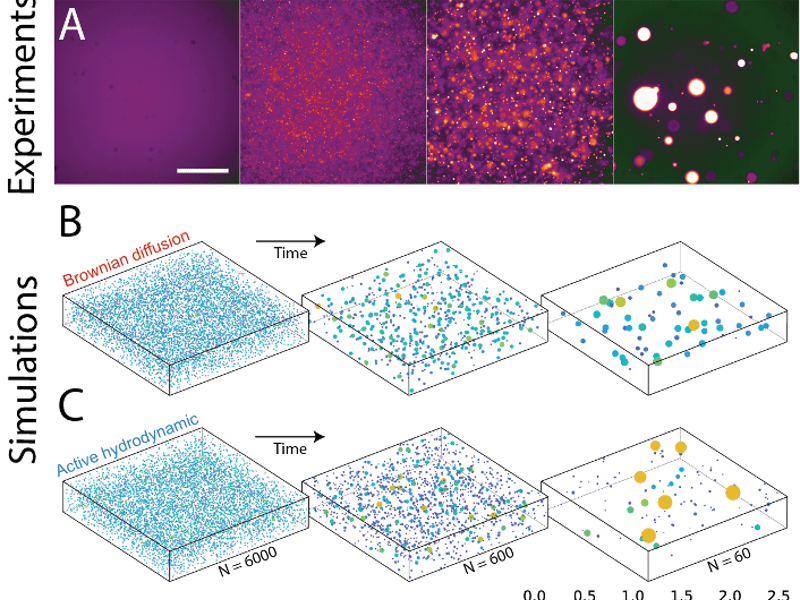
Coarsening, the growth of larger structures at the expense of smaller ones, is a fundamental process in multiphase systems. Duclos and Rogers mixed phase-separating DNA nanostars in a reconstituted active fluid. This effort aligns with the goal of IRG2: designing active composite materials by dispersing active building blocks within diverse passive soft materials.
May 12, 2026
Princeton University
Designing uniform, ligand-free nanoparticle catalysts on a supramolecular support via molecular recognition
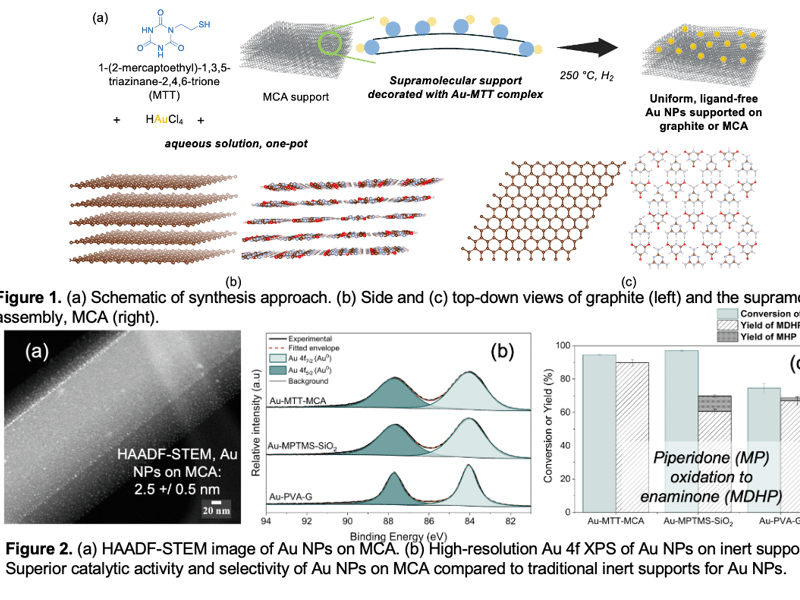
The PCCM team has designed a new synthetic approach to preparing supported metal nanoparticle (NP) catalysts based on a noncovalent assembly, melamine cyanurate. This newly designed method introduces a fundamentally new class of supramolecular materials as a versatile platform for catalyst design with great potential in diverse electro/photo/thermal catalytic routes.
May 12, 2026
Princeton University
Ribosomal RNA Processing Shapes the Multiphase Nucleolus
C. P. Brangwynne and A. Košmrlj
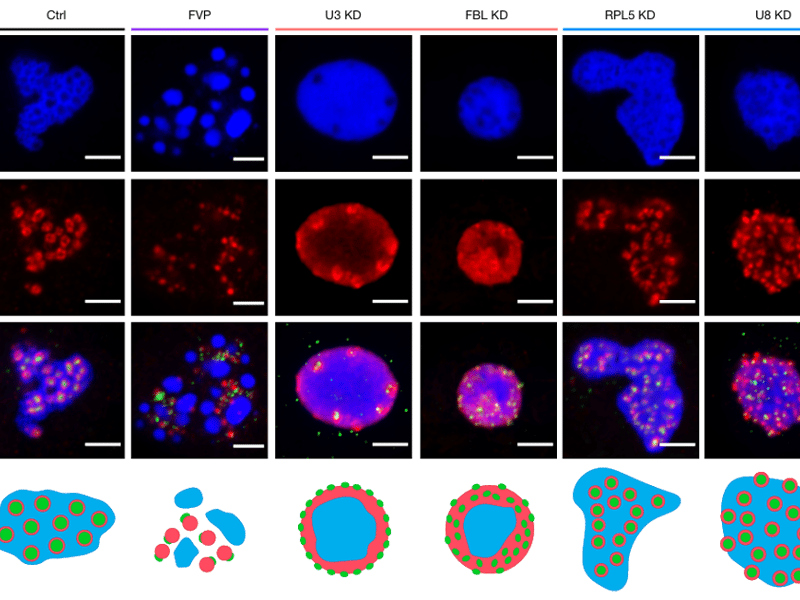
Ribosome biogenesis takes place in the nucleolus, a three-layered liquid-like structure. The PCCM MRSEC team recently discovered that the nucleolar architecture depends on correct ribosomal RNA processing. This discovery addresses one of the central IRG topics on how the formation of multiple condensed phases are controlled in macromolecular solutions containing passive and active components.
May 12, 2026
University of Illinois Urbana-Champaign
Equipment Highlight: Atom-by-Atom Visualization of Moiré Phasons
Y. Zhang, B. Ahammed, A.M. van der Zande, E. Ertekin, and P. Y. Huang
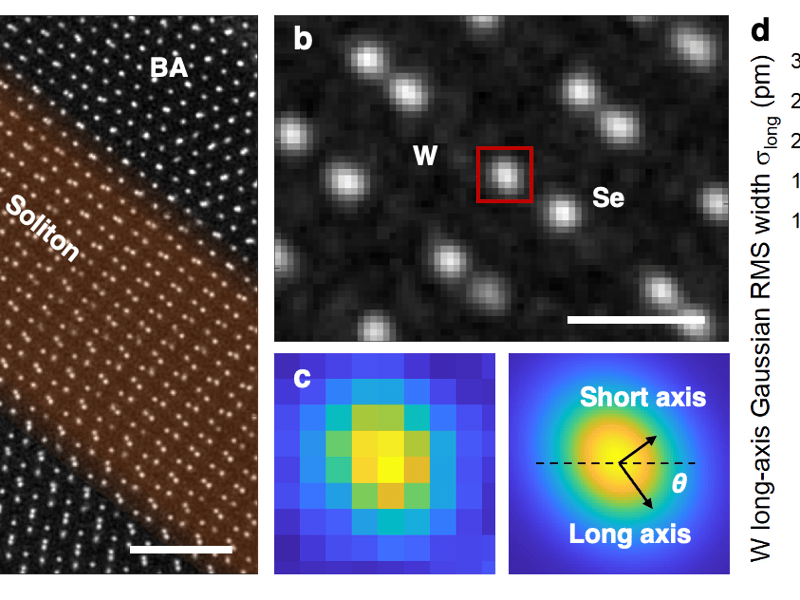
Enabled by an electron microscope pixel array detector in the Illinois MRSEC shared facilities, the team has developed an ultrahigh‑resolution electron ptychography method to measure thermal vibrations atom‑by‑atom in twisted WSe₂ bilayer.
May 12, 2026
University of Illinois Urbana-Champaign
Strain-Tunable Valley Separation Boosts Carrier Mobility in 2D Materials
S Afrid, H.L Zhao, A. M. van der Zande, and S. Rakheja
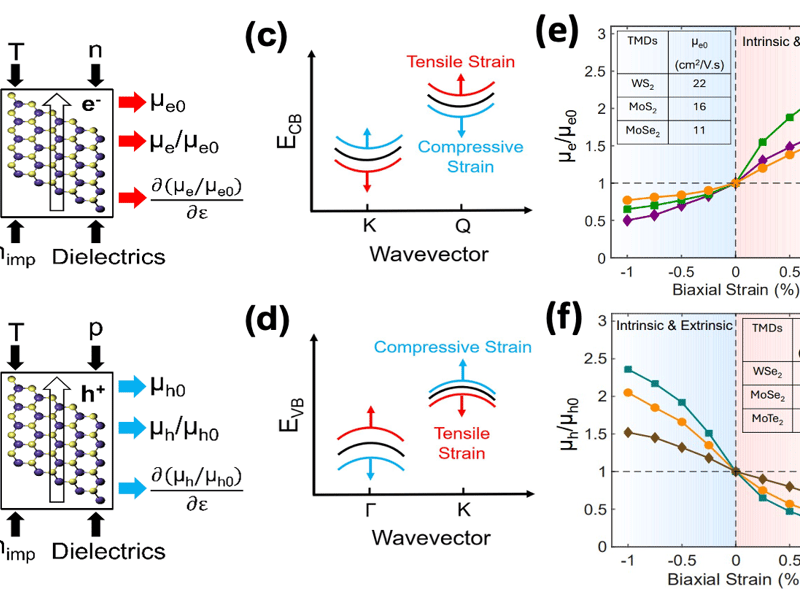
The Illinois MRSEC has developed new multiscale simulations to capture all major sources of scattering that slow down charge flow, and has carefully validated the models with experimental data.
Showing 31 to 40 of 1452