Brown's Center for Advanced Materials Research (1996)
The Materials Research Science and Engineering Center (MRSEC) at the Brown University supports interactive research in one interdisciplinary group focusing on advanced materials for structural and electronic applications. The research group emphasizes the development of a new generation of capabilities for measuring and modeling mechanical response at the microscopic level. Advanced measurement and modeling techniques will be used. The goal will be to develop methodologies to realize predictive capabilities and to understand the performance and limitation of particular microstructures at micron and atomic length scales. The MRSEC supports the development, operation and maintenance of shared experimental facilities for materials research. It provides seed funding for exploratory research and fosters research participation by undergraduates. The Center develops educational modules consisting of interactive demonstrations and laboratory projects to be used by mathematics and science teachers. The MRSEC also supports enhanced collaboration with industry, shared experimental facilities that also support research not directly funded by the MRSEC, and seed funding for exploratory research. The Center currently supports about 12 senior investigators, 2 postdoctoral research associates, 3 technician or other professional, 12 graduate students, and 4 undergraduates. The MRSEC is directed by Professor Rodney Clifton. %%% The Materials Research Science and Engineering Center (MRSEC) at the Brown University supports interactive research in one interdisciplinary group focusing on advanced materials for structural and electronic applications. The research group emphasizes the development of a new generation of capabilities for measuring and modeling mechanical response at the microscopic level. Advanced measurement and modeling techniques will be used. The goal will be to develop methodologies to realize predictive capabilities and to understand the performance and limitation of particular microstructures at micron and atomic length scales. The MRSEC supports the development, operation and maintenance of shared experimental facilities for materials research. It provides seed funding for exploratory research and fosters research participation by undergraduates. The Center develops educational modules consisting of interactive demonstrations and laboratory projects to be used by mathematics and science teachers. The MRSEC also supports enhanced collaboration with industry, shared experimental facilities that also support research not directly funded by the MRSEC, and seed funding for exploratory research.
Development of Ultra-Coherent Quantum Materials (IRG 3)
The past decade has seen explosive growth in the area of quantum information science and related quantum enabled technologies. The IRG-3 team is focused on developing ultra-coherent quantum materials, in particular group IV materials such as Si, Ge, SiC, and diamond. Members of the team recently demonstrated that isotopically enriched silicon samples can support electron spin coherence times at least as long as 10 seconds, orders of magnitude longer than other solid state systems. Such isotopic enrichment is not possible in III-V materials, as no spin-0 nuclear isotopes exist for any III-V element. Moreover, work by team members has also shown that single electrons can be routinely isolated in Si devices, paving the way for studies of quantum coherence at the single spin level. The team includes experts on the growth and characterization of these materials, device design and measurement, and superconducting devices which can couple to the electron spins.
Co-Leaders
S. A. Lyon, co-leader (EE)
A. A. Houck, co-leader (EE)
Senior Investigators
Nathalie de Leon (EE)
J. C. Sturm (EE)
J. M. Taylor (Physics, Joint Quantum Institute/U. Maryland)
Jeff Thompson (EE)
Collaborators
J. M. Chow (IBM Watson Research Center)
Chris Dries (United Silicon Carbide)
M. F. Gyure (HRL Laboratories)
C.-W. Liu (National Taiwan University)
B. Lovett (Heriot-Watt University)
J. Morton (University College London)
J. Pomeroy (NIST)
T. Schenkel (LBNL)
C. Tahan (Laboratory for Physical Sciences)
M. Thewalt (Simon Fraser)
Guido Burkard (Konstanz University)
Marcelo Maialle (University of Campinas)
Engineered Multiblock Polymers
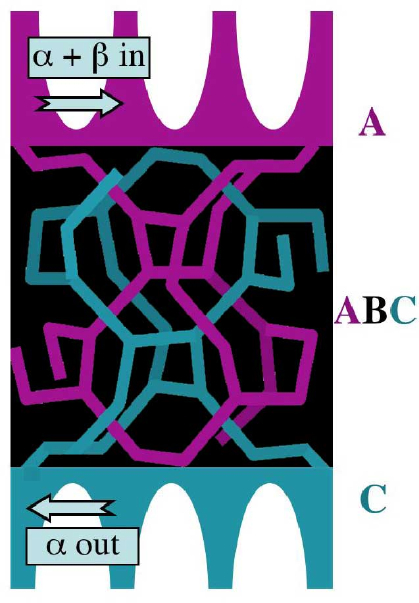
Engineered Multiblock Polymers designs, prepares, characterizes and employs block polymers containing more than two chemically distinct segments to enable a rich array of sophisticated technologies using these nanostructured hybrid materials. The group establishes fundamental knowledge concerning the complex interplay between synthesis, structure, properties, and processing in these materials and focuses their research efforts on multidomain aqueous assemblies for innovative biomedical applications, tailored membrane materials for advanced separations, and inventive coating and extrusion processes that facilitate practical applications of new multiblock-based materials.
Structural Chemo-Mechanics of Fibrous Networks
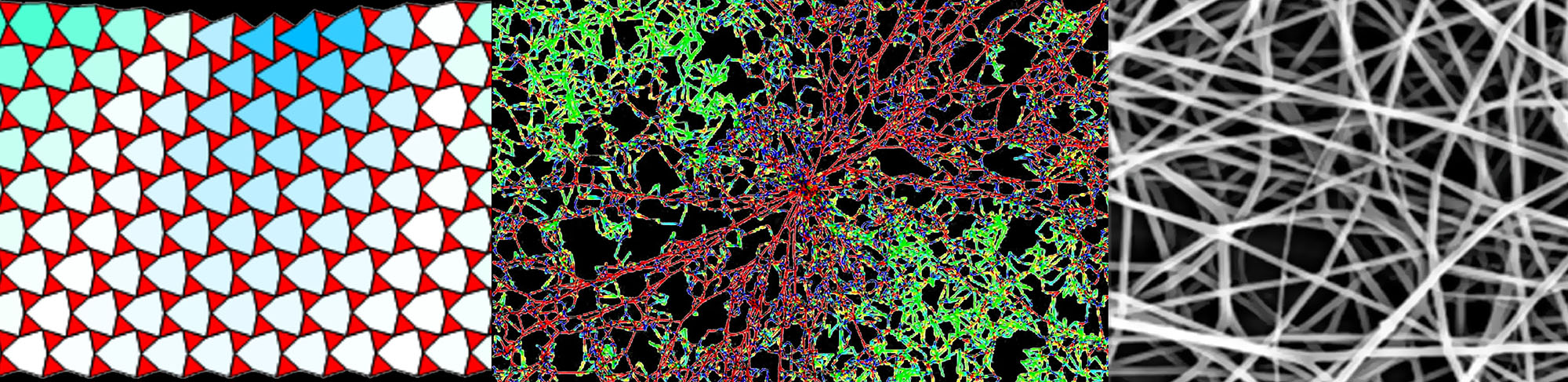
Structural Chemo-Mechanics of Fibrous Networks aims to develop a new field of network chemo-mechanics by understanding and harnessing the structural, chemical, and mechanical complexity inherent in fibrous networks. Fibrous networks are ubiquitous in biology but are underexplored in materials science. The team will create and characterize new fibrous materials with structural chemo-mechanical properties, and it will develop theory and models to enhance understanding of them. Specifically, we aim to synthesize materials in which spatially localized chemical reactions are controlled through management of local fibrous network structure. This local chemical control can occur by focusing applied macroscopic stress to targeted regions in the material; this phenomena enables us to concentrate or align chemical species with specific reactant and catalyst sites, and thereby alter their reaction kinetics. The group will thus lay foundations for materials with stress-reinforcing and self-renewal capabilities and materials with an expanded range of non-linear elastic responses to large multiaxial strains. The new concepts are useful for advanced fibers, adhesives, elastomers, textiles, and scaffolds for tissue repair and regeneration.
Emergent Properties Resulting from Constraints
This IRG includes three thrust areas. These thrust areas are intimately related in several ways: the overlapping participation of the investigators, the common experimental methods and biopolymer materials, and the common theme of materials under constraint resulting in new properties. More important, they explore
this common theme on several levels of complexity. The first thrust deals with constraints on individual molecules, the second with the structure of large condensed arrays of molecules, and the third with the spatial and temporal organization of "active matter", dynamical arrays of interacting objects. All three levels are vital to understanding living systems, and combined, they have the potential for creating novel nano-structured material systems.
Polymers in a crowded and confined environment
The first thrust area will study the effects of localization of biopolymers both in vivo and in vitro,
bridging the gap between traditional biological and physical studies. In cells, confinement of
macromolecules to very small and crowded volumes has major consequences for structure and dynamics.
We will explore this rich and important subject that is crucial to biological function. We will use
microfluidic devices for in vitro studies of the confinement of DNA, microtubules and actin, correlating
the results with fluorescence microscopy studies of processes involving DNA dynamics in yeast cell
nuclei.
Frustration in chiral self-assembly
The second thrust area will study the effects of chirality in frustrating long range order in both
crystals and membranes, resulting in complex new structures. Although frustration can result in
macroscopic modulated phases, like the beautiful twisted grain boundary phases and the cholesteric blue
phases, it can also lead to finite self-limiting self-assembled structures. Self assembly of molecular
components into ordered arrays is a dominant theme in materials science. However, chirality, the twisted
internal structure of the elementary units, can result in twisted aggregates not compatible with long range
order. The result can be novel structures such as twisted filaments and ribbons, and complex arrangement
of membranes and pores. This may produce simple models for some cell components, which are also
constructed by self-limiting self-assembly.
Active matter under confinement
The third thrust area, perhaps the most exciting and novel, will study "active matter," with the initial
focus on two examples which sound quite different, but have fundamental concepts in common, and are
capable of producing similar spatial and temporal patterns. The first is the dynamical nematic liquid
crystal, composed of actin filaments that are constantly polymerizing at one end, and de-polymerizing at
the other, leading to the travel of each filament relative to its surroundings. We will study the resulting
formation of spatial and temporal patterns, some of which play an important role in cellular dynamical
processes, such as cell division. The second is a dense array of droplets each containing an oscillating
chemical reaction, either a controlled array produced by microfluidics or randomly packed nano-droplets
in a microemulsion. Interactions among the droplets by diffusion of reagents produce a rich variety of
pattern formation and temporal self organization, which we will study by careful variation of the
parameters of these systems. These will be the first precisely controllable experimental model systems of
active matter ever formulated and analyzed, an important innovation in this exciting new area.
IRG 1: Harnessing In-Fiber Fluid Instabilities for Scalable and Universal Multidimensional Nanosphere Design, Manufacturing, and Applications
IRG-I focuses on the study and development of unique structures based on the ability to harness a newly discovered nonlinear fiber fluid instability to generate regularly sized nanospheres in fibers. The main objectives are to introduce a new materials-agnostic fabrication approach for nanospheres of arbitrary geometries and dimensions, and to develop a new paradigm for fundamental fluid-dynamic studies. This new paradigm offers a highly controlled environment for the observation of fluid instabilities involving multiple fluids co-flowing in hitherto unobtainable geometries and scales.
IRG 1: Predictive Assembly
Rational materials design and development guided by a computational framework, validated by experimental measurements

Long-term Research Goals and Intellectual Focus: The intellectual focus of IRG1 is on the assembly of nanoscale building blocks into functional, tunable materials that operate at the meso- to macroscales. The ability to organize nanoscale components rationally, precisely, and collectively into larger-scale architectures will enable limitless possibilities for creating materials that are poised for broad impact in energy security, environmental sustainability, human health, and civil infrastructure. However, there is community consensus that coupled experimental and computational tools are a critical missing link for understanding materials function and scientific discovery at the mesoscale.
Our long-term research goal is to establish a computation-driven framework for understanding, predicting, and designing how nanocomponents dynamically assemble into complex mesoscale architectures. While the proposed framework is broadly applicable to a variety of systems, we will focus our investigation on two major materials systems where predictive mesoscale assembly has strong potential to lead to revolutionary scientific and technological advances.
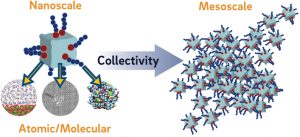
Polymer-grafted nanocrystals (NCs): Solid-state NCs—here, composed of metal and metal-organic frameworks (MOFs)can be synthesized into various anisotropic shapes by controlling crystallographic nucleation and growth. When grafted with polymers, NCs assemble into a rich variety of non-close-packed architectures that are phases unto themselves and exhibit unique optical and catalytic properties.
Natural and synthetic proteins: Supramolecular protein arrays can be assembled through both chemically and genetically controlled molecular-level interactions. Reversible metal coordination, disulfide bonding, and synthetic linkers minimize the burden of designing and engineering extensive protein surfaces, while enabling the construction of porous and gel-like materials that are modular, responsive to external stimuli, and retain biological function.
Magnetoelectric Materials and Functional Interfaces
Magnetoelectric (ME) materials are at the frontier of materials research due to a variety of non-trivial coupling mechanisms interweaving electric and magnetic degrees of freedom. Their properties are in many aspects superior over today’s spintronic materials where the emphasis is on creating and manipulating spin-polarized (but nevertheless dissipating) electric currents. Controlling ME coupling on the nanoscale enables unprecedented possibilities to tailor functional materials and complex nanostructures, thus opening unique perspectives for novel technologies where electrically controlled magnetism offers innovative approaches for device operation.
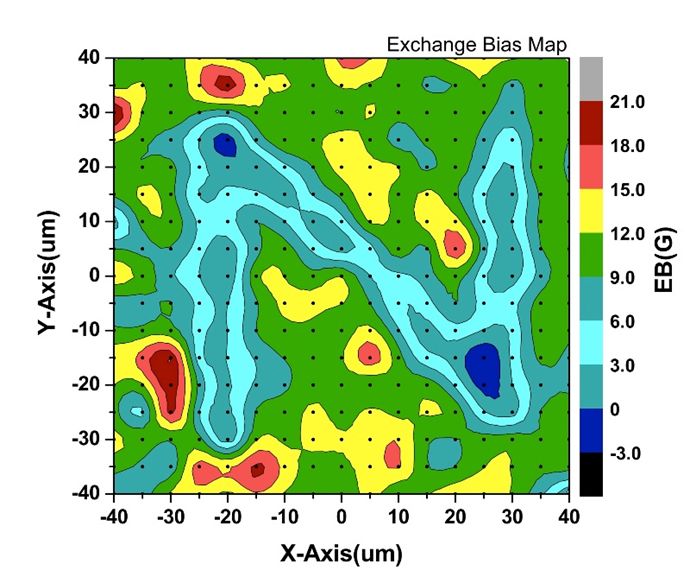
The primary objective of this IRG is to understand magnetoelectricity in complex functional heterostructures and enable its unconventional use beyond the realm of static equilibrium and linear response. This objective will be achieved through interdisciplinary investigations of ME antiferromagnets, complex oxide thin films, ME multiferroics, and molecular-level magnetoelectrics. They will be implemented in new functional heterostructures and subject to external stimuli giving rise to responses in a hitherto unexplored parameter space. The expected research outcomes are new insights in the ME coupling and spin dynamics of magnetoelectrics, development of novel voltage-controlled ultra-low power spintronic devices, and harnessing voltage-controlled entropy changes in conceptually new materials design.
Pluperfect Nanocrystal Architectures
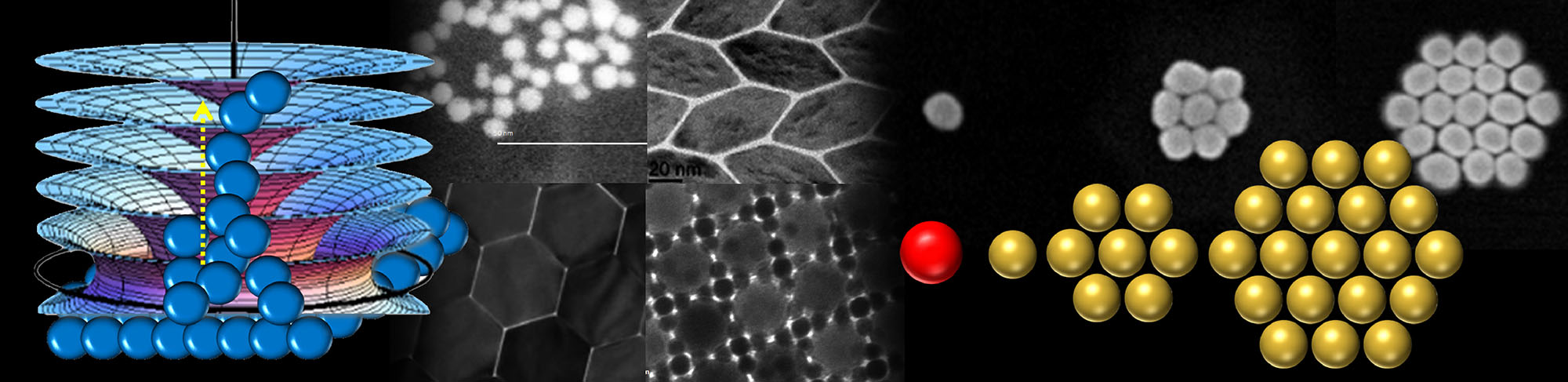
Pluperfect Nanocrystal Architectures aims to create, characterize, and control the architectures of nanocrystal-based materials that transcend the structure and function of translationally periodic nanocrystal assemblies that have dominated the research landscape to date. In creating synthetic materials, we typically aim for perfection, preparing pure and periodic materials that are easy to model and measure. However, an opportunity exists for the self- and directed-assembly of nanocrystals that break from perfection by exploiting additional degrees of design freedom that are unavailable in atomic systems. The team will explore combinations of surface chemistry and geometrical cues that trigger and direct the formation of compositional defects, aperiodicity, and heterogeneity in nanocrystal assemblies in “hard” fabricated and “soft” liquid crystal templates. Targeted imperfection will unlock a palette of configurable and reconfigurable architectures with new functions that are not possible in traditionally “perfect” assemblies. In this way we aspire to create pluperfect nanocrystal architectures, i.e., complex, beyond-perfect, or literally “more than perfect” nanocrystal assemblies, that impart novel optical and magnetic responses.
Northwestern University Materials Research Science and Engineering Center (2017)
The Northwestern University Materials Research Science and Engineering Center (NU-MRSEC) advances world-class materials research, education, and outreach via active interdisciplinary collaborations within the Center and with external partners in academia, industry, national laboratories, and museums, both domestically and abroad. The intellectual merit of the NU-MRSEC resides primarily within its interdisciplinary research groups (IRGs) and seed-funded projects that promote dynamic evolution of Center research foci. IRG-1 entitled “Reconfigurable Responses in Mixed-Dimensional Heterojunctions” explores nanoelectronic materials systems that simultaneously process and store information to provide functionality exhibited by more complex biological systems such as neural networks. IRG-2 entitled “Functional Heteroanionic Materials via the Science of Synthesis” brings together experts in bulk crystal and thin-film synthesis, computational design of materials, and advanced characterization to expand a relatively unexplored class of materials with unconventional combinations of properties such as high electrical conductivity and low thermal conductivity.
Showing 1041 to 1050 of 2691