The Materials Research Science and Engineering Center at University of California, Santa Barbara is focused on classes of material that are both chemically and structurally complex with a significant portion of the effort related to interfaces, including those between organic and inorganic materials. IRG 1, Biomaterial Microstructures, has evolved from the Complex Fluids IRG of the previous NSF MRSEC, and carries out the enabling science for the development of biomaterial microstructure and solution aggregates that perform biological or biomimetic functions and serve as model systems for hybrid devices. IRG 2, Solution Synthesis of Inorganics at Molecular and Atomic Interfaces studies the roles of structure-directing molecules and surfaces in the hierarchical organization of inorganics synthesized from solution at low temperatures. IRG 3, Mesoscopic Macromolecular Structures, develops the principles for synthesis and processing of novel macromolecular structures that are heterogeneous on a mesoscopic scale and exploit these structures to control properties for electronic, optical and biotechnological applications. IRG 4, Strongly Non-equilibrium Phenomena in Complex Materials, applies atomic-scale microscopies and advanced scientific computing to bear on a diverse, but closely related, set of problems concerning deformation, failure, and structural reorganization of complex materials. The Center includes significant shared facilities located in a new Materials Research Laboratory building recently completed to house the Center.
The educational activities include development of evaluation methods to measure the degree of success that their outreach programs are having. Outreach projects include Santa Barbara City College Materials Interns; Research Interns in Science and Engineering; Research Experience for Teachers; and UCSB Scienceline, an internet link with Santa Barbara County science teachers and students, impacting both under-represented minority and female students at the college, and pre-college levels. Last year, these programs reached 28 undergraduates (12 women; 2 under-represented minorities) and 5800 pre-college students (3000 women; 4000 under-represented minorities). This is an interdisciplinary MRSEC with 31 faculty members, 15 post-doctoral associates and 24 graduate students from programs in Materials Science and Engineering, Chemical Engineering, Physics, Chemistry, Electrical Engineering, Geology, Mechanical Engineering, Molecular, Cellular and Developmental Biology and Molecular Genetics and Biochemistry. Professor Anthony Cheetham directs the MRSEC.
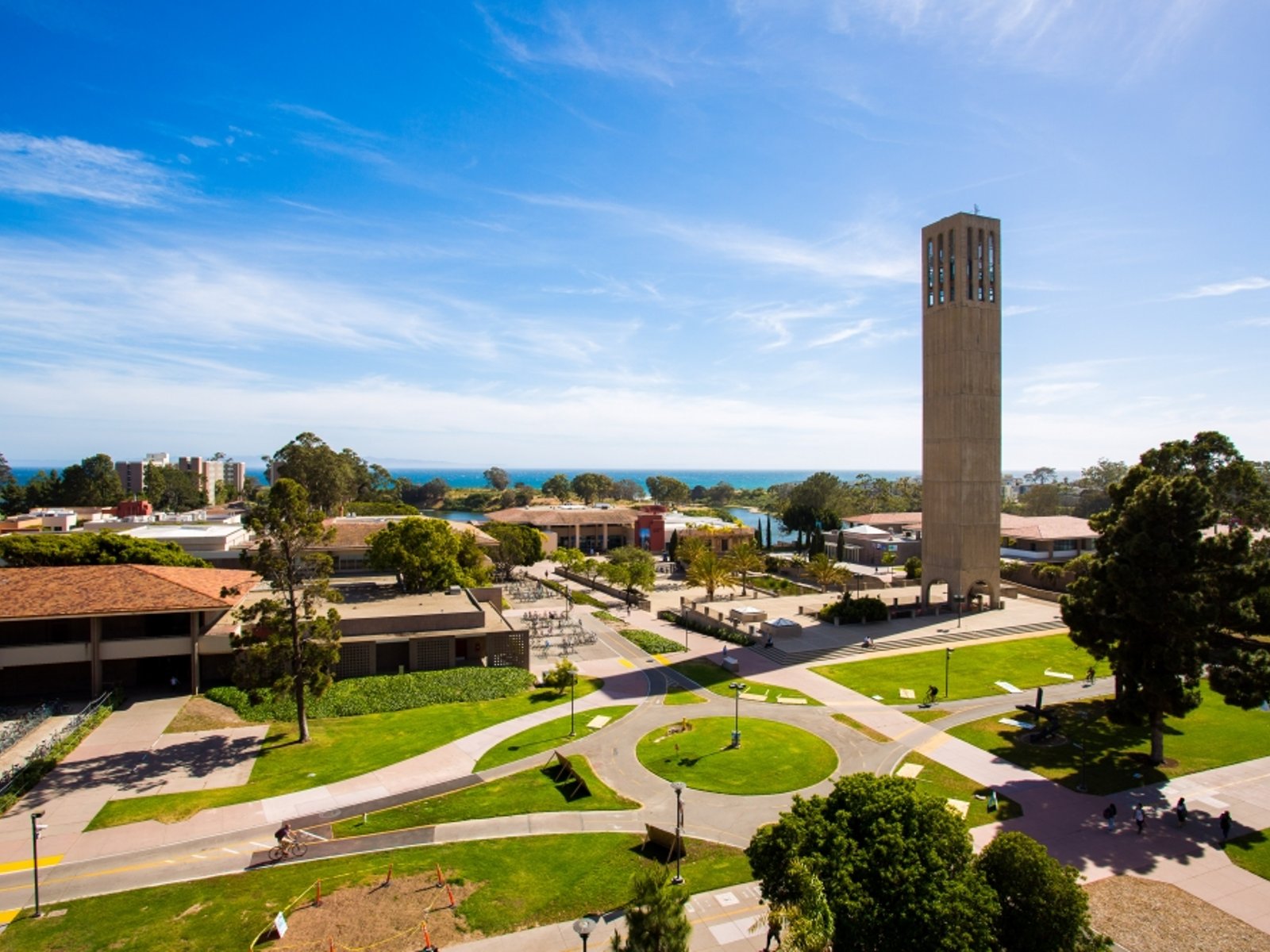
Credit: Courtesy UC