Highlights

Deactivating Viruses Using Self-Assembling DNA Origami Shells
May 17, 2021
Big Idea: Synthetic Materials Biology, Understanding the Rules of Life

Deactivating Viruses Using Self-Assembling DNA Origami Shells

S. Fraden1, G. Grason2, R. Hayward2, M. Hagan1, W. Rogers1, C. Santangelo2,H. Dietz3 1Brandeis University, 2U. Mass. Amherst, 3Tech. Universität München
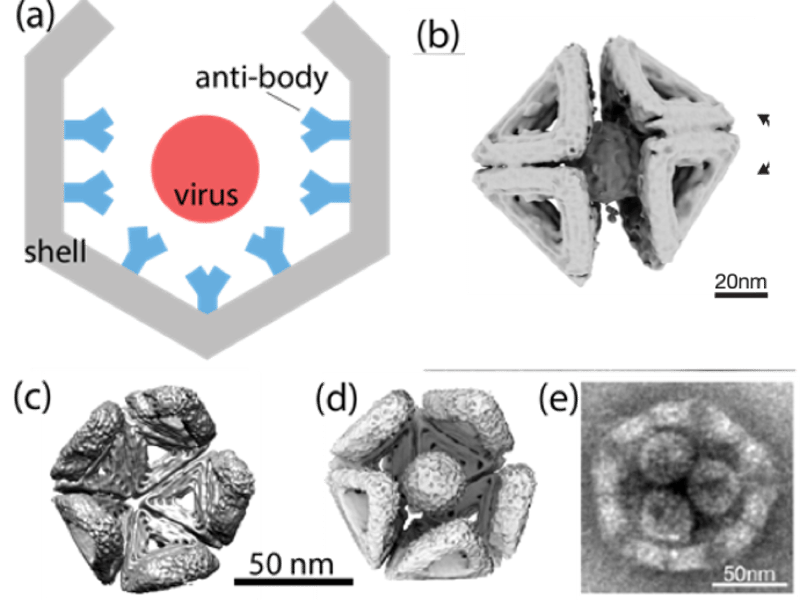
Researchers have developed programmable DNA origami building blocks that self-assemble into icosahedral shells, with programmable sizes. The shells can be functionalized with antibodies, enabling them to engulf and neutralize natural viruses.
Development of New Active Materials
May 17, 2021
Big Idea: Understanding the Rules of Life

Development of New Active Materials

1,2Z. Dogic ,1G. Duclos, 1S. Fraden and  1B. Goode 1Brandeis University, 2UCSB
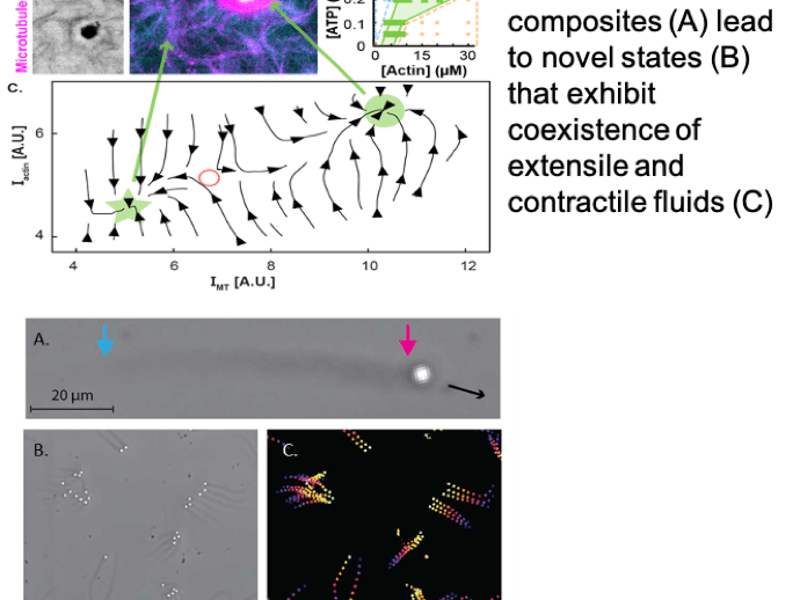
Active materials are systems that are driven by nano scale components that consume energy and produce work. In this work, two new biochemically powered active materials were developed with unique properties that will allow for a systematic exploration of emergent non-equilibrium phenomenology.
Large Variations in Structure and Chemistry in the Near-Boundary Region
Single-Defect Phonons Imaged by Electron Microscopy
May 17, 2021
Big Idea: Machine Learning / Artificial Intelligence, Materials Under Extreme Conditions, Mid-scale Research Infrastructure

Single-Defect Phonons Imaged by Electron Microscopy

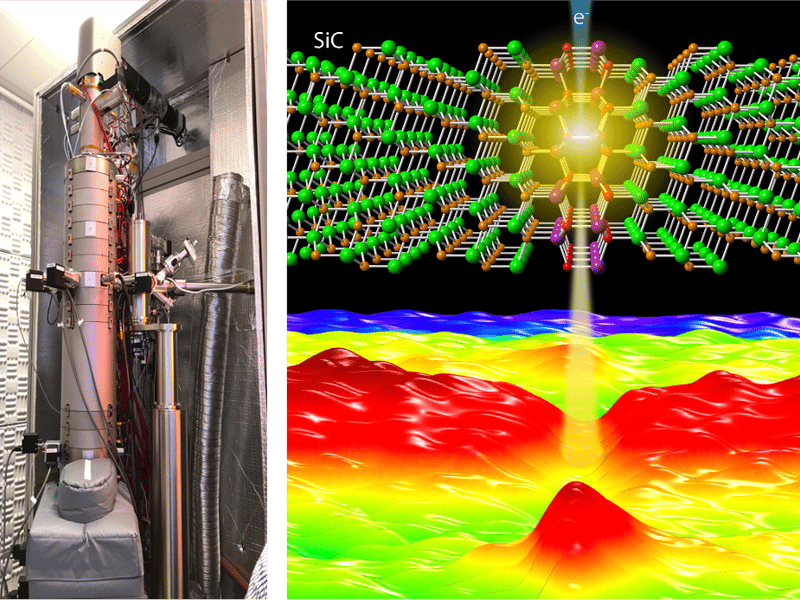
Based on the new capabilities of the Nion HERMES 200, the UCI MRSEC team (Pan and Wu) demonstrated, for the first time, exotic atomic vibrations localized at a single stacking fault in cubic SiC, showing by an energy shift of 3.8 meV and an obvious intensity modulation of the acoustic phonon mode.
Hierarchical Assembly of Structurally Oriented Metal-Organic Frameworks as Novel Ionic Conductors
May 17, 2021
Big Idea: Materials Under Extreme Conditions

Hierarchical Assembly of Structurally Oriented Metal-Organic Frameworks as Novel Ionic Conductors

Chen, Pascal, Meng; University of California San Diego
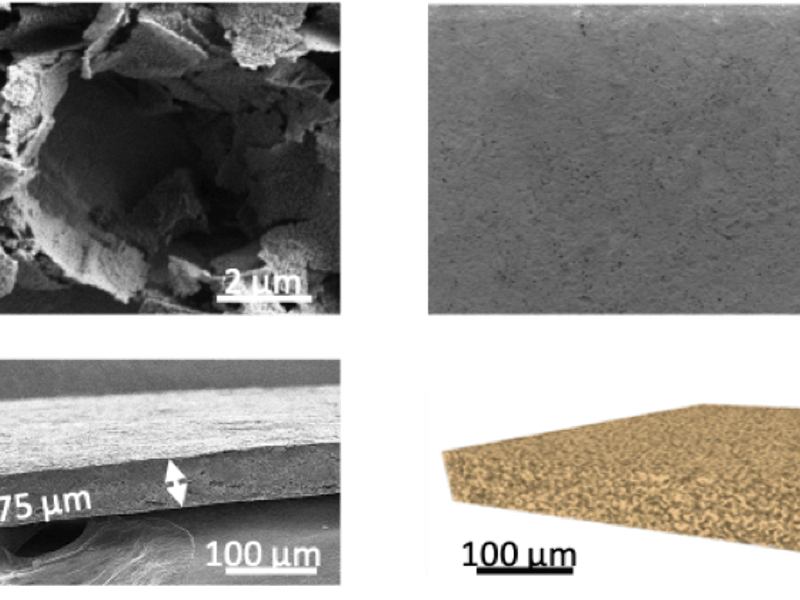
Liquefied gas electrolytes enable low temperature operation due to their low freezing point. However, their high vapor pressure poses a safety concern. Can confinement of these gas electrolytes in a nanoscale material enhance electrochemical performance while minimizing the hazards?
Research Immersion in Materials Science & Engineering (RIMSE) Spring Break Research Experience
May 17, 2021
University of California - San Diego

Research Immersion in Materials Science & Engineering (RIMSE) Spring Break Research Experience

Brydges, Sailor; University of California San Diego
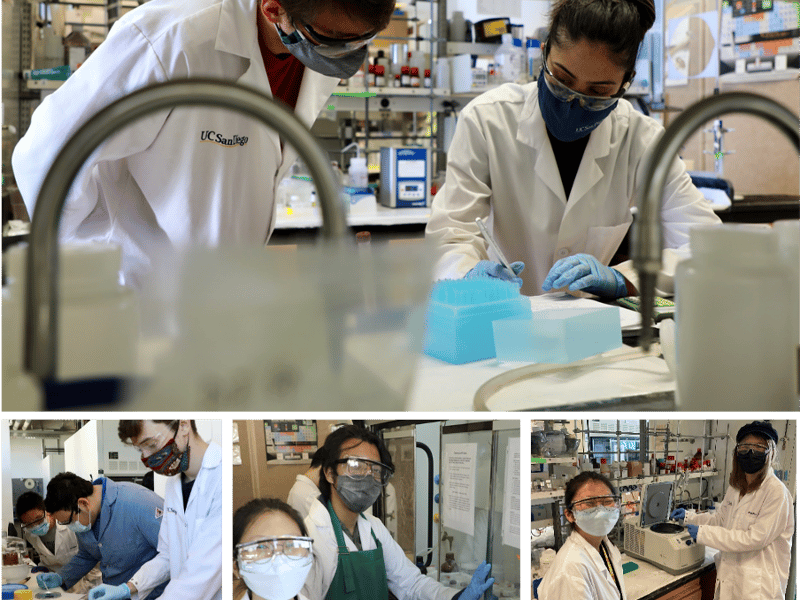
In response to a campus-wide initiative to prevent a surge in COVID19 infections, the Center piloted a special (in-person) RIMSE Spring Break Research Experience to encourage undergraduate students to remain on campus during the 2021 Spring Break.
Complementary Methods for Characterizing Excitations in Hybrid Materials
May 17, 2021
Big Idea: Quantum Leap

Complementary Methods for Characterizing Excitations in Hybrid Materials

Gundlach, Jungfleisch, University of Delaware

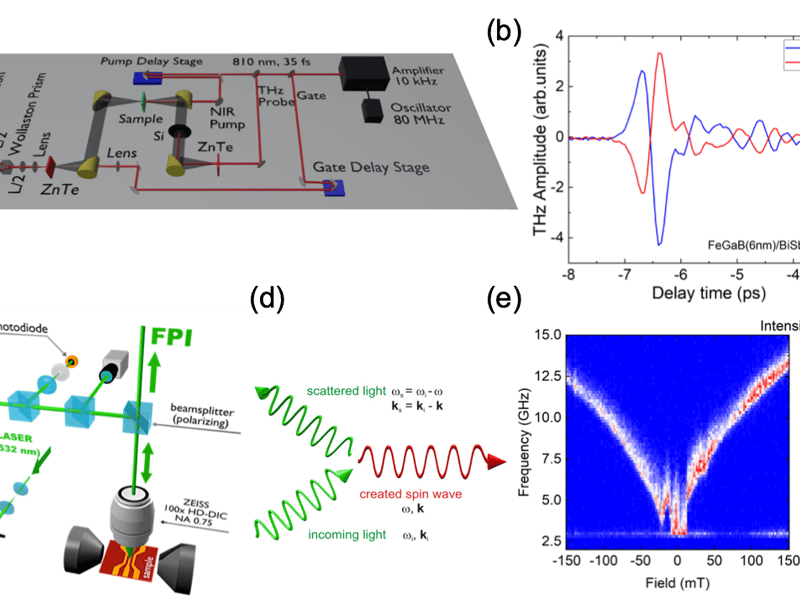
The UD MRSEC team is developing and employing a suite of novel experimental characterization techniques that provide important insights into hybrid materials, in which unique properties arise due to interactions between material constituents.
Science and Cooking: Highlighting Indigenous Scientific Innovations and Traditions
May 17, 2021
Big Idea: NSF INCLUDES

Science and Cooking: Highlighting Indigenous Scientific Innovations and Traditions

David A. Weitz (Physics and Applied Physics) and Michael Brenner (Applied Math)
The Harvard MRSEC is partnering with Navajo Technical University to develop robust pathways to scientific careers for Native American students. The partnership strives to bring to the forefront scientific traditions and innovations of indigenous peoples.
Liquid-induced Topological Transformations of Cellular Microstructures
May 17, 2021
Big Idea: Future of Work at the Human-Technology Frontier

Liquid-induced Topological Transformations of Cellular Microstructures

Joanna Aizenberg (Chemistry and MatSci) and Katia Bertoldi (MechE)
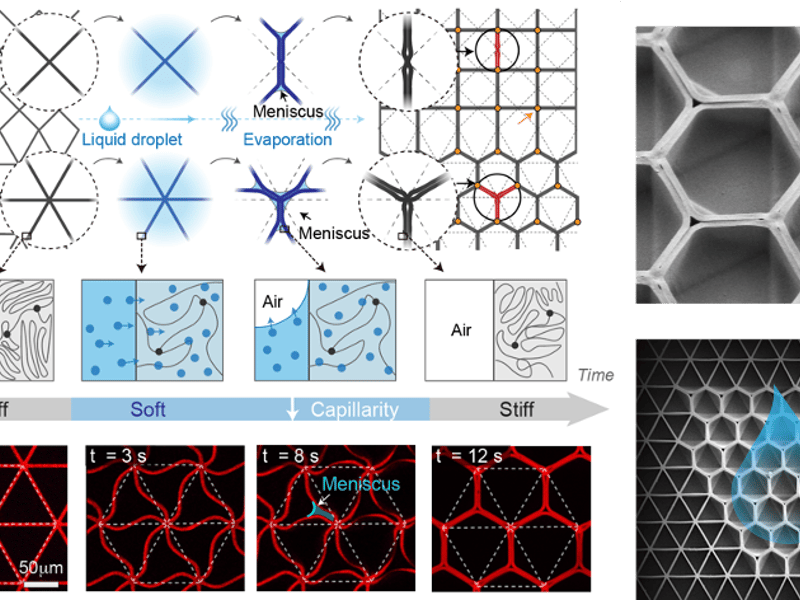
A team at the Harvard MRSEC led by Aizenberg and Bertoldi has developed a dynamic design strategy to achieve topological transformations of two-dimensional polymeric cellular lattices in a reversible and controllable manner through exposure to different liquids.
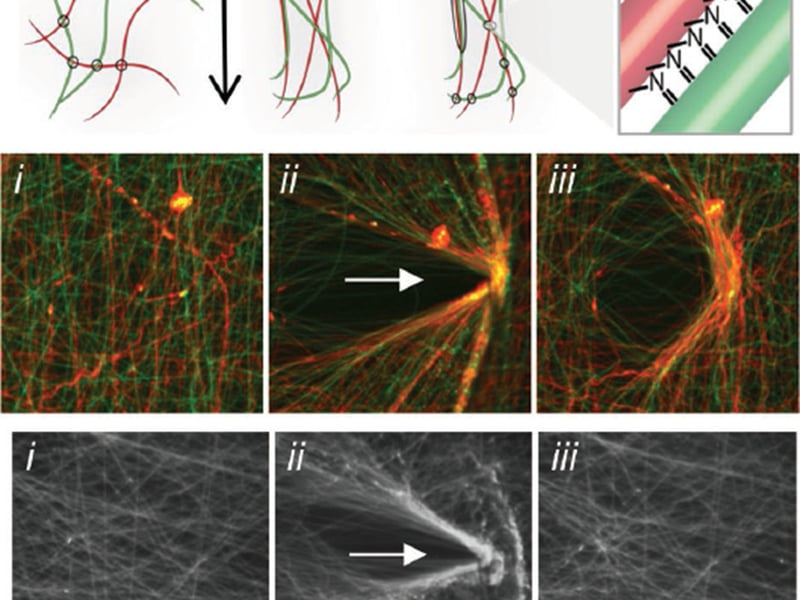
Figure: fibers of  hyaluronic acid modified with either hydrazides (red) or aldehydes (green).
Figure: fibers of hyaluronic acid modified with either hydrazides (red) or aldehydes (green).
May 12, 2021
University of Pennsylvania

Mechanochemical Adhesion and Plasticity in Multifiber Hydrogel Networks

Matthew Davidson, Ehsan Ban, Vivek Shenoy, Jason Burdick, University of Pennsylvania

Burdick and Shenoy have designed synthetic actively remodeling networks using electrospun fibers containing reactive groups that form covalent crosslinks at sites where fibers are brought together by localized strains. This approach uses the fibers of  hyaluronic acid modified with either hydrazides (red) or aldehydes (green).