Hierarchical Engineering of soft materials: From multi-phase coexistence to synthetic nucleosomes (SuperSeed 8)
Principal Investigators
Howard A. Stone (Mechanical & Aerospace Engineering)
Mikko Haataja (Mechanical & Aerospace Engineering)
Andrej Košmrlj (Mechanical & Aerospace Engineering)
Seed start and end dates: March 1, 2017 - February 28, 2019
The next-generation materials will involve integration of self-assembly at multiple length scales and the ability to use experiments and theory, including continuum mechanics, physical chemistry, statistical physics, mesoscale modeling approaches and molecular-scale simulations, to understand and design the requisite structure-function relationships. For example, in the biological sciences it has been recognized recently that microphase separation can occur in an organized manner to allow multiphase coexistence, even in the absence of membranes. Furthermore, there are examples in the recent literature highlighting novel physics and structures made possible by manipulating the chemistry, swelling, wrinkling, and folding of thin soft materials. Also, this Seed has recently discovered novel composite structures formed by the wrapping and packing of spherical particles by long flexible fibers. Haataja, Košmrlj, and Stone proposed a Seed project highlighting hierarchical soft components built around strengths in soft materials science and engineering in the Princeton community, which has the potential to initiate a new, unique, and forward-looking IRG. Indeed, this activity led directly to preparation of a new IRG.
SuperSeed-8 Highlights
2019 (a) Phase behavior of multi-component liquid mixtures, (b) Electrostatically-driven spontaneous fiber wrapping
Materials Driven by Light
Addresses light-matter interactions that lead to material properties not accessible in equilibrium. Phases and ordered states accessed via light-induced perturbations to energy landscapes, topological material behavior enabled by optical excitation, and formation of exotic quantum phases are explored to provide new understanding of and control over optically responsive materials. Research advances in this IRG are expected to lead to new understanding of material behavior accessible and controllable using temporally structured light, with potential applications in a broad range of technologies for communications and information processing.
De Novo Synthetic Protein Modules for Light-Capture and Catalysis
 Senior Investigators: J. Kent Blasie & P. Leslie Dutton
IRG co-leaders; William F. DeGrado, Bohdana M. Discher, Jeffrey G. Saven, Michael J. Therien, & A. Joshua Wand
Senior Investigators: J. Kent Blasie & P. Leslie Dutton
IRG co-leaders; William F. DeGrado, Bohdana M. Discher, Jeffrey G. Saven, Michael J. Therien, & A. Joshua Wand
IRG-4 draws on the rich biological resource of atomic-level structures & functional mechanisms to guide design & synthesis of novel proteins as modular nano-scale materials. These adaptable self-assembling modules will be constructed to couple light-energy to conservative oxidative & reductive catalysis. These modular designed proteins have no peers in material science.
Filamentous Networks and Structured Gels

Senior Investigators:
Shu Yang & Arjun G. Yodh
IRG Leaders; Christopher S. Chen, John C.Crocker, Paul A. Janmey, Tom C. Lubensky, Karen I. Winey
IRG-1 will draw on expertise from five departments & collaborate to explore & understand the properties of filamentous networks. The goal is to design & synthesize responsive network materials. The ultimate aim is to create a new class of materials & associated technologies by combining knowledge about filamentous networks with control of responsive gels or gel elstrongents.
Materials Research Science and Engineering Center at UCSB (2011)
The Materials Research Science and Engineering Center at the University of California, Santa Barbara, also referred to as the Materials Research Laboratory (MRL) serves as an innovation engine for discoveries in new materials. The MRL is home to a scientific and engineering community that creates new collective knowledge and fosters the next generation of scientific leaders. By enabling modern technological advances, the high-impact research conducted within the NSF MRSEC program at UCSB has enormous societal payoff and is shaping the future of technology, the environment, and medicine.
The MRSEC at UCSB addresses fundamental problems in materials science and engineering that are critical to the future economic growth of the United States. Current areas of interest include the support of interdisciplinary and multidisciplinary materials research and education of the highest quality in the areas of self-assembling materials for new adhesives and materials for hostile biological and underwater environments inspired by the common mussel. By examining the unique properties of complex oxides prepared with unprecedented perfection and purity, the MRSEC also aims to develop new microelectronic materials that complement and even out-perform existing Si-based systems. New strategies for materials that will significantly advance energy and environmental applications are a key focus of the MRSEC at UCSB. Studies designed to open up the science and engineering of robust and stable two-phase nanoscopic materials with unprecedented magnetic, radiation-resistance and thermal transport properties will push the US to the forefront of these technologies. A prime driver behind the research activities of the UCSB Materials Research Laboratory is to address problems of a scope and complexity requiring the advantages of scale and interdisciplinarity that can only be provided by a campus-based research center.
Outstanding Shared Experimental Facilities play a fundamentally important role in the research of all MRL programs and additionally, broadly impact the materials research community at UCSB, local and national companies, and government laboratories. Expanding these highly successful facilities and technology outreach programs are a major focus of future growth. An innovative approach to engaging with industry allows the MRSEC to develop productive partnerships which have resulted in numerous start-up companies and collaborative programs with major corporations. These partnerships will continue to be an economic engine for California and the United States. The MRSEC is also committed to maintaining the prominence of materials research in the United States through an integrated international outreach program that offers a portfolio of opportunities for 2-way exchange of knowledge and researchers. Recognizing the importance of Education and Human Resources, the MRSEC operates an ambitious and award winning effort with a focus on K-12, and teacher development, including specific programs designed to encourage members of underrepresented groups to consider careers in STEM disciplines. The goal is to ignite curiosity through hands-on experience, thereby fostering the next generation of scientists and engineers.
Active Interfaces Between Highly-Deformable Nanomaterials
This IRG will transform understanding of the link between deformations of 2D heterostructures and molecular assemblies, and the resultant changes in electronic, chemical, and optical properties. It will explore a novel regime where non-uniform deformations are large compared to material dimensions, resulting in emergent properties and functionalities.
UChicago Materials Research Center (2008)
The Materials Research Science and Engineering Center (MRSEC) at the University of Chicago supports innovative research to produce the design principles for the next generation of materials. The research is focused on investigating materials formed far from equilibrium, exploring new paradigms for material fabrication and response, and exploiting feedback between structure and dynamics. Senior investigators come from seven Departments and five Institutes of University of Chicago and two Divisions at the neighboring Argonne National Laboratory. In addition to training a diverse group of graduate and undergraduate students, the Chicago MRSEC brings science inquiry experiences to underserved students in neighboring communities on Chicago's South Side including programs for students and teachers and after-school Science Clubs. The MRSEC provides summer research opportunities to undergraduate students from all over USA. As part of its outreach to the general public, the MRSEC collaborates with Chicago's Museum of Science and Industry, the Exploratorium in San Francisco, and SciTech in Aurora, IL to develop materials science exhibits and to introduce graduate students to museum-exhibit development. The MRSEC is committed to increasing the Center diversity as reflected in the significant participation by women in the Center's investigators and leadership. The MRSEC has international collaborations with universities in Chile and Holland.
Research at this MRSEC is organized in four Interdisciplinary Research Groups (IRGs): (i) The IRG on Jamming and Slow Relaxation in Materials Far From Equilibrium considers the factors causing flowing systems to become rigid and trapped far from equilibrium. Its goal is to pursue new types of materials processing to exploit effects of aging and memory common to jammed and glassy materials. (ii) The IRG on Dynamic Transitions of Material Sheets focuses on the dynamics of interfaces, such as on the surface of a droplet or a membrane. The goal is to use the instabilities at interfaces to shape materials to create structure where explicit shaping is impractical. (iii) The IRG on Rational Design of Nanoparticle and Molecule-Based Functional Materials develops tools to create new classes of materials based on the large assortment of nanometer-sized particles now available. Goals include understanding the fundamentals of nano-particle self-organization to tune array properties. (iv) The IRG on Macroscopic Quantum Coherence seeks to establish control of materials by addressing fundamental issues in quantum materials engineering. The goal is to create macroscopically-coherent states by focusing on systems that can be finely tuned to enable precise control of the complex quantum dynamics for the creation of useful devices.
Controlled Function in Inter-dimensional Materials
IRG Leaders: Cherie R. Kagan & James M. Kikkawa
Senior Investigators; Marija Drndić, Nader Engheta, Jennifer Lukes, Christopher B. Murray
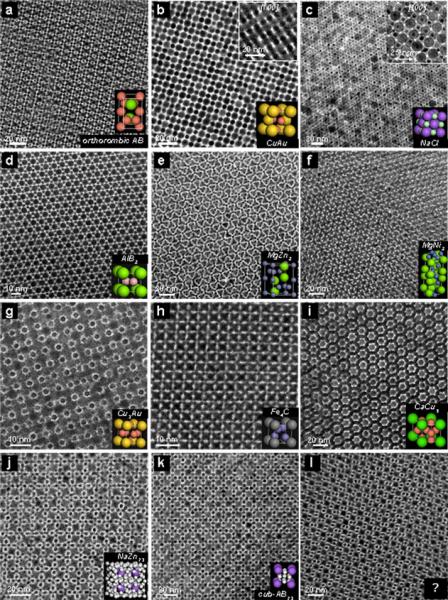
IRG-4 will identify, understand, and ultimately exploit the novel collective interactions that arise in highly-ordered, multi-component materials assembled at the nanoscale. These materials are “interdimensional” in that complex interactions between low-dimensional constituents (nanoparticles) organized into higher-dimensional assemblies give rise to surprising and even transformative characteristics. All of the matter in these new solids is within a few nanometers of an interface, creating strong interplay between building blocks whose collective responses are then shaped by the long-range order of their interfacial network. In analogy to conventional atomic solids, ordering in multi-component solids with nanocrystal superlattices (NSLs) can evolve pairwise local interactions into long-range influences that couple photonic, phononic, magnetic, and electronic responses. The IRG will focus on the modular assembly of two or more types of nanostructures into a wide range of multi-component materials where a high degree of order can transform the properties of the assembly. Inter-dimensional material architectures include families of highly ordered binary nanocrystal superlattices (BNSLs) and quasicrystals, precise-number nanocrystal clusters formed by templated assembly, and the first co-crystallization of nanorods and nanospheres. These structural motifs accommodate a wide variety of semiconducting, metallic, phosphorescent, semimetallic, and magnetic nanocrystals, tunable in size (1-100 nm), shape (spheres, rods, cubes, 3- and 6-sided prisms), and surface functionalization.
Materials Research Science and Engineering Center at UCSB (1996)
The Materials Research Science and Engineering Center (MRSEC) at the University of California Santa Barbara supports research in the area of complex materials in four interdisciplinary groups. One group investigating complex fluids is focused on the creation and control of biomolecular materials. The emphasis is on biomolecular materials whose microstructure can be controlled for possible applications to the development of heat-proof proteins, artificial tissue, novel drug delivery systems, and biogels. A second group investigating solution synthesis of inorganics at molecular and atomic interfaces seeks to understand basic mechanisms of these processes and to explore the synthesis of new materials with applications to electro-optics, catalysis, and biotechnology. Heterogeneous polymeric structures are investigated by a third group. These structures include heterogeneous block copolymers for potential biomedical applications and network blends for polymer light-emitting electrochemical cells. Strongly non-equilibri um phenomena in complex materials are investigated by a fourth group that has a strong theoretical component focused on issues of practical importance in the materials area with a common theme of nonlinearity. Planned studies include fundamental mechanisms of friction, dynamics of fracture, including both conventional fracture and seismic events, the structural evolution of thin films, and phase transitions in reacting polymers. The MRSEC supports the development, operation and maintenance of shared experimental facilities for materials research. It provides seed funding for exploratory research and emerging areas, and fosters research participation by undergraduates. The MRSEC has strong industrial links and an educational outreach program. The educational program includes the Science Partnership for School Innovation and an internship program involving instructors and students from a local city college. The Center currently supports 30 senior investigators, 10 postdoctoral research associates, 5 technicians or other professionals, 35 graduate students, and 25 undergraduates. The MRSEC is directed by Professor Anthony K. Cheetham. %%% The Materials Research Science and Engineering Center (PARSEC) at the University of California Santa Barbara supports research in the area of complex materials in four interdisciplinary groups. One group investigating complex fluids is focused on the creation and control of biomolecular materials whose microstructure can be controlled for possible applications to the development of heat-proof proteins, artificial tissue, and novel drug delivery systems. A second group investigating synthesis of inorganics at molecular and atomic interfaces seeks to understand basic mechanisms of these processes and to explore the synthesis of new materials with applications to electro-optics, catalysis, and biotechnology. Heterogeneous polymeric structures are investigated by a third groupwith potential biomedical applications and polymer light-emitting electrochemical cells. Strongly non-equilibrium phenomena in complex materials are investigated by a fourth group that has a strong theoretical component focused on issues of practical importance in the materials area. Planned studies include fundamental mechanisms of friction, dynamics of fracture, including both conventional fracture and seismic events, the structural evolution of thin films, and phase transitions in reacting polymers. The MRSEC supports the development, operation and maintenance of shared experimental facilities for materials research. It provides seed funding for exploratory research and emerging areas, and fosters research participation by undergraduates. The MRSEC has strong industrial links and an educational outreach program. The educational program includes the Science Partnership for School Innovation and an internship program involving instructors and students from a local city college
Columbia Center for Precision Assembly of Superstratic and Superatomic Solids (2014)
New materials are typically created using the most basic building blocks of matter - atoms of the different elements in the periodic table. The Center for Precision Assembly of Superstratic and Superatomic Solids -- led by Columbia University in partnership with City College of New York, Harvard University, Barnard College, and the University of the Virgin Islands -- seeks to create novel materials from two new types of building blocks: atomically thin sheets stacked into layered structures; and precisely defined clusters of atoms linked together into bulk solids. The Center research will provide better understanding of low-dimensional materials and their interactions. This understanding will aid in the design and discovery of new materials with better applications in electronic/magnetic devices, optoelectronic systems, and thermoelectrics. The Center provides interdisciplinary graduate research training and opportunities for undergraduate research; includes research partners in industry, national laboratories, and internationally; and will build new shared instrumentation facilities available to the research community. The Center includes a comprehensive program to improve and support science education through partnerships with three local K-12 schools, and a new pilot program at the Columbia School of Journalism.
Showing 991 to 1000 of 2691