Highlights
May 22, 2020
Northwestern University
Northwestern University Center for Atom Probe Tomography
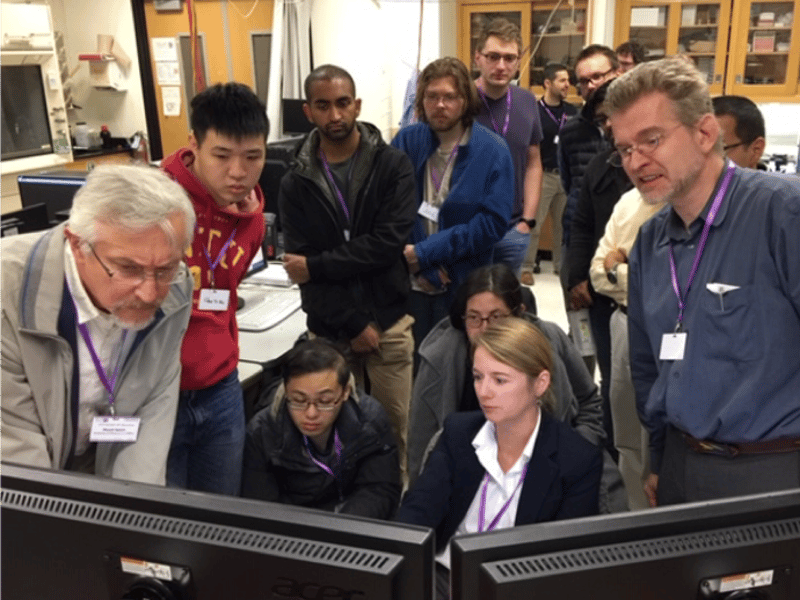
Northwestern University MRSEC Shared Facilities play a central role in education and outreach programs. For example, the Northwestern University Center for Atom Probe Tomography recently hosted a two-day workshop to offer hands-on user training in the latest methods in atom probe tomography including materials analysis and visualization tools.

May 22, 2020
Northwestern University
Facilitating Technology Transfer and Commercialization
In partnership with the Northwestern University Kellogg School of Management, McCormick School of Engineering, Pritzker School of Law, and Innovation and New Ventures Office, the Northwestern University MRSEC fosters a comprehensive innovation ecosystem that allows fundamental research to be transferred to the market via startup companies.

May 22, 2020
Northwestern University
Professional Development Workshops: Supporting Women in STEM in Tanzania
The Northwestern University MRSEC sponsors the Women Supporting Women in the Sciences initiative, which is a partnership with the University of Dodoma and the Nelson Mandela African Institution for Science and Technology in Tanzania. This initiative develops professional development workshops for female STEM students.

May 22, 2020
Northwestern University
Northwestern Prison Education Program
The Northwestern Prison Education Program is an initiative to provide a high-quality liberal arts and STEM education to incarcerated students in Illinois in partnership with Oakton Community College and the Illinois Department of Corrections. Responding to the crisis of mass incarceration, NPEP fills a vital need by being the only degree-granting program in the State of Illinois with a full liberal arts curriculum including STEM courses for incarcerated students.
May 22, 2020
Northwestern University
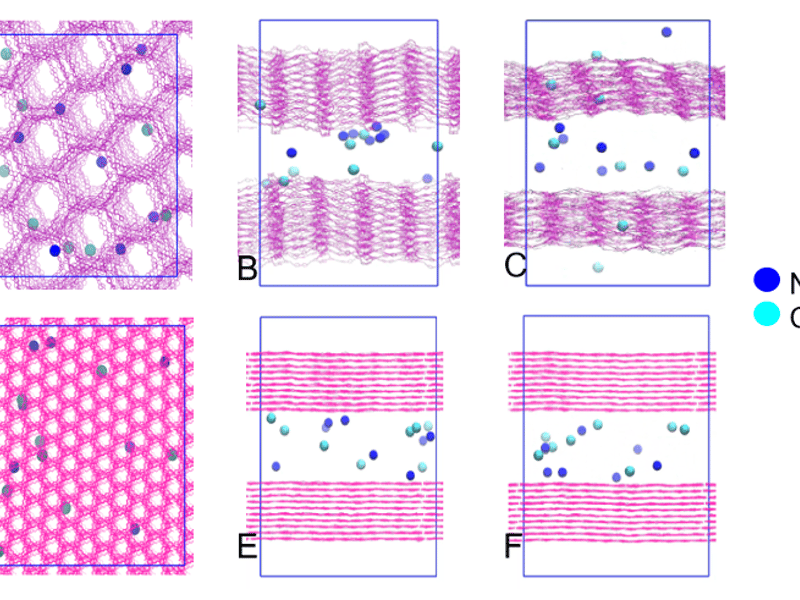
Improving Water Desalination with Molecularly Precise Porous Membranes
Through molecular dynamics simulations, the Northwestern University MRSEC Super-Seed has studied the dependence of pore size dimension on the desalination properties of COF membranes.
May 22, 2020
Northwestern University
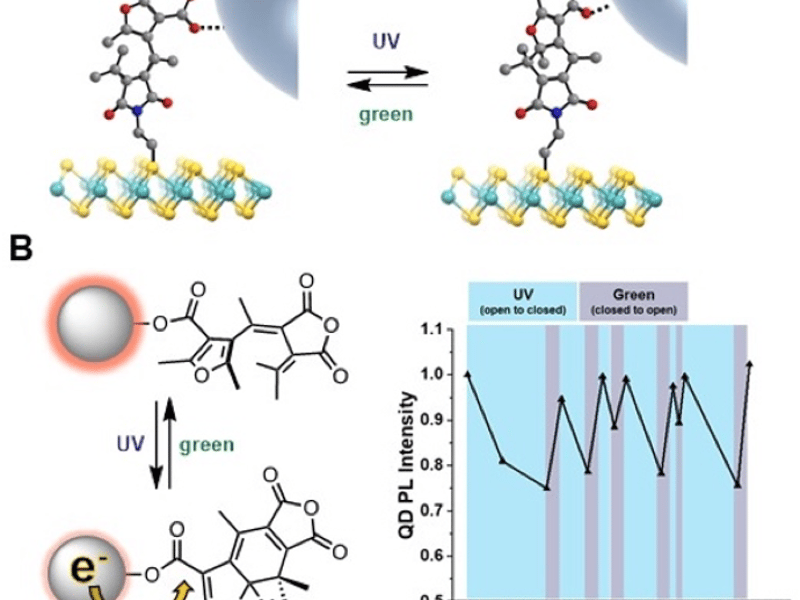
Ultrafast Photoswitches for Reconfigurable Mixed-Dimensional Heterojunctions
This Northwestern University MRSEC seed project is designing and building molecules to bridge the QD-MoS2 interface, thus enabling control over this ultrafast charge transfer. These photoswitchable molecules can be rapidly toggled between two different states using different colors of light.
May 22, 2020
Northwestern University
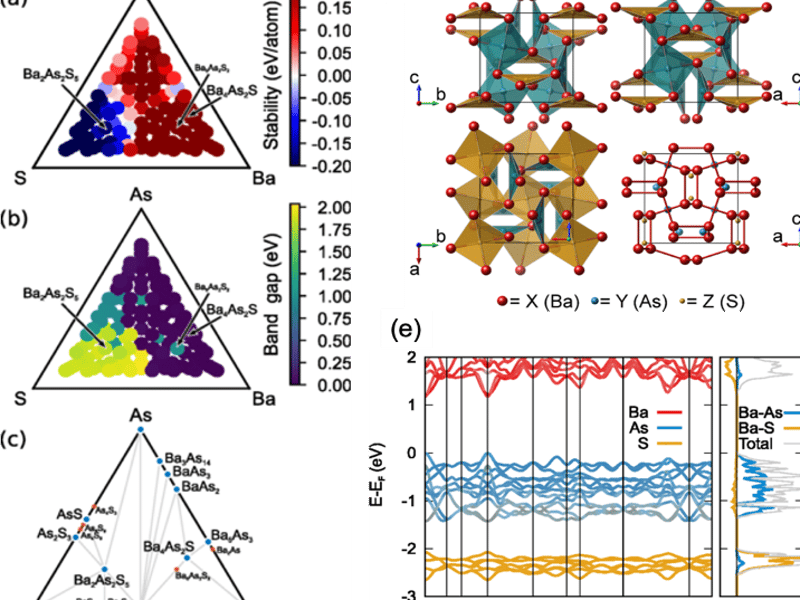
Machine-Learning Guided Discovery of Ternary Heteroanionic Semiconductors
Recently, novel methods based on materials informatics and machine-learning models have emerged to assist the search for materials with improved properties in industrially relevant applications. To apply this approach in heteroanionic materials discovery, NU-MRSEC IRG-2 has reported a computational investigation of a series of ternary HetMs with tunable band gaps from machine-learning and crystal structure prediction.
May 22, 2020
Northwestern University
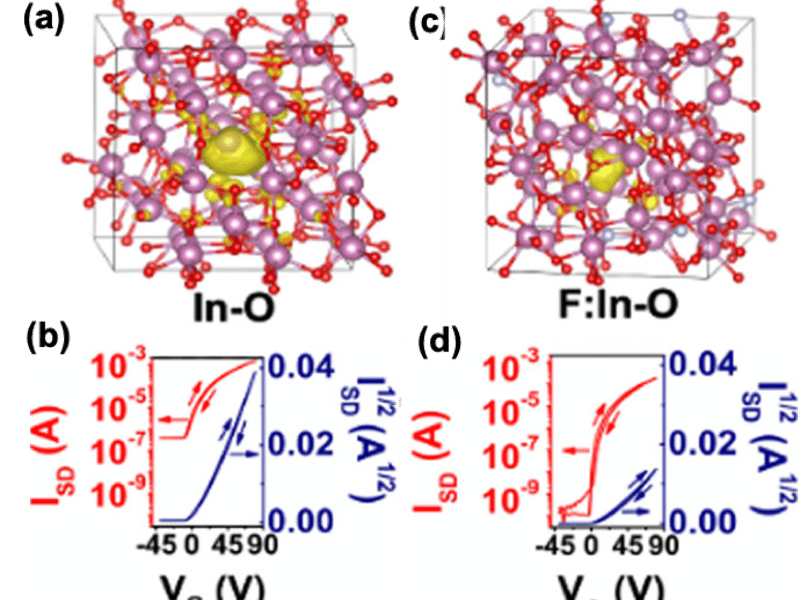
Enhancing the Electronic Properties of Indium Oxide via Heteroanionic Doping
Heteroanionic doping of metal oxide semiconductors enables unique optoelectronic properties as a result of the tunable bonding and variable charge transport properties imparted by diverse anion chemistry. Here the effects of fluoride (Fˉ) doping in an archetypical metal oxide semiconductor, indium oxide (In-O), is studied.
May 22, 2020
Northwestern University
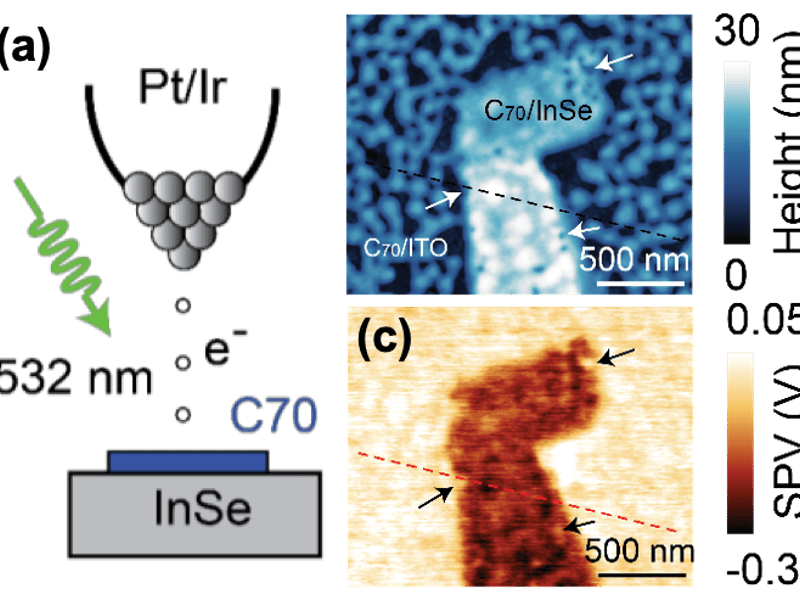
Mixed-Dimensional InSe-Organic van der Waals Heterostructures
In a five-PI collaboration within NU-MRSEC IRG-1, photoinduced charge separation is probed between InSe and two organic molecular semiconductors using novel experimental techniques that combine laser illumination with conductive scanning probe microscopy. In addition to providing insight for mixed-dimensional InSe-organic van der Waals heterostructures, this work establishes a general experimental methodology for studying localized charge transfer at the molecular scale that is applicable to other photoactive nanoscale systems.
May 22, 2020
Northwestern University
Solid-phase epitaxy produce magnetic oxides with novel magnetic properties
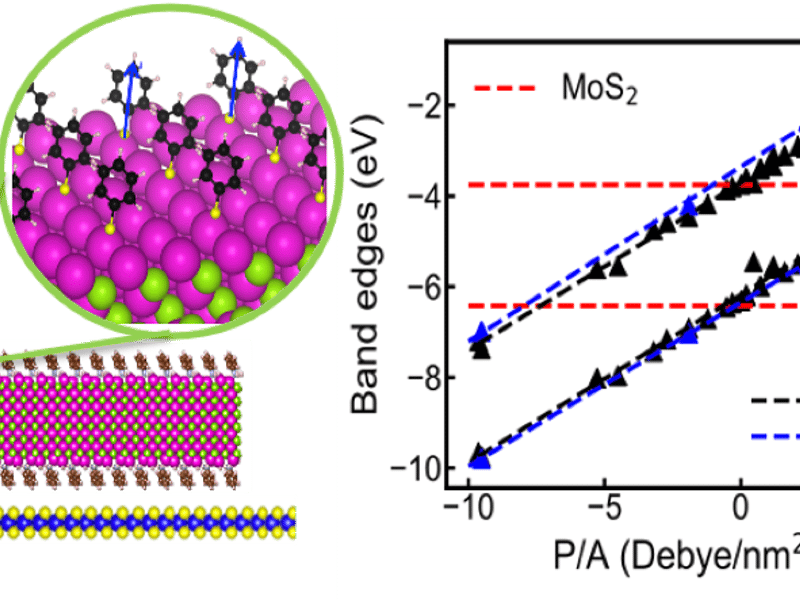
Most inorganic quantum dots are obtained through organic synthesis using surface ligands. When deposited on two-dimensional materials such as MoS2, such ligands form an “interlayer” between the components of the resulting mixed-dimensional heterojunction. To understand the effects of this interlayer, a collaborative theory and experimental effort in NU-MRSEC IRG-1 effort has modeled and characterized the electronic structure of CdSe nanoplatelets with well-controlled ligand-dipole terminations.
Showing 331 to 340 of 1452