The Materials Research Science and Engineering Center (MRSEC) at the University of California Santa Barbara supports research in the area of complex materials in four interdisciplinary groups. One group investigating complex fluids is focused on the creation and control of biomolecular materials. The emphasis is on biomolecular materials whose microstructure can be controlled for possible applications to the development of heat-proof proteins, artificial tissue, novel drug delivery systems, and biogels. A second group investigating solution synthesis of inorganics at molecular and atomic interfaces seeks to understand basic mechanisms of these processes and to explore the synthesis of new materials with applications to electro-optics, catalysis, and biotechnology. Heterogeneous polymeric structures are investigated by a third group. These structures include heterogeneous block copolymers for potential biomedical applications and network blends for polymer light-emitting electrochemical cells. Strongly non-equilibri um phenomena in complex materials are investigated by a fourth group that has a strong theoretical component focused on issues of practical importance in the materials area with a common theme of nonlinearity. Planned studies include fundamental mechanisms of friction, dynamics of fracture, including both conventional fracture and seismic events, the structural evolution of thin films, and phase transitions in reacting polymers. The MRSEC supports the development, operation and maintenance of shared experimental facilities for materials research. It provides seed funding for exploratory research and emerging areas, and fosters research participation by undergraduates. The MRSEC has strong industrial links and an educational outreach program. The educational program includes the Science Partnership for School Innovation and an internship program involving instructors and students from a local city college. The Center currently supports 30 senior investigators, 10 postdoctoral research associates, 5 technicians or other professionals, 35 graduate students, and 25 undergraduates. The MRSEC is directed by Professor Anthony K. Cheetham. %%% The Materials Research Science and Engineering Center (PARSEC) at the University of California Santa Barbara supports research in the area of complex materials in four interdisciplinary groups. One group investigating complex fluids is focused on the creation and control of biomolecular materials whose microstructure can be controlled for possible applications to the development of heat-proof proteins, artificial tissue, and novel drug delivery systems. A second group investigating synthesis of inorganics at molecular and atomic interfaces seeks to understand basic mechanisms of these processes and to explore the synthesis of new materials with applications to electro-optics, catalysis, and biotechnology. Heterogeneous polymeric structures are investigated by a third groupwith potential biomedical applications and polymer light-emitting electrochemical cells. Strongly non-equilibrium phenomena in complex materials are investigated by a fourth group that has a strong theoretical component focused on issues of practical importance in the materials area. Planned studies include fundamental mechanisms of friction, dynamics of fracture, including both conventional fracture and seismic events, the structural evolution of thin films, and phase transitions in reacting polymers. The MRSEC supports the development, operation and maintenance of shared experimental facilities for materials research. It provides seed funding for exploratory research and emerging areas, and fosters research participation by undergraduates. The MRSEC has strong industrial links and an educational outreach program. The educational program includes the Science Partnership for School Innovation and an internship program involving instructors and students from a local city college
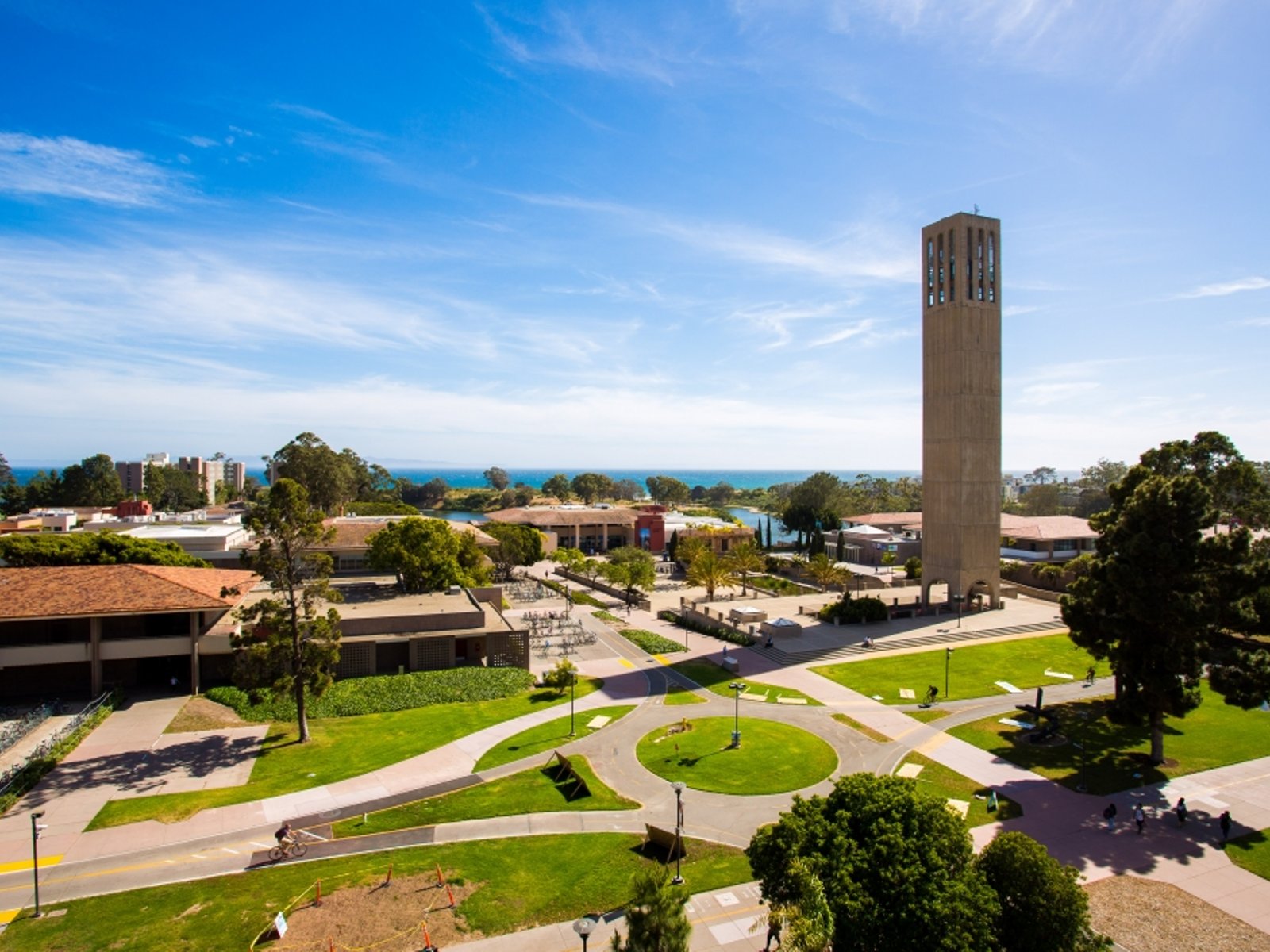
Credit: Courtesy UC