The Materials Research Science and Engineering Center (MRSEC) at the University of California at Santa Barbara (UCSB) addresses fundamental problems in materials science and engineering that are important to the scientific community, society and the future economic growth of the United States. Current areas of interest include the support of interdisciplinary and multidisciplinary materials research and education of the highest quality in the areas of new semiconductors for microelectronics, novel nanostructures for high speed communication devices and advanced polymeric materials. A prime driver behind the research activities of the UCSB MRSEC is to address problems of a scope and complexity requiring the advantages of scale and interdisciplinarity that can only be provided by a campus-based research center. The MRSEC has a leadership role in Educational Outreach programs and in the development of Industrial and International Collaborations on the UCSB campus. It provides undergraduate research opportunities, graduate student training, outreach to K-12 students and teachers, and community outreach. The outstanding Central Facilities program plays a fundamentally important role in the research of all MRSEC programs and additionally has a broad impact on the materials research community at UCSB, local and national companies, and government laboratories.
The MRSEC consists of the following IRGs: IRG-1: Specific, Reversible and Programmable Bonding in Supra- and Macromolecular Materials identifies new experimental and computational methods for precisely controlling the structure and properties of materials based on directed and reversible interactions.. IRG-2: Oxides as Semiconductors focuses on the theory, growth, and application of ultra-pure semiconducting oxides. IRG-3: Soft Cellular Materials seeks to use tailor made/functionalized nanoparticles and block copolymers, in association with polymer blends, to develop new soft materials with precisely controlled cellular structures. IRG-4: Nanostructured Materials by Molecular Beam Epitaxy will examine the development of all-epitaxial metal/semiconductor nanocomposite systems for potential applications in high speed and Terahertz technology.
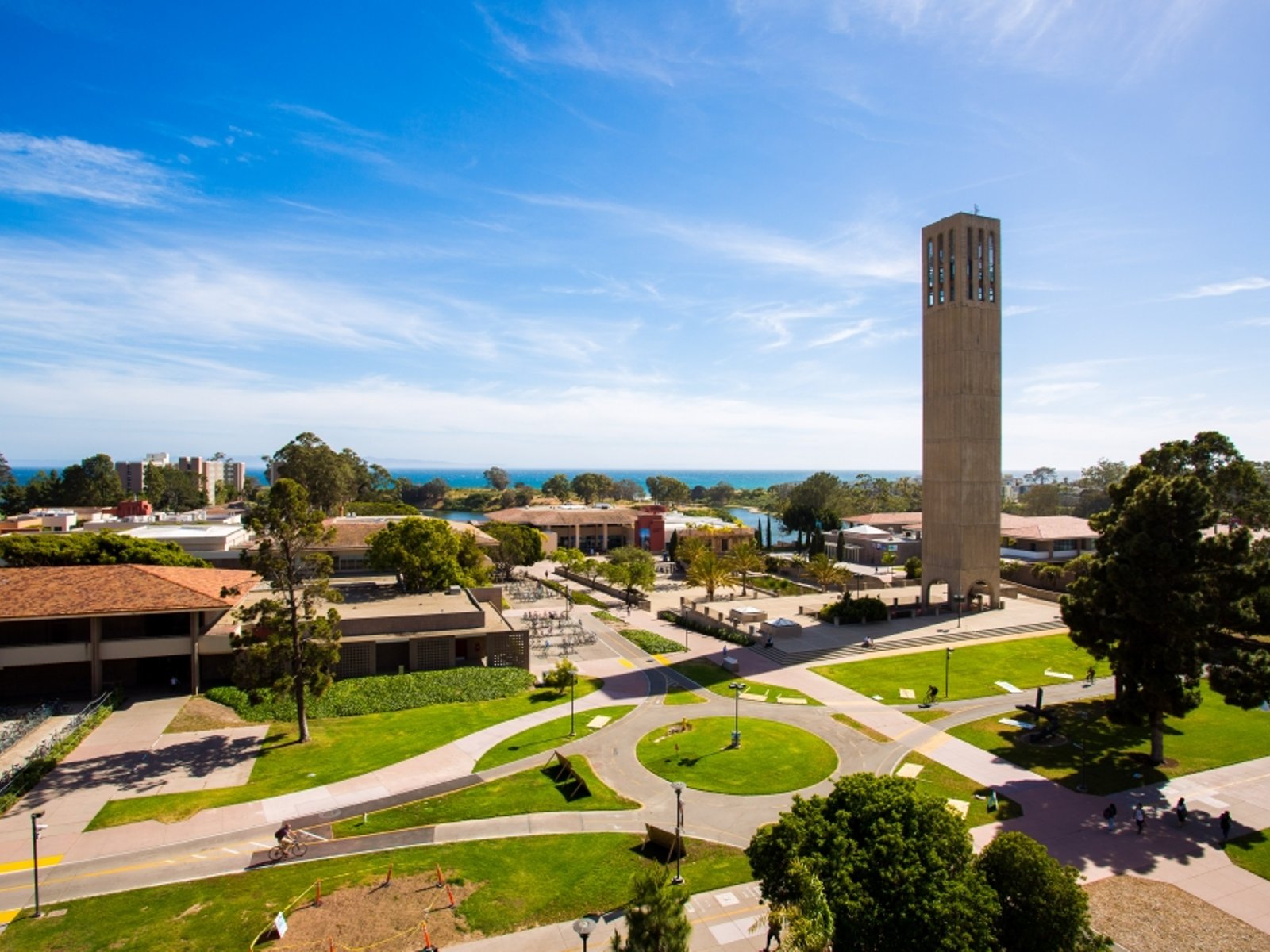
Credit: Courtesy UC