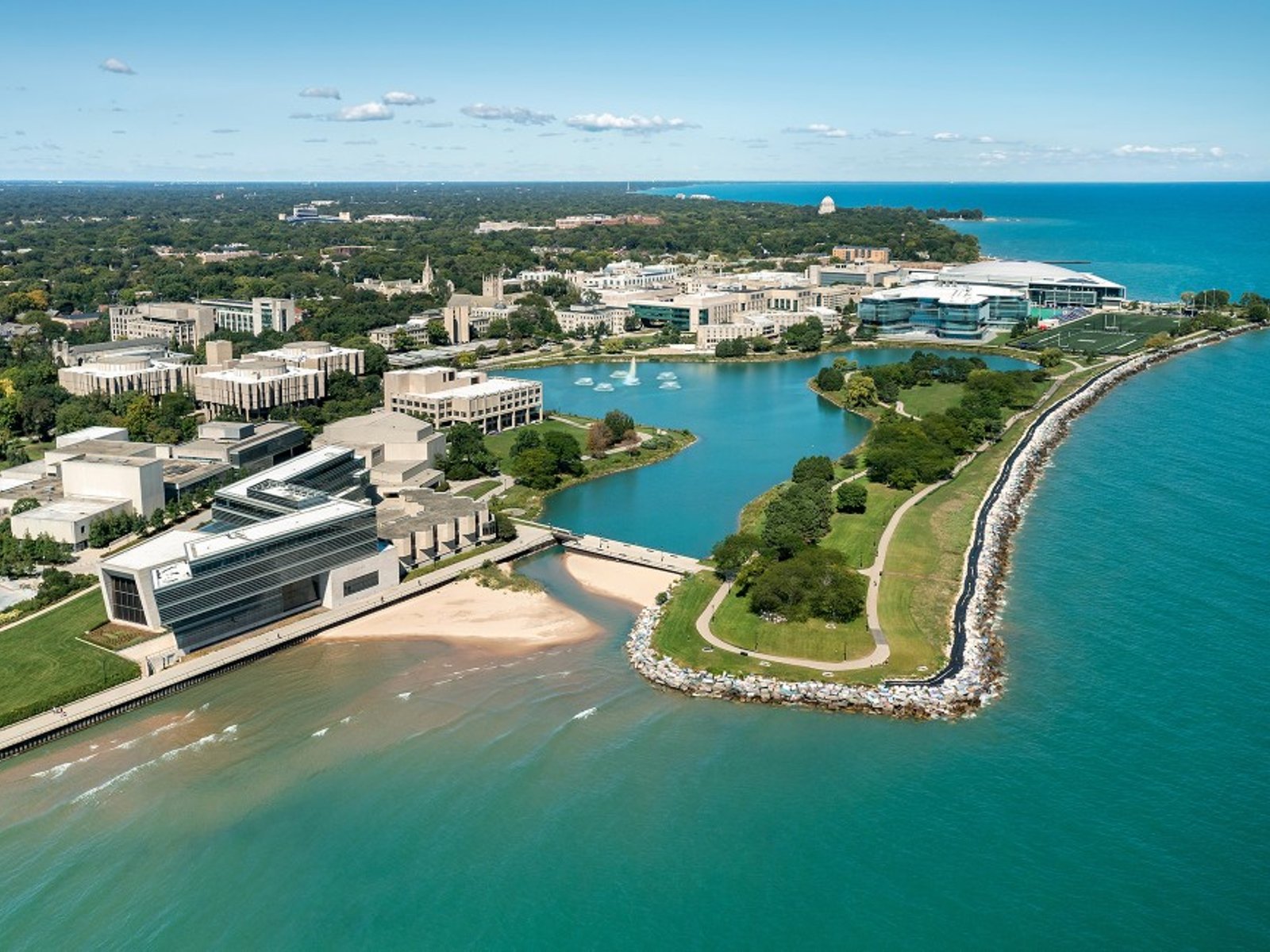
The Northwestern University Materials Research Science and Engineering Center (NU-MRSEC) advances world-class materials research, education, and outreach through active interdisciplinary collaborations. The Center partners with academic institutions, industries, national laboratories, and museums both domestically and internationally, fostering innovation at the frontiers of materials research.

NU-MRSEC operates with a synergistic structure comprising interdisciplinary research groups (IRGs), a robust Seed funding program, and advanced shared facilities. These initiatives aim to accelerate the discovery, dissemination, and commercialization of novel materials while addressing critical challenges in technology and science.

Education and outreach are integral to the Center’s mission. NU-MRSEC engages K-12 students, undergraduates, graduate students, and postdocs through programs that inspire and train the next generation of scientists and engineers. Public engagement is further enriched by partnerships with institutions such as Argonne National Laboratory, the Art Institute of Chicago, the Museum of Science and Industry, and the Field Museum of Natural History.

In all its efforts, the Center prioritizes diversity, equity, and inclusion, striving to reflect society’s richness within the materials science community. Through its impactful research, innovative educational approaches, and broad outreach, NU-MRSEC serves as a cornerstone of materials science leadership and collaboration.

IRG-1

Bioprogrammable Materials via Cell-Free Synthetic Biology
IRG-1 aims to establish cell-free bioprogrammable materials, a new class of bioinspired composites whose properties autonomously adapt in response to specific spatiotemporal cues via the collective activity of embedded artificial cells. These bioprogrammable materials will possess autonomous properties such as self-healing, on-demand cargo release, degradation, dynamic mechanical property modulation, biomineralization, and shape-morphing. IRG-1 will establish a new paradigm for enhancing the performance and capabilities fo soft active materials by endowing them with the adaptive multi-functionality of biological systems, thus accelerating advances in sustainable agriculture, soft robotics, water treatment, smart clothing, food storage, and wound healing.
Leaders
Danielle Tullman Ercek, Sinan Ketan
IRG-2

Orchestrated Iontronics via Dynamic Hybrid Ionic/Electronic Conductors

IRG-2 aims to deliver "Materials for AI" by designing hybrid ionic/electronic conductors (HIECs) based on organic materials and inorganic layered materials that mimic biological neuronal behaviors with broad implications for neuromorphic computing, bioelectronics, and energy storage technologies. By undestanding and leveraging spatiotemporal cooperativity of electronic and ionic processes, IRG-2 will realize neuron-inspired phenomena in HIECs such as adaptive synaptogenesis, sensory transduction, tunable potentiation/plasticity, and optogenetic responses.
Leaders
Jonathan Rivnay, Monica Olvera de la Cruz
Leadership
Mark Hersam
Director
Danielle Tullman Ercek
IRG-1 Leader
Sinan Ketan
IRG-1 Co-Leader
Jonathan Rivnay
IRG-2 Leader
Monica Olvera de la Cruz
IRG-2 Co-Leader
Jonathan Emery
Education and Outreach
Northwestern University