Highlights
Jan 22, 2014
University of Minnesota - Twin Cities
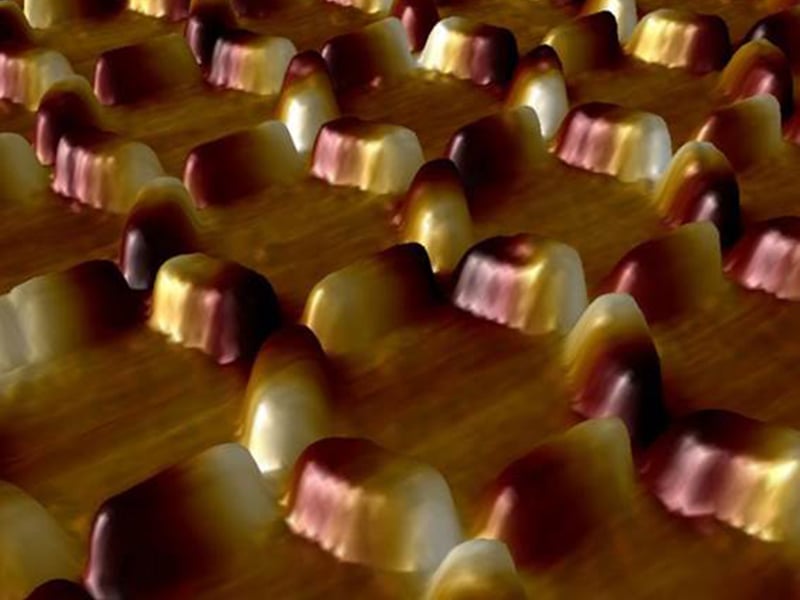
Magnetic Charge Crystallization in Artificial Spin Ice
Chris Leighton (IRG-3), in collaboration with the Univ. of Illinois, Penn State, and Los Alamos
“Artificial spin ice” is a term used for arrays of nanoscale magnetic islands on lattices that geometrically frustrate inter-island interactions.
Jan 22, 2014
University of Minnesota - Twin Cities
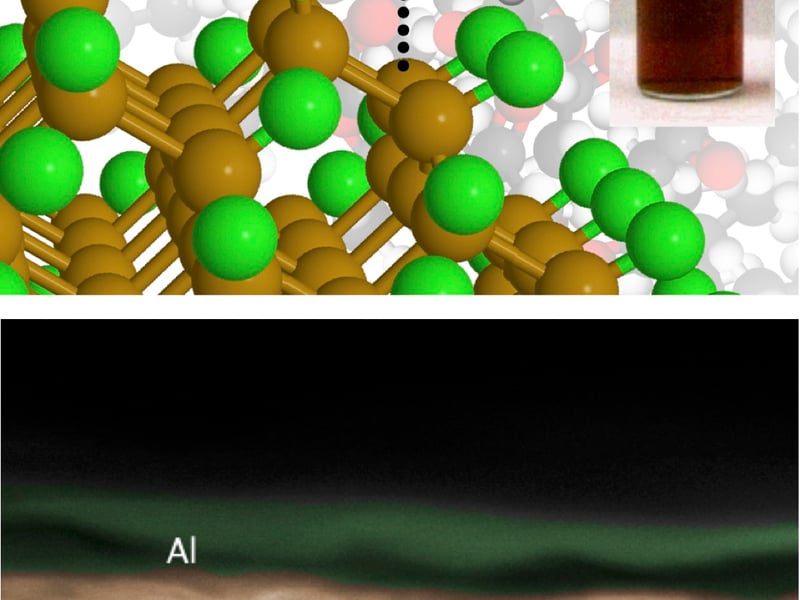
Ligand-free Colloids and Surface Doping of Silicon Nanocrystals
Uwe Kortshagen
Inks of inorganic nanocrystals hold great promise for printed electronics but the widely used organic surfactants (ligands) needed to stabilize these inks degrade the electrical quality of the printed films.
Jan 22, 2014
University of Minnesota - Twin Cities
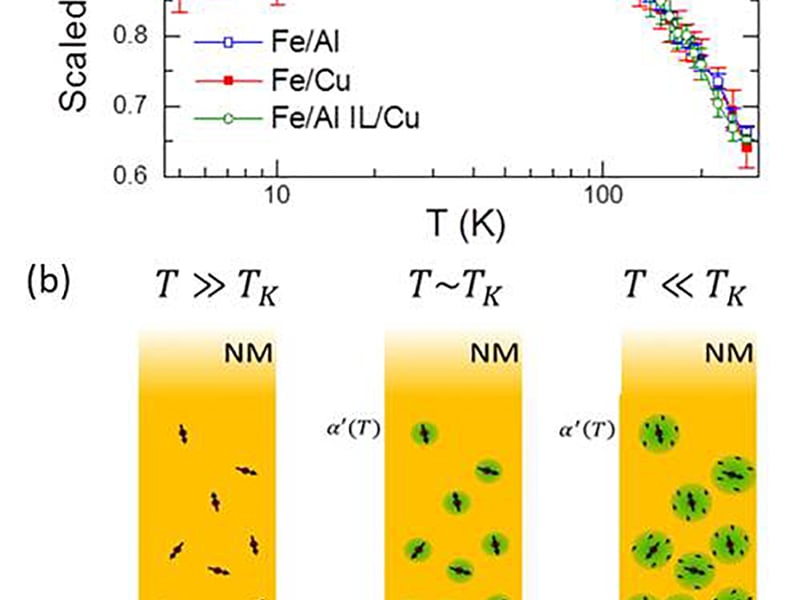
Kondo Physics at Ferromagnet/Normal Metal Interfaces
P. A. Crowell and C. Leighton
The idealized picture of an interface between two elemental materials is simply an abrupt transition between planes containing two different types of atoms.
Jan 19, 2014
Northwestern University
Enhanced Refractive Index Sensing with Monodisperse Faceted Plasmonic Nanoparticles
Yu Jin Shin, Emilie Ringe, Michelle L. Personick, M. Fernanda Cardinal, Chad A. Mirkin, Laurence D. Marks, Richard P. Van Duyne, and Mark C. Hersam
The shape-dependent optical properties of metal
nanostructures have motivated efforts to correlate
nanoparticle structure with plasmonic behavior. In
particular, gold bipyramids (BPs) are of interest due
to their sharp tips that lead to strong localized field
enhancement and high sensitivity to the surrounding
environment. However, despite their potential,
relatively few reports have studied the optical
properties of sub-100 nm BPs due to their relatively
low synthetic yields. To overcome this issue, density
Jan 19, 2014
Northwestern University
Northwestern MRSEC Partnerships Nucleate New Centers
Northwestern MRSEC provides the physical and intellectual
infrastructure to nucleate collaborative opportunities in materials
research both on and off the Northwestern campus, and continues
to leverage its diverse portfolio of research into new educational
and commercial opportunities. Recent examples include:
Dec 5, 2013
University of Utah
Utah MRSEC Teaching the Teachers
Debra Mascaro, Utah MRSEC, University of Utah Mechanical Engineering.
Teaching the Teachers
Electromagnetism at the Physical Sciences Inquiry Academy
These fifth-grade teachers are building electromagnetic ping pong ball launchers to demonstrate electromagnetism to their students.
Utah MRSEC leads lessons and activities for teachers, as well as provides educational kits which supplement curriculum andcoordinate with Utah Core Standards.
Participants:
Dec 5, 2013
University of Utah
Graphene-Insulator-Graphene Active THz Devices
Berardi Sensale-Rodriguez, Department of Electrical and Computer Engineering, The University of Utah, Salt Lake City, Utah 84112, USA
Discovery: Graphene-based plasmonic structures composed of graphene-insulator-graphene can provide gain at THz
frequencies due to interplay between plasmons and resonant-tunneling.
Oct 21, 2013
University of Pennsylvania
Protein 'Passport' That Help Nanoparticles Get Past Immune System
Paul A. Janmey and Dennis E. Discher
What’s the Problem? Macrophages are part of the
innate immune system and will try to eat anything they don’t recognize
as being part of the body — they’re like border patrol guards, checking
everybody’s passports. If you’re a red blood cell, you have the right
passport and get waved on. But if you’re a piece of dirt or a
bacterium, you don’t have the right passport, and Macrophages get you.
The problem is that there are some things we actually want to be in
body, like drug-delivery particles, that get eaten by these
Oct 10, 2013
University of Wisconsin - Madison
Monolayers of Organic Semiconductors with High Hole Mobility
E. Mannebach, J. W. Spalenka, P. S. Johnson, Z. Cai, F. J. Himpsel, and P. G. Evans
The electronic properties of thin films with thicknesses of only a single molecular layer have in the past typically been far worse than thicker films of the same material.
Oct 9, 2013
University of Wisconsin - Madison
Helping the Public See 10,000x Better
During the summer of 2012, Hitachi Inc. loaned the UW-MRSEC education group a table-top
scanning electron microscope for use during education and outreach activities. Thirteen
fifth-graders synthesized ZnO nanoparticles then used the SEM to examine their particles.
The education group sent a summary of the activity including photographs which Hitachi
used for an article about the SEM which they published in the Japanese version of the
Wall Street Journal.
Showing 811 to 820 of 1452