Highlights
May 14, 2022
Big Idea: Understanding the Rules of Life
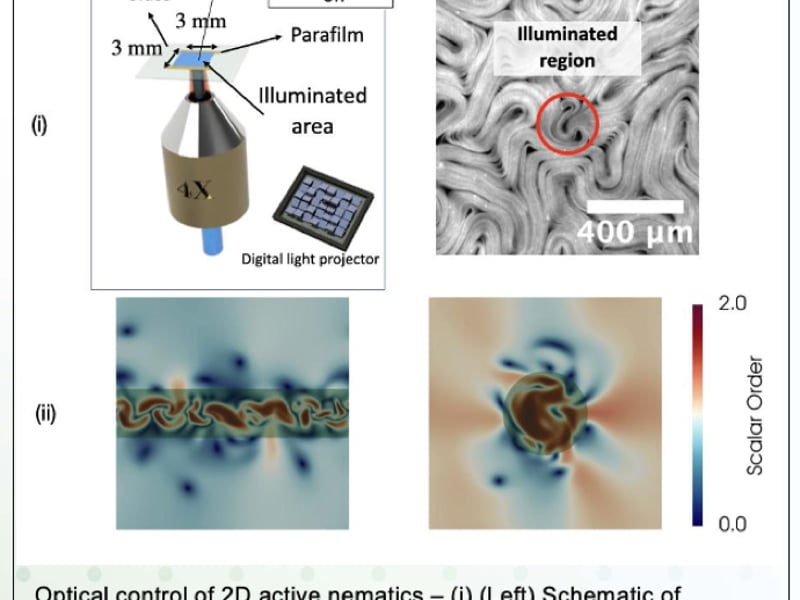
Spatiotemporal control of active materials
Biological cells control spatial and temporal generation of active stresses to achieve diverse sought-after functionalities ranging from motility to cell division. Motivated by these observations IRG2 goal is to control of spatiotemporal patterns of active stresses and to endow soft materials with lifelike functionalities.
May 14, 2022
Big Idea: Understanding the Rules of Life
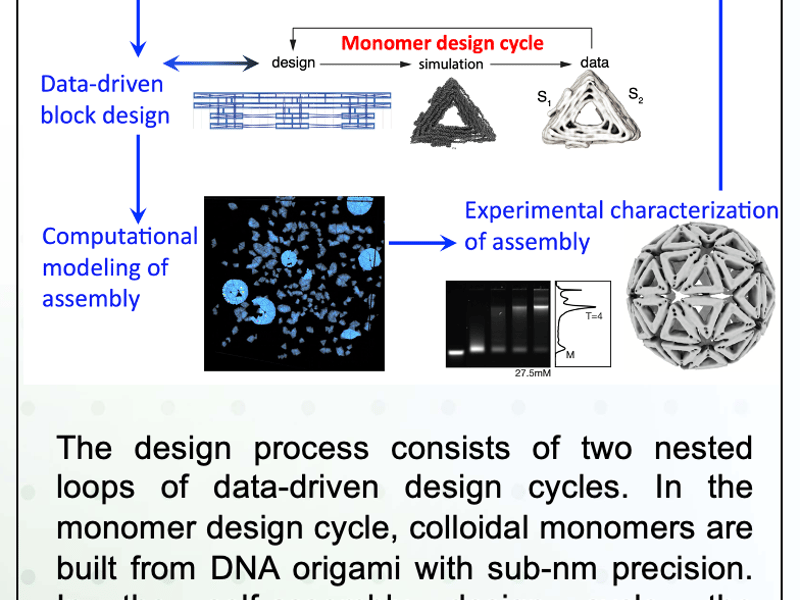
Self-assembling DNA Origami Shells
S. Fraden, M. Hagan, W. Rogers: Brandeis University; G. Grason: U. Mass. Amherst; H. Dietz: Tech. Universität München
The self-assembly of biological molecules into large, but finite-size, superstructures is fundamental to life. A grand challenge for colloidal self-assembly is to produce colloidal monomers with valence-limited interactions, that have arbitrary angles and strengths, to produce structures with the precision, complexity and functionality of biological assemblies.
May 14, 2022
Big Idea: Quantum Leap
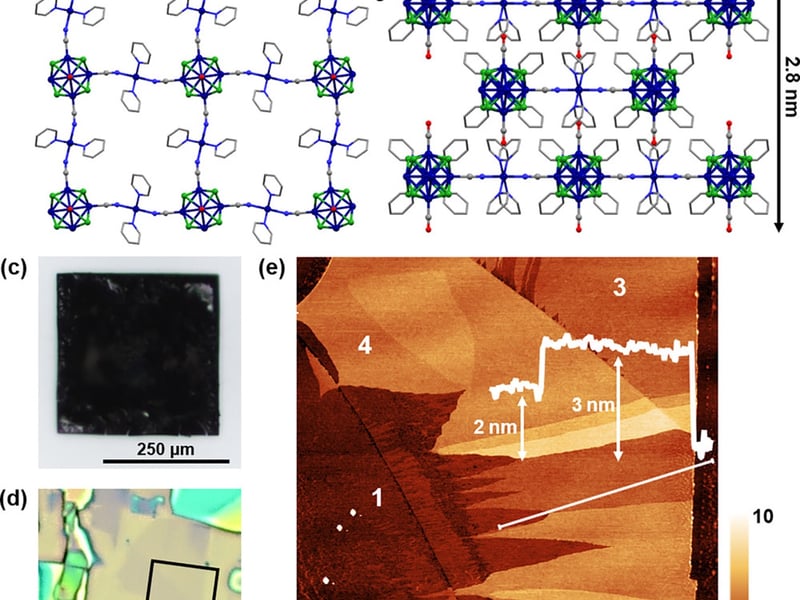
Superatom Regiochemistry Dictates the Assembly and Surface Reactivity of a Two-Dimensional Material
Colin Nuckolls, Xavier Roy, Columbia University Center for Precision-Assembled Quantum Materials
The area of two-dimensional (2D) materials research would benefit greatly from the development of synthetically tunable van der Waals (vdW) materials. While the bottom-up synthesis of 2D frameworks from nanoscale building blocks holds great promise in this quest, there are many remaining hurdles, including the design of building blocks that reliably produce 2D lattices and the growth of macroscopic crystals that can be exfoliated to produce 2D materials.
May 14, 2022
Big Idea: Quantum Leap
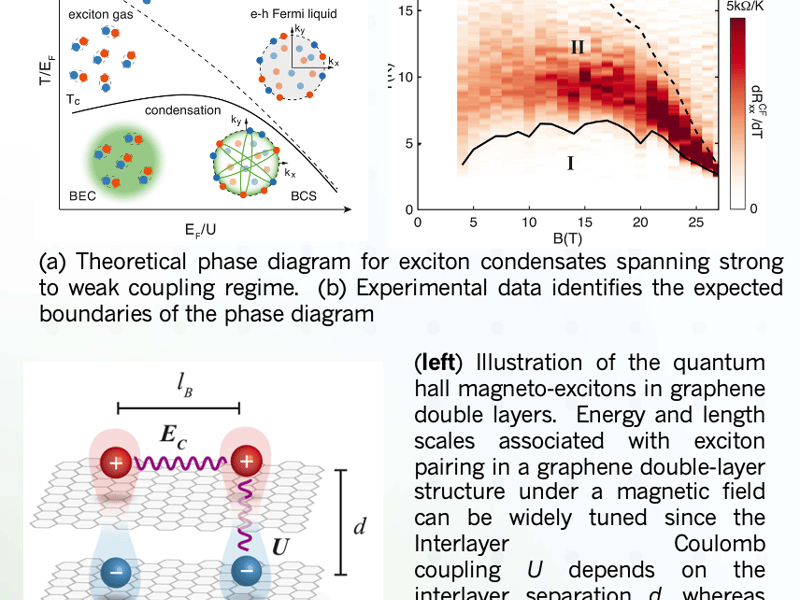
Crossover between strongly coupled and weakly coupled exciton superfluids
Cory Dean, Columbia University Center for Precision-Assembled Quantum Materials (PAQM)
We studied graphene double layers separated by an atomically thin insulator. Under applied magnetic field, electrons and holes couple across the barrier to form bound magneto-excitons. Using temperature-dependent Coulomb drag and counterflow current measurements, we were able to tune the magneto-exciton condensate through the entire phase diagram from weak to strong coupling.
May 12, 2022
Big Idea: Growing Convergence Research
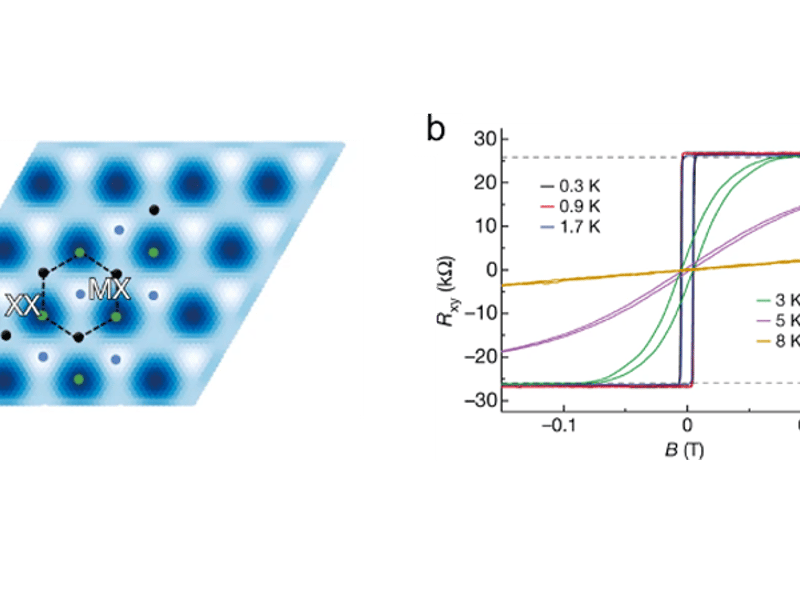
Quantum anomalous Hall effect in atomically-thin semiconductor layers
Analogous to a superconductor, the quantum anomalous Hall effect can transport electrons in a sample without dissipating any energy. The effect has been proposed as an important element for quantum circuitry, quantum computing and a standard for fundamental constants of physics. Unfortunately, it often emerges only at temperatures near absolute zero (~ 0.1 K).
May 12, 2022
Big Idea: Future of Work at the Human-Technology Frontier, Materials Under Extreme Conditions
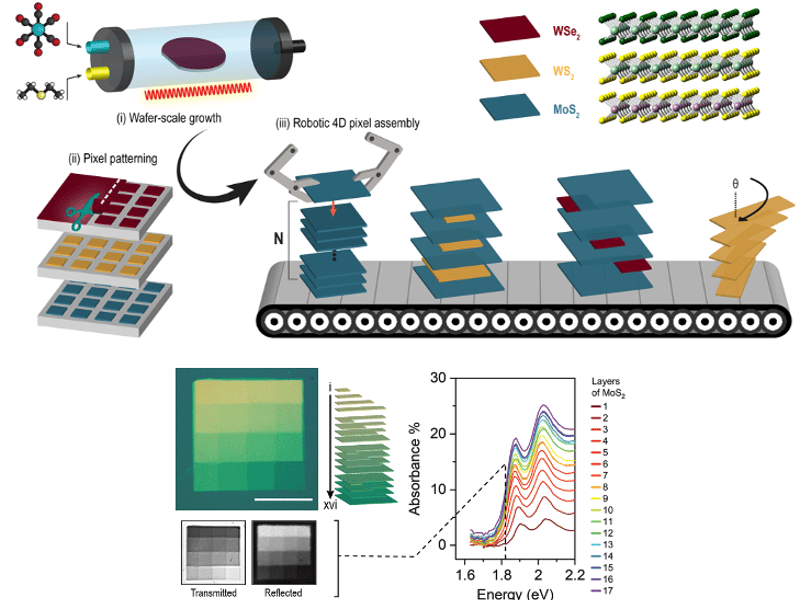
Robotic Pixel Assembly of Atomically-Thin Materials
As new methods are established to synthesize atomically-thin quantum materials, it becomes necessary to develop a technique to take those materials and assemble them into complex structures.
May 12, 2022
University of Texas at Austin
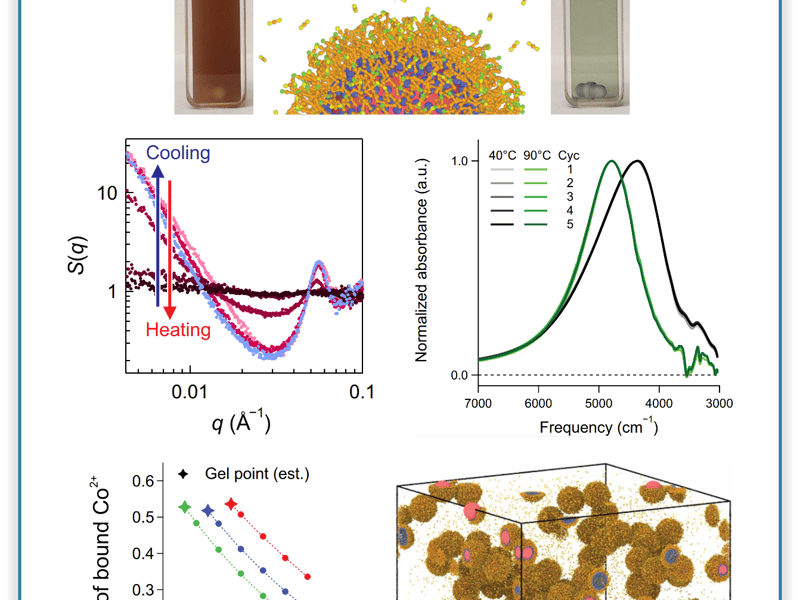
Colorimetric Quantification of Linking in Thermoreversible Nanocrystal Gel Assemblies
D. Milliron, E. Anslyn, T. Truskett: Univ. of Texas at Austin
This highlight demonstrates the gelation assembly of colloidal nanocrystals using uniquely developed ligands that can form a metal coordination linkage. Metal ions that are paired with ligand functional groups were used to control the assembly of nanocrystals from a stable dispersion to full spanning gel networks. The metal coordination linkage was reversed using temperature as an external trigger and enabled thermally switchable nanocrystal gel networks.
May 12, 2022
University of Texas at Austin
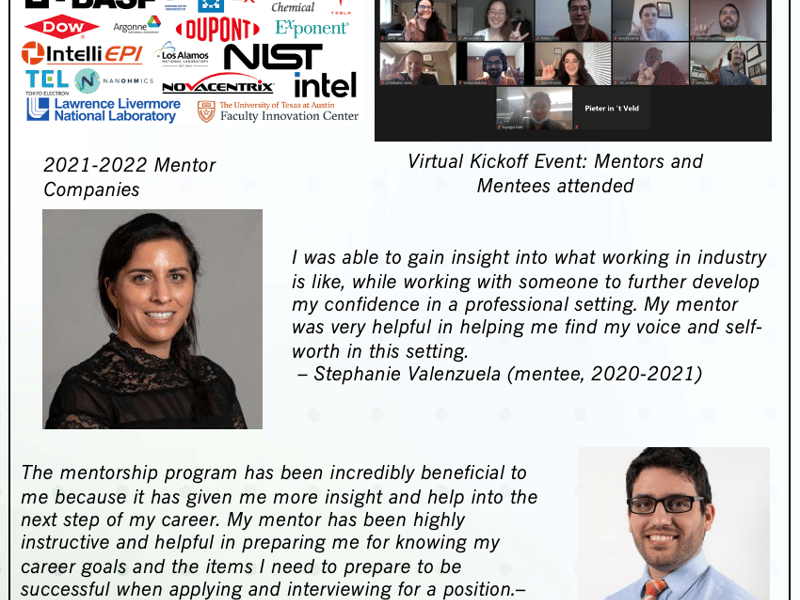
CDCM Industrial Mentorship Program Prepares Students for the Workforce of Tomorrow
The Industrial Mentorship Program connects undergraduate students, graduate students and post-doctoral fellows to a mentor in industry. This program is designed to expose participants to fundamental research as it relates to societal and economic development; enable them to broaden their networks; and facilitate a successful transition into the workforce.
May 12, 2022
Big Idea: Quantum Leap
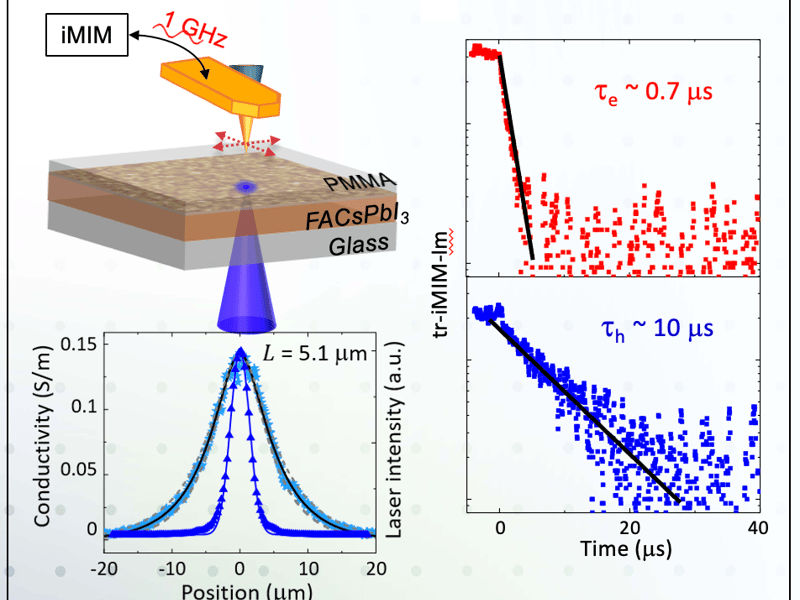
Temporally and Spatially Resolved Carrier Dynamics in Organic-Inorganic Hybrid Perovskites
This highlight illustrates a key characterization advance realized at the Center for Dynamics and Control of Materials – temporally resolved light-induced microwave impedance microscopy.
May 10, 2022
UMN Materials Research Science and Engineering Center (2020)
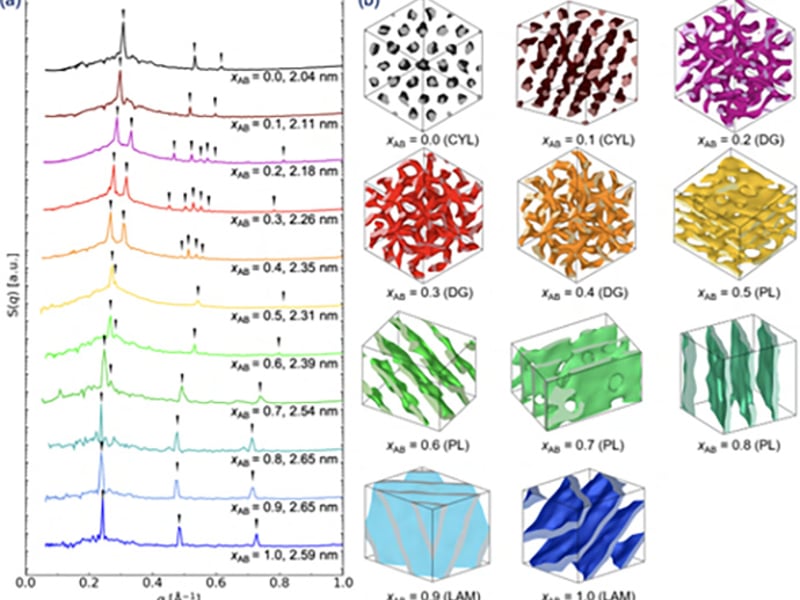
Stabilizing A Double Gyroid Network Phase by Blending of LAM and CYL Forming Block Oligomers
Z. Shen, K. Luo, S. Park, D. Li, M. Mahanthappa, F. Bates, K. Dorfman, T. Lodge, I. Siepmann, University of Minnesota
Based on the hypothesis that blending LAM- and CYL-forming block oligomers may yield stable network phases, molecular dynamics simulations are used to study binary blend self-assembly of AB-type diblock (n-tridecan-1,2,3,4-tetraol) and AB2-type miktoarm (5-octyl-tridecan-1,2,3,4-tetraol) amphiphiles. The AB2-rich and AB-rich blends form double gyroid (DG) networks and perforated lamellae (PL), respectively.
Showing 241 to 250 of 1452