Highlights
Feb 20, 2012
Northwestern University
Collaboration with Public Institutions: Art Conservation
The Art Institute of Chicago:Science of Art Conservation
Jan 19, 2012
University of Minnesota - Twin Cities
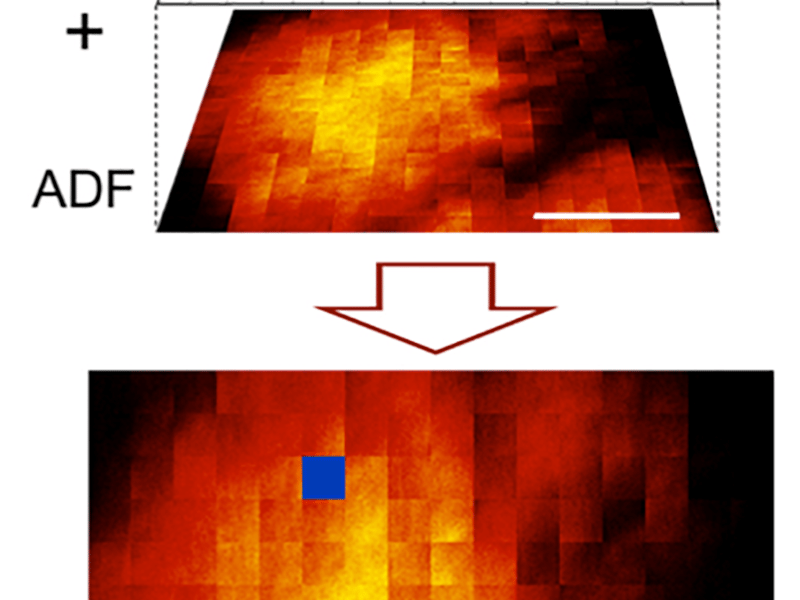
Imaging 'Invisible' Dopant Atoms in Semiconductor Nanocrystals
Andre Mkhoyan, David Norris
In semiconductor nanocrystals, the physical effects of deliberately included impurities, called dopants, may depend on the dopant position with the crystal.
Jan 18, 2012
University of Minnesota - Twin Cities
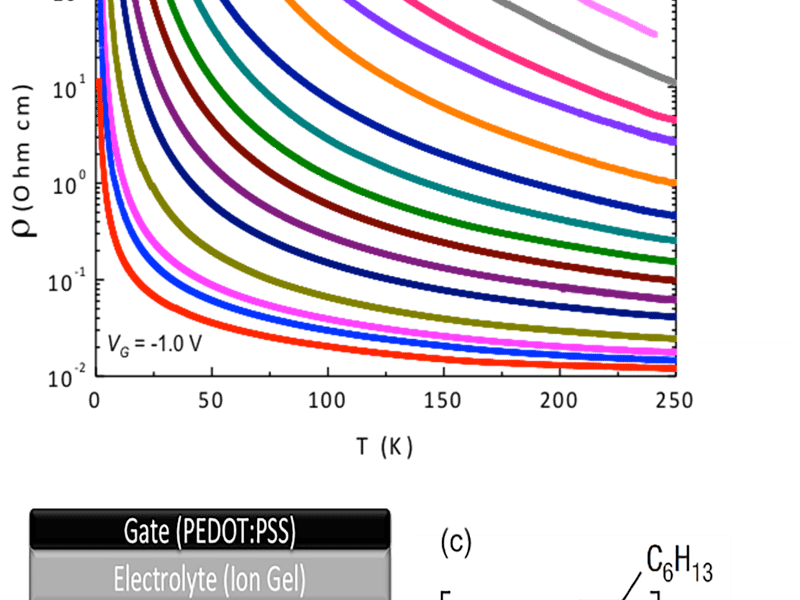
Why Most Plastics Can't be Metals
Chris Leighton, Dan Frisbie
Conductive polymers, i.e. plastics, that conduct electricity, are important in science and technology as they offer the potential for cheap, flexible electronic devices.
Jan 18, 2012
University of Minnesota - Twin Cities
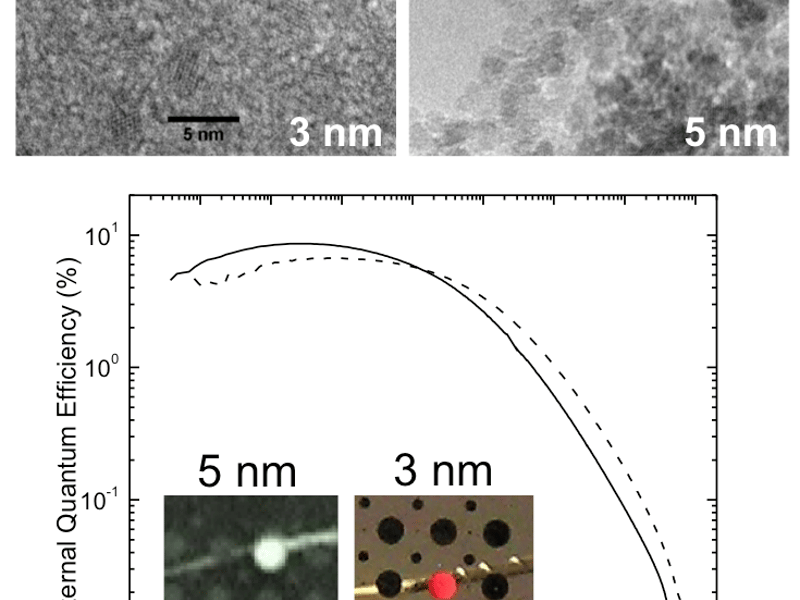
High Efficiency Silicon Nanocrystal Light Emitting Devices
Russell Holmes, Uwe Kortshagen
Hybrid light-emitting devices based on organic semiconductors and inorganic semiconductor nanocrystals are of great interest for applications in optical displays and solid-state light sources.
Jan 17, 2012
Cornell University
Patterned Graphene "Scrap" Grows into Continuous "Patchwork Quilt"
M.P. Levendorf, et al. inpreparation
New technique produces heterojunctions in
single-atom-thick graphene
Aug 31, 2011
University of Pennsylvania
Stressing the Most Important (Dirac) Points
Steve M. Young,1 Sugata Chowdhury,1 Eric J. Walter,2 Eugene J. Mele,3 Charles L. Kane,3 and Andrew M. Rappe1,* 1 The Makineni Theoretical Laboratories, Department of Chemistry, University of Pennsylvania 2 Department of Physics, College of William and Mary 3 Department of Physics, University of Pennsylvania
Recent physics research shows how spin-orbit coupling can rearrange
electronic bands in a solid to make a "topological insulator" a new
quantum phase of matter that is guaranteed to have conductive surfaces
even though its bulk is insulating. What happens if you take a
topological insulator and compress or expand it? A team of researchers
at the University of Pennsylvania has examined this question. They find
that if you expand the material enough, you can manipulate the Dirac
Aug 31, 2011
University of Pennsylvania
Workshops on Materials Science Labs for Teachers
Schuyler Patton (Central HS), Russ Composto, Karen Winey and Andrew McGhie
In 2008 The Penn MRSEC assisted a high school science teacher, Schuyler
Patton, to prepare a year-long elective course on materials science for
his high school, Central HS, Philadelphia. It started with one class of
33 students and it was very successful. In 2010-11, it was expanded to
two sections with 66 students. In summer 2010, the Penn MRSEC offered a
series of three hands-on workshops for teachers based on the laboratory
experiments used in this course. The themes of these workshops were a)
Showing 1001 to 1010 of 1452