Flat bands have been associated with excoct effects in materials, such as strong correlations, superconductivity, or the fractional quantum Hall effect.
In bulk materials they are difficult to be isolated form other electronic states. In addition, they are often at non-accessible energies.
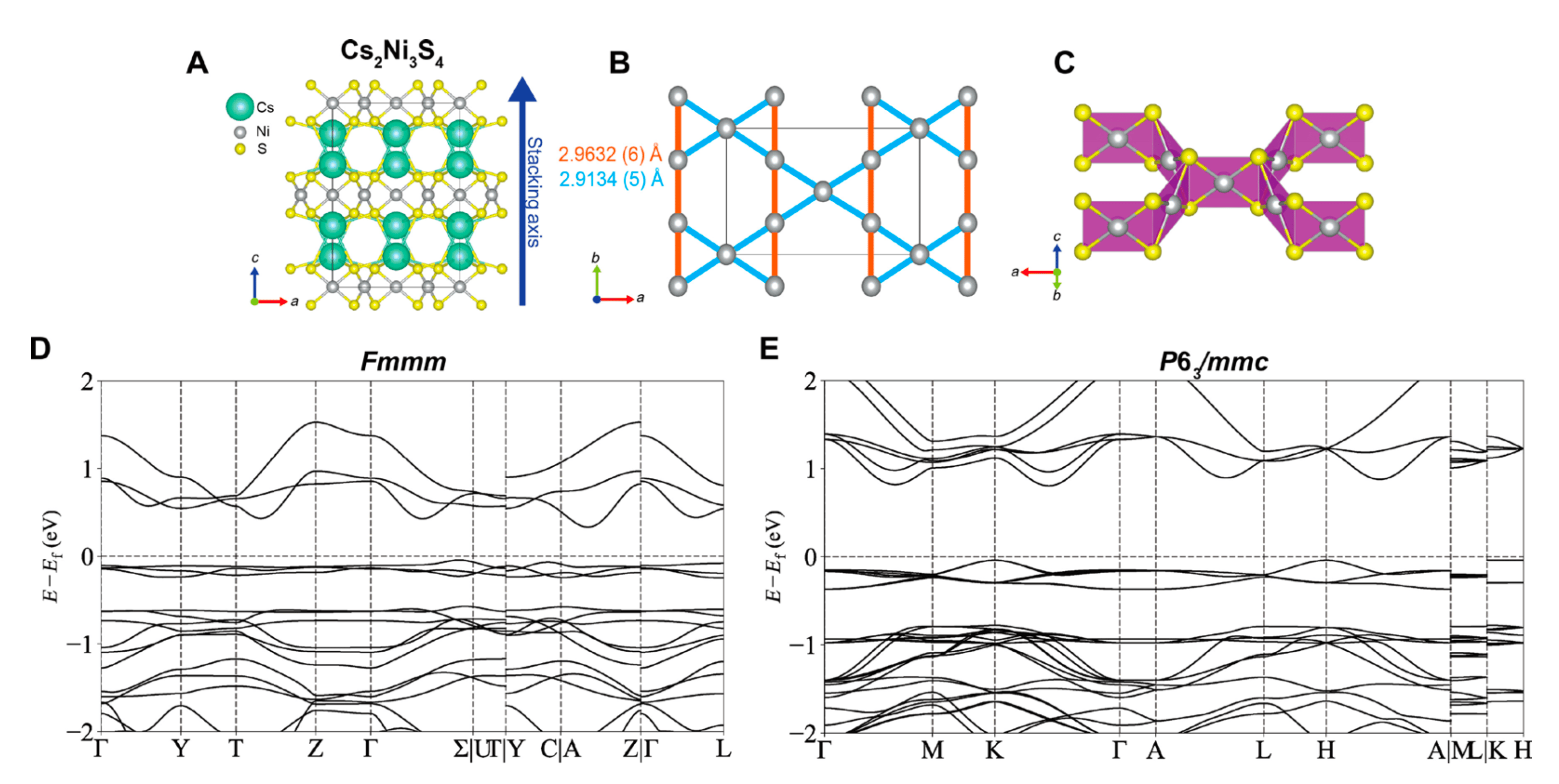
In this work, Schoop and Bernevig collaborated to access flat bands in a new material using soft-chemical modification of a known materials.
The intimate collaboration between theory (Bernevig) and experimental chemistry (Schoop), which is facilitated by NSF MRSEC was instrumental for this achievement.
Bernevig’s theory showed that the flat bands in questions are promising to host the desired physical effects. Schoop developed a new chemical methods that enabled to energetically access those bands.
The new material shows promise for correlations.
 Download
Accessing bands with extended quantum metric in kagome Cs 2 Ni 3 S 4 through soft chemical processing
.png/thumbcontain)
The Bioinspired Soft Materials Center (2020)
The Brandeis Materials Research Science and Engineering Center (MRSEC) seeks to create new materials that are constructed from only a few simplified components, yet capture the remarkable functionalities found in living organisms.