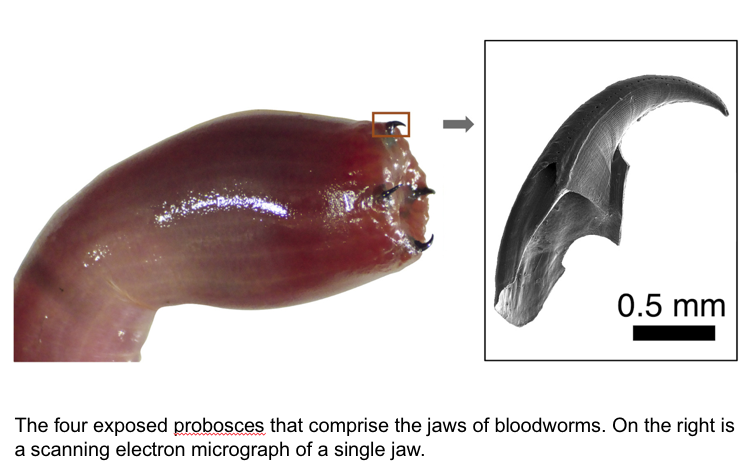
The key protein that helps bloodworms form copper-based mineral composites to make very strong jaws has been identified along with the several functions that it serves.
High-performance natural materials play a critical role in informing modern material design and development. For effective technological translation, research needs to scrutinize the mechanisms of each of these properties and how they relate to one another which is accomplished here. Copper binding underpins the formation of a dense protein liquid phase and enables melanin synthesis but later provides self-healing cohesive bridges between the proteins.
The results directly support the goals of IRG-3 as they develop an understanding of the processing pathways that nature uses to make useful materials.
 Download
Materials Research Science and Engineering Center at UCSB
The U.S. National Science Foundation Materials Research Science and Engineering Center at UC Santa Barbara develops and sustains a productive, collaborative, and engaged community that drives a portfolio of transformative materials research and empowers a diverse workforce.