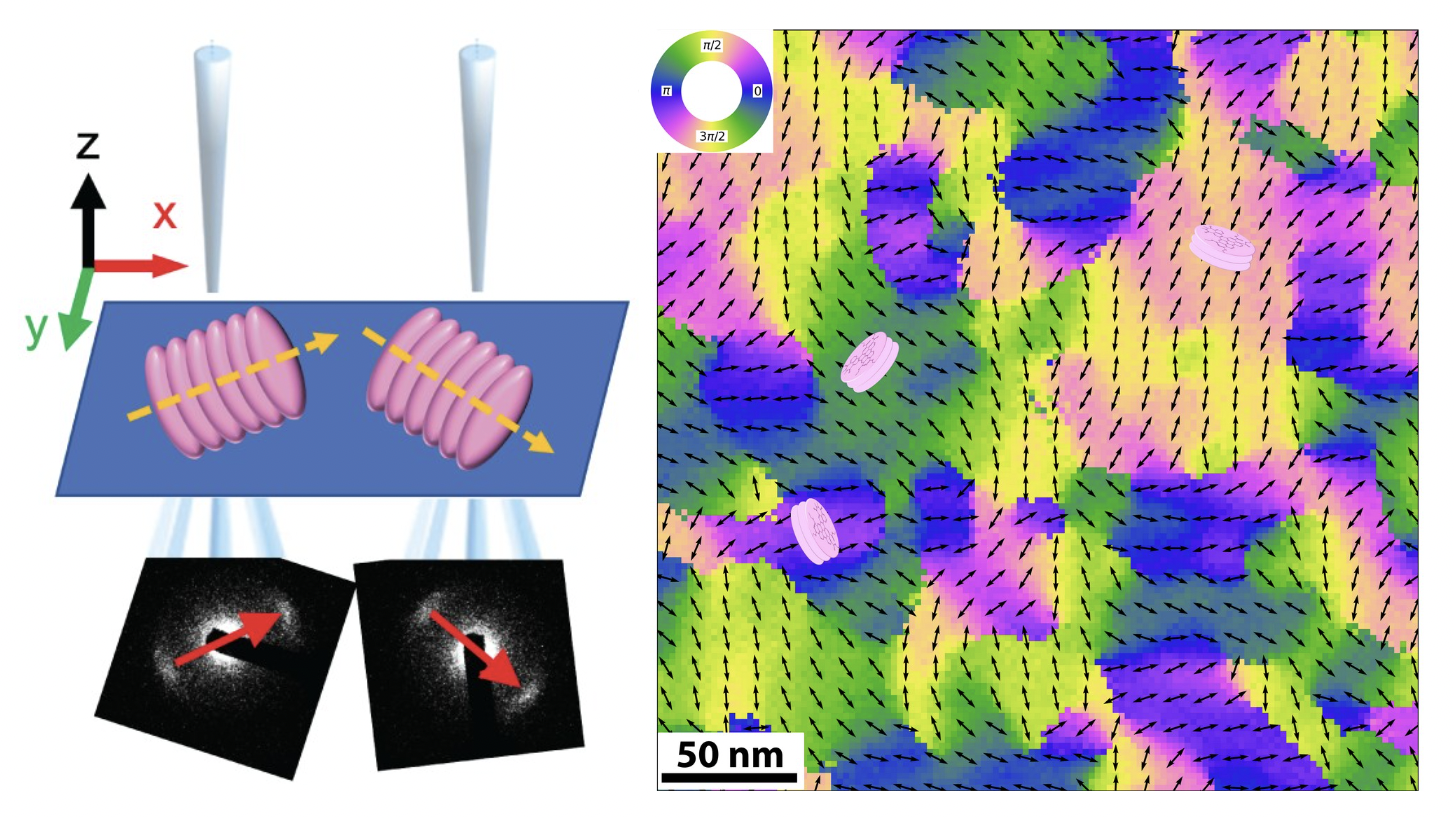
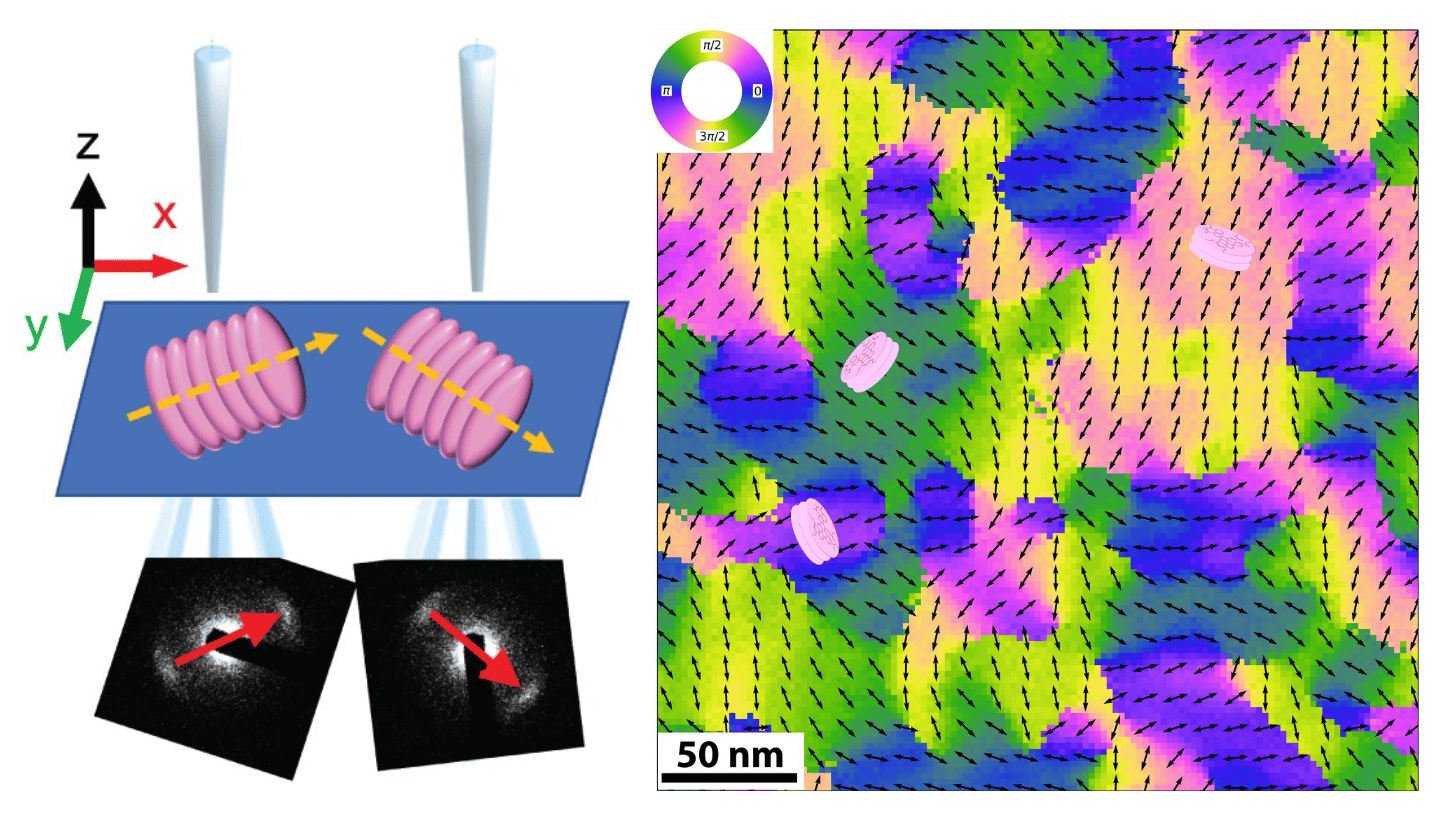
 Textbooks say that glasses are structurally disordered and isotropic, meaning that their constituent molecules don’t’ form a repeating pattern and point in random directions. However, glasses made of non-spherical molecules shaped, for example, like rods or disks, can have preferred orientations for the molecules.
Researchers in the Wisconsin MRSEC have shown that how fast molecules move on the surface of a glass thin film as it is being grown determines the size of regions that share orientation.
The in-plane orientation of the molecules effect how they conduct electricity and interact with light. In general, more alignment is better for applications ranging from flexible transistors to organic light emitting diodes to organic photovoltaics. Controlling alignment using industry standard processes and at moderate temperature will help create materials that will improve all of these technologies.
 Download

Wisconsin Materials Research Science and Engineering Center
The U.S. National Science Foundation-sponsored Wisconsin Materials Research Science and Engineering Center brings together teams of researchers from diverse disciplinary backgrounds to tackle grand challenges in the materials science of liquids and glasses and non-equilibrium magnetism.