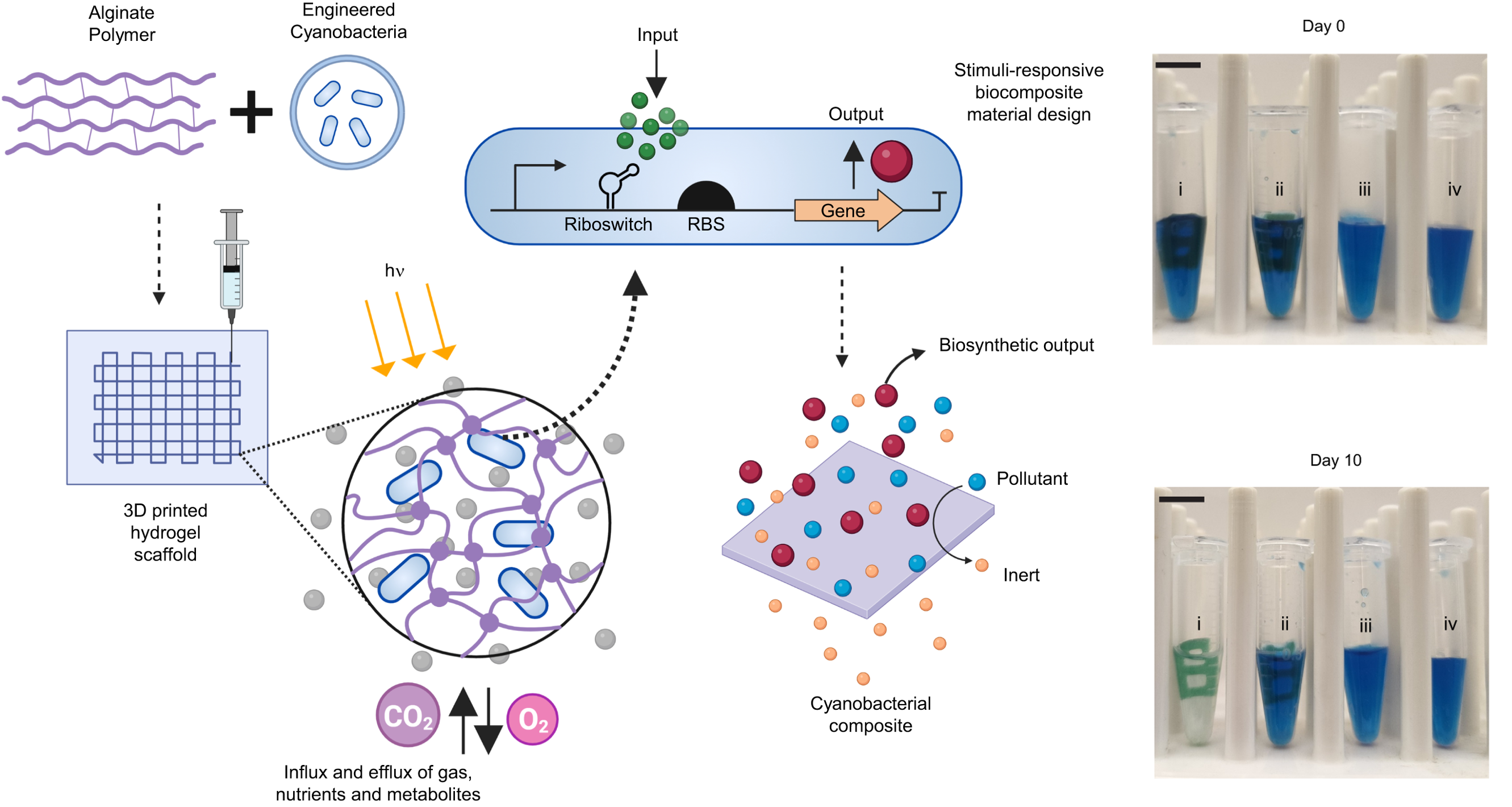
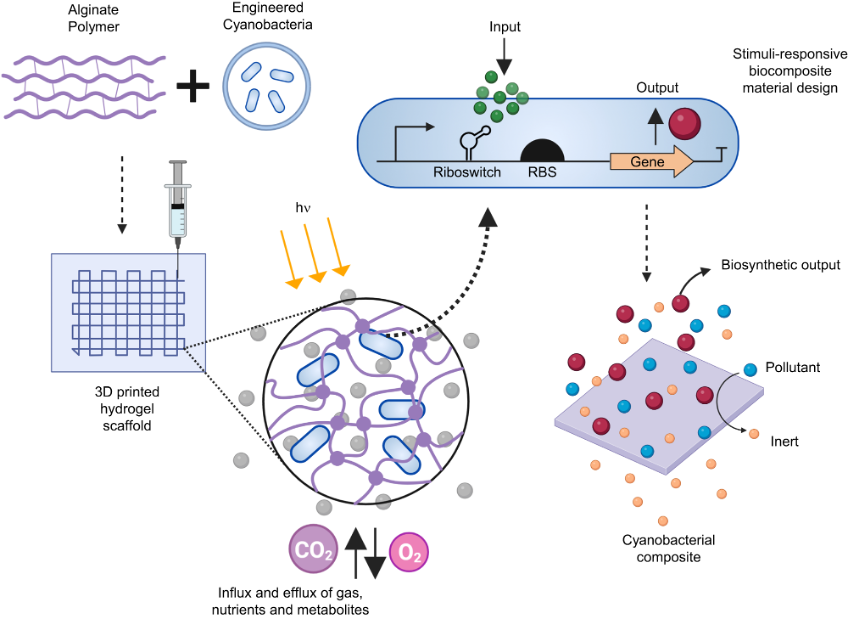
 What Has Been Achieved: Cyanobacterial composite materials were developed and programmed to remediate an organic dye pollutant and at the end of the materials life cycle were engineered to undergo cell death
Importance of the Achievement: Industrial pollutants are ubiquitously found in fresh water sources. This work demonstrated how a harmless photosynthetic organism could be programmed to remediate textile dye pollutants, which could be extended to many other sources of industrial pollution.
Relation to the IRG2: A primary goal of IRG2 is developing composite materials that can respond to their environment. In this case, the team engineered a riboswitch into the material that allows genes to be activated in the presence of a small molecules present in tea.
Nature Communications, 2023, 14, 4742; https://doi.org/10.1038/s41467-023-40265-2
 Download
Phenotypically complex living materials containing engineered cyanobacteria
UC San Diego MRSEC (2020)
The UC San Diego Materials Research Science and Engineering Center fosters research, education, and outreach across the disciplines of engineering, physical sciences, and biological sciences, with a focus on new materials and new materials properties.