Hydrogels are hydrated three-dimensional networksof hydrophilic polymers that are commonly used in the biomedical industry due to their mechanical and structural tunability, biocompatibility, and similar water content to biological tissues.
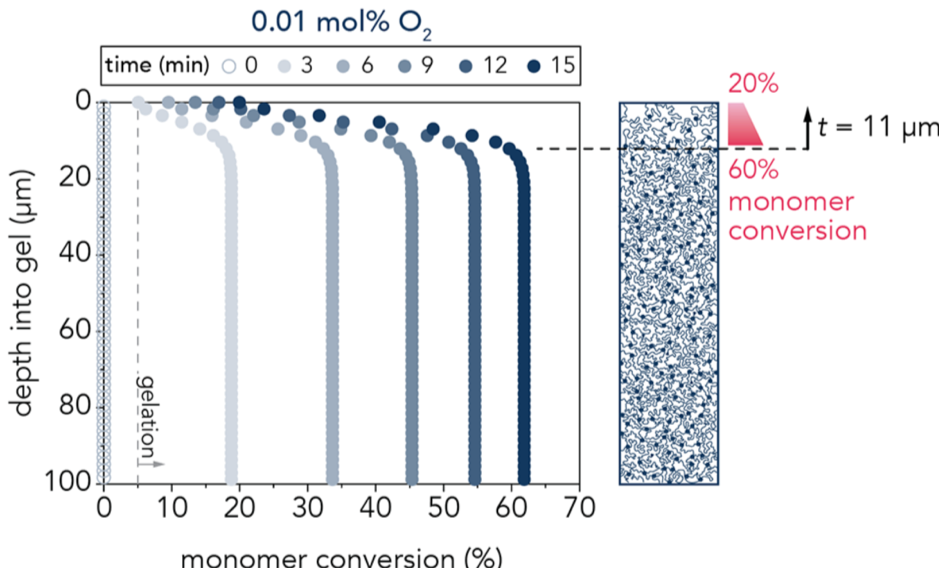
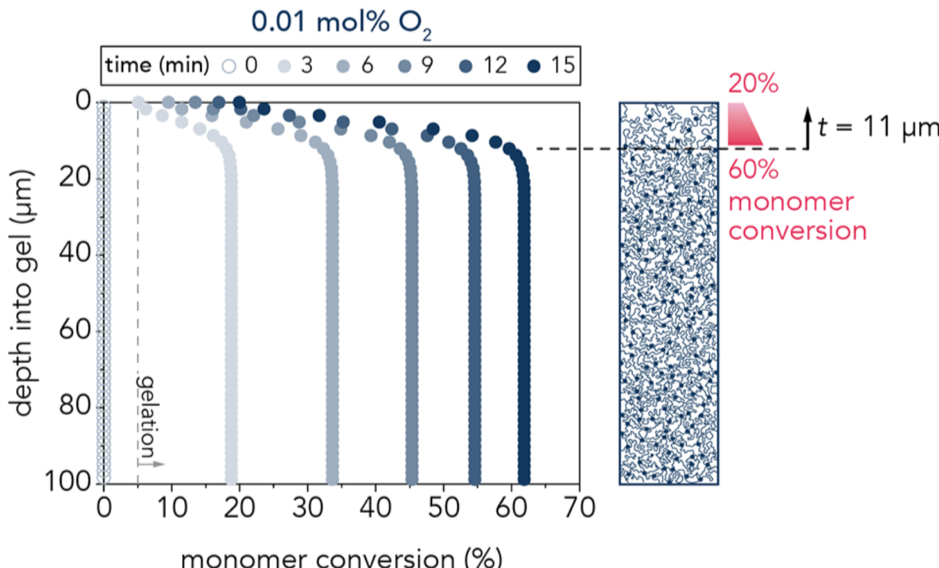
The surface structure of hydrogels polymerized through free-radical polymerization can be modified by controlling environmental oxygen concentrations, leading to the formation of a polymer concentration gradient. UC Santa Barbara MRSEC researchers created polyacrylamide hydrogels in varying oxygen environments and monitored their mechanical and tribological properties.
Without significantly reducing the elastic modulus of thehydrogel an order of magnitude reduction in the friction coefficient can be created simply by adjusting polymerization conditions (e.g. oxygen concentration).
A quantitative analytical model based on polyacrylamide chemistry and kinetics has developed.
 Download

Materials Research Science and Engineering Center at UCSB
The U.S. National Science Foundation Materials Research Science and Engineering Center at UC Santa Barbara develops and sustains a productive, collaborative, and engaged community that drives a portfolio of transformative materials research and empowers a diverse workforce.