NSF MRSEC News
May 31, 2022
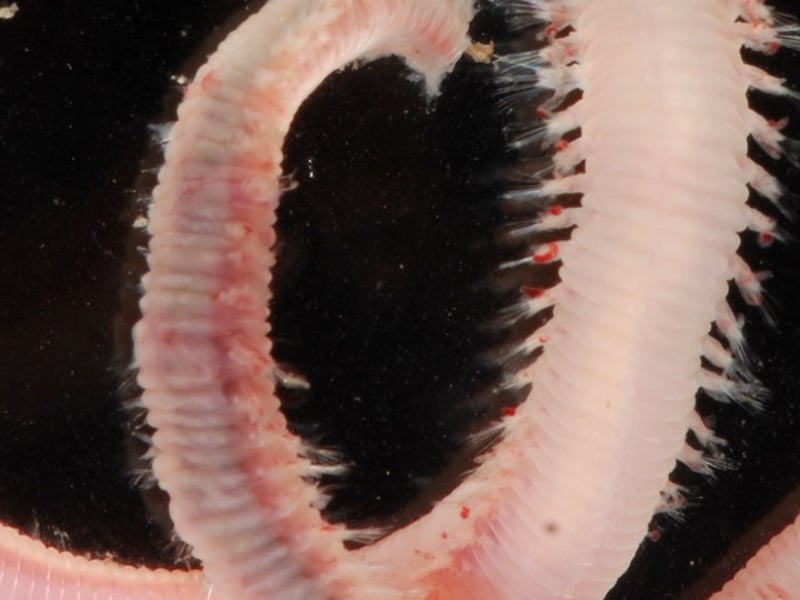
A Closer Look at the Fangs of a Venomous Bloodworm
Researchers at UC Santa Barbara and UC Berkeley recently discovered that the venomous bloodworm, Glycera dibranchiata creates its four sharp fangs made of hardened melanin and infused with copper by relying on what’s called a multitasking protein—made primarily of two amino acids. The research was funded by the MRSEC program and was recently published in the journal, Matter as well as covered in the New York Times.
Feb 18, 2022
Let's Talk About Materials Research
The next time you sink your teeth into a soft slice of bread, think about the material training that went into making that bread. Material training is one of many approaches to designing new materials and involves taking a material and applying a repeated training protocol that modifies small-scale structures in the material. The result is the same material that you started with but with new properties. When it comes to that slice of bread, repeatedly kneading the dough changes its gluten structure and results in a stronger and more elastic version of itself -- and also makes for a truly delicious materials science experiment. That science experiment was one of 19 at the first-ever MRSEC Science Slam, recently held online.
Jan 10, 2022
U.S. National Science Foundation Hosts First-Ever MRSEC Science Slam
The Division of Materials Science and the Materials Research Science and Engineering Center Program are proud to present the first-ever MRSEC Science Slam. With participants from all 19 MRSECs, the Science Slam will feature five-minute long slams on a research highlight or unique broader impact accomplishment. Creativity is key! Non-NSF audience will vote for the winner.
Oct 13, 2020
Northwestern MRSEC Graduate Students Host Virtual Science for Seniors Program
Olga Ricketts-Peart is not what she calls a “science person.” But she loves science anyway.
The 77-year-old has been attending “Science with Seniors,” a program offered at the Levy Senior Center in Evanston that’s gone online in the past few months due to the COVID-19 pandemic.
The third Thursday of each month, graduate students from Northwestern University meet virtually with seniors from the Levy Center for lectures on science and technology, topics that range from sleep to solar cells.
Jul 2, 2020
U.S. National Science Foundation Announces MRSEC Competition Results
This year, the National Science Foundation (NSF) is awarding 11 MRSECs totaling $200 million over six years. In addition to eight existing Centers successfully recompeting, NSF is establishing three new MRSECs.
May 20, 2020
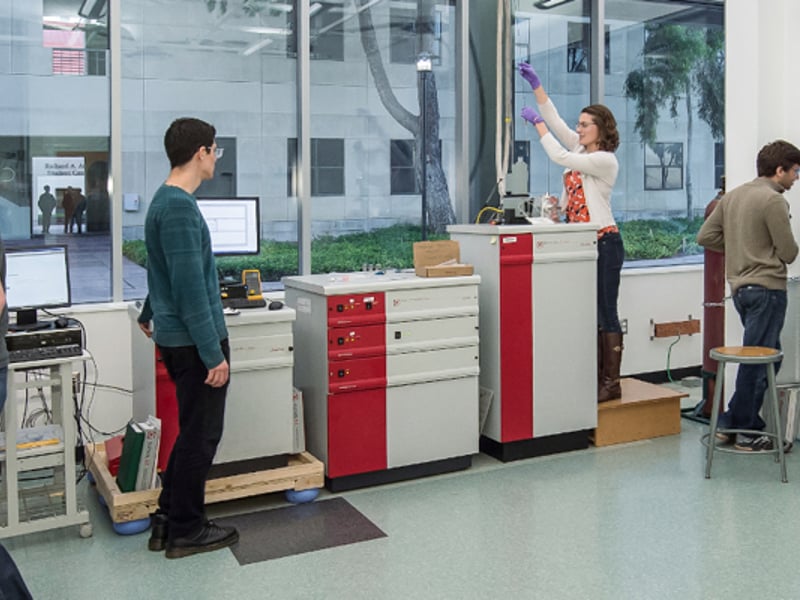
Shared Instrumentation Facilities
Consider a hypothetical scenario: A new faculty member is happy to start her independent university faculty career with a substantial startup package, which allows her to purchase a state-of-the art diffractometer. Research is progressing well, and the group is productive. However, come year four, problems commence.

Apr 2, 2020
Making the Best of a Bad Situation: A Characterization Seminar Series
The analytical facilities at Penn State, the University of Illinois, the University of Wisconsin, and the University of Minnesota are collaborating on a free seminar series on characterization. One hour Zoom lectures will be held three times per week starting March 30th. The initial lectures will provide broad overviews of various analytical techniques. Future lectures will address more specific measurements, applications and materials.
Feb 6, 2020
DMR Seeks Program Director for Condensed Matter Physics Program
Division: Materials Research (MPS/DMR)
Directorate: Mathematical and Physical Sciences (MPS)
Job Type: STEM
Appointment Type: Temporary / Rotator
Position Summary

Nov 19, 2019
Graphene: The more you bend it, the softer it gets
New research by engineers at the University of Illinois combines atomic-scale experimentation with computer modeling to determine how much energy it takes to bend multilayer graphene – a question that has eluded scientists since graphene was first isolated. The findings are reported in the journal Nature Materials.
Sep 2, 2019
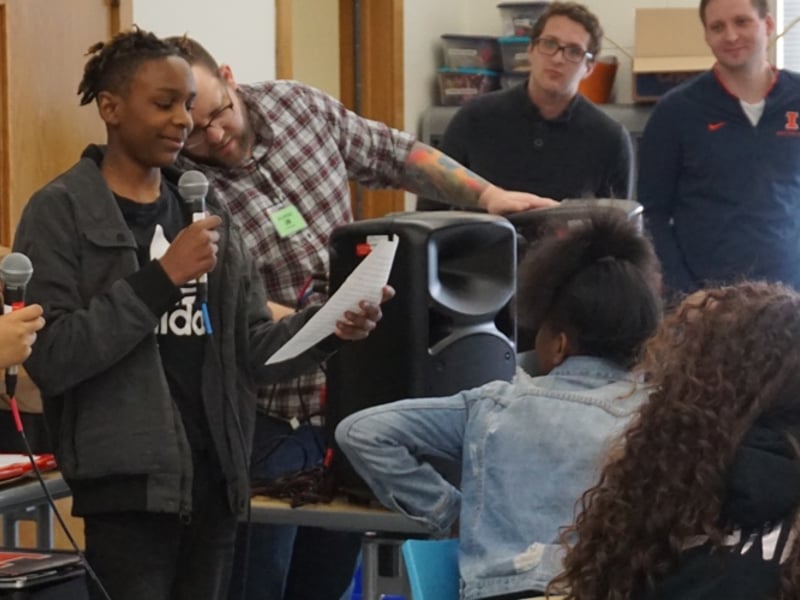
I-MRSEC’s Musical Magnetism Curriculum Uses Hip Hop to Teach Science
The goal of I-MRSEC’s “Musical Magnetism” curriculum was to expose Franklin STEAM Academy eighth grade students to materials science and magnetism, but also to another of the center’s main emphases: scientific communication.
Showing 31 to 40 of 75