Highlights
Jun 13, 2024
University of Texas at Austin
K-5 Research Experience for Teachers (RET)
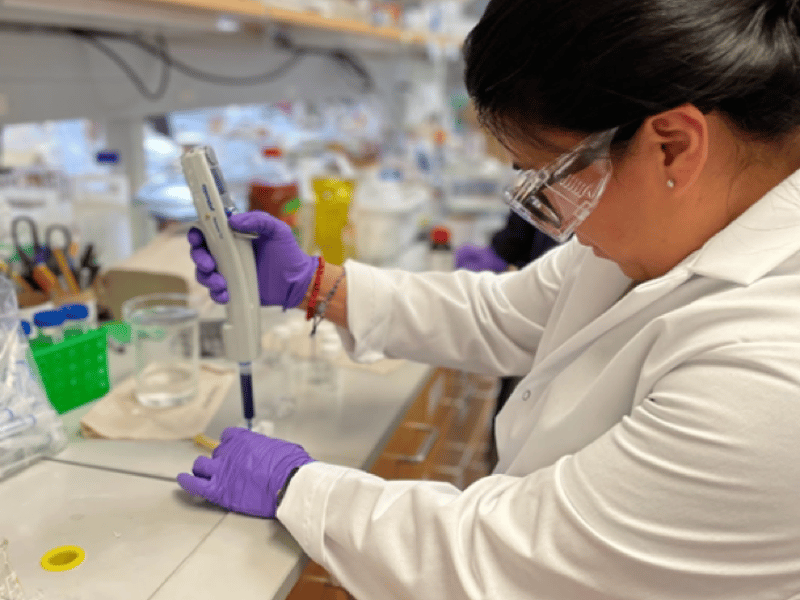
CDCM’s Research Experiences for Teachers (RET) program engages elementary school teachers in materials research at UT Austin during the summer and has created lasting impact over the past six years. The program aims to increase teacher efficacy in research practices and guide teachers in integrating what they learn into their instructional practice. The end goals are to enhance students’ engagement in science and increase students’ awareness of and interest in STEM fields.
Jun 13, 2024
University of Texas at Austin
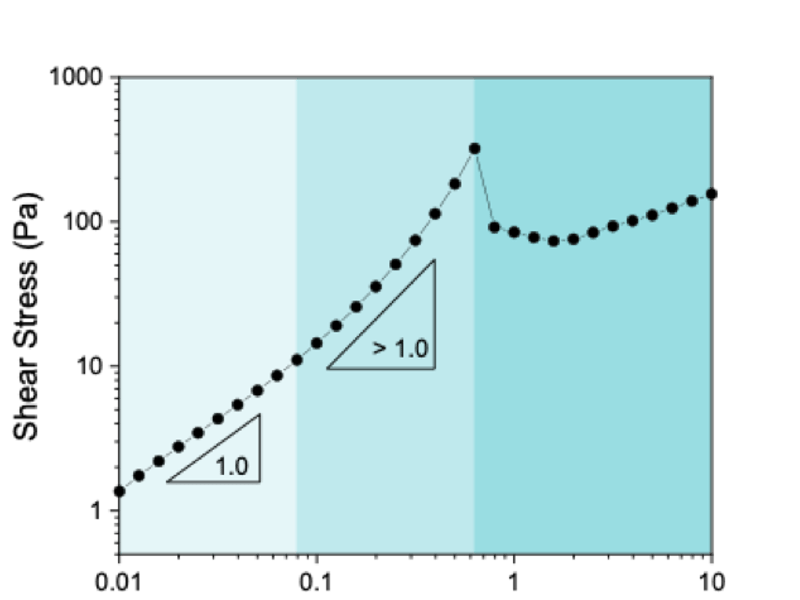
Nonlinear Rheological Behavior of Dynamic Covalent Gels
Hydrogels with dynamic linkers have garnered intense interest for applications that require flow, including injectable delivery vehicles and 3D bioprinting inks. However, to fully enable these applications, there remains a need to understand how linking chemistry affects gelation and nonlinear rheological properties. To probe this relationship, UT Austin MRSEC researchers developed synthetic multi-arm polyethylene glycol (PEG) gels linked with dynamic covalent bonds.
Jun 13, 2024
University of Texas at Austin
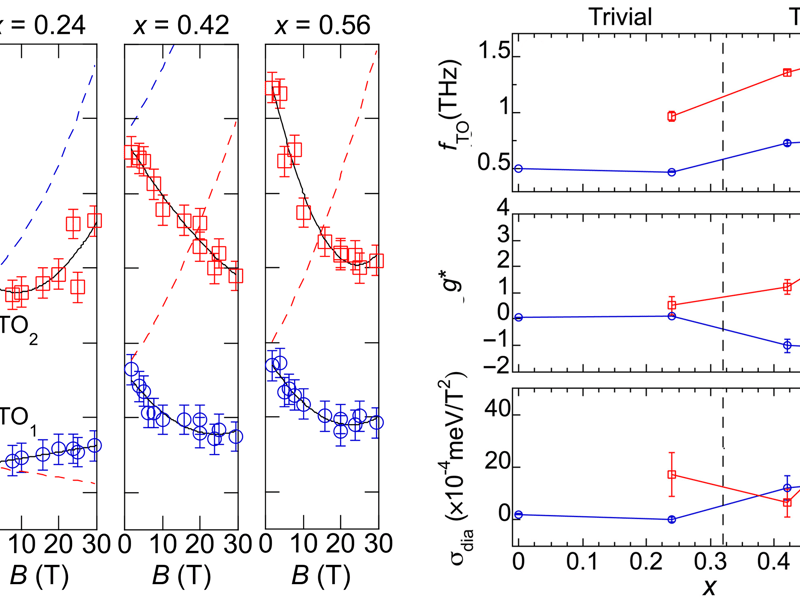
Interplay between phonon chirality and electronic topology
UT Austin researchers used polarization-dependent terahertz magnetospectroscopy to observe Zeeman splittings and diamagnetic shifts in a series of Pb1-xSnxTe films, which transition from a topologically trivial insulator to a topological crystalline insulator (TCI) phase as the Sn concentration increases beyond 0.32. This study demonstrates a substantial phonon magnetic moment films in the TCI phase exhibited phonon magnetic moment values significantly larger—by two orders of magnitude—than those in the topologically trivial sample.
Jun 13, 2024
University of Texas at Austin
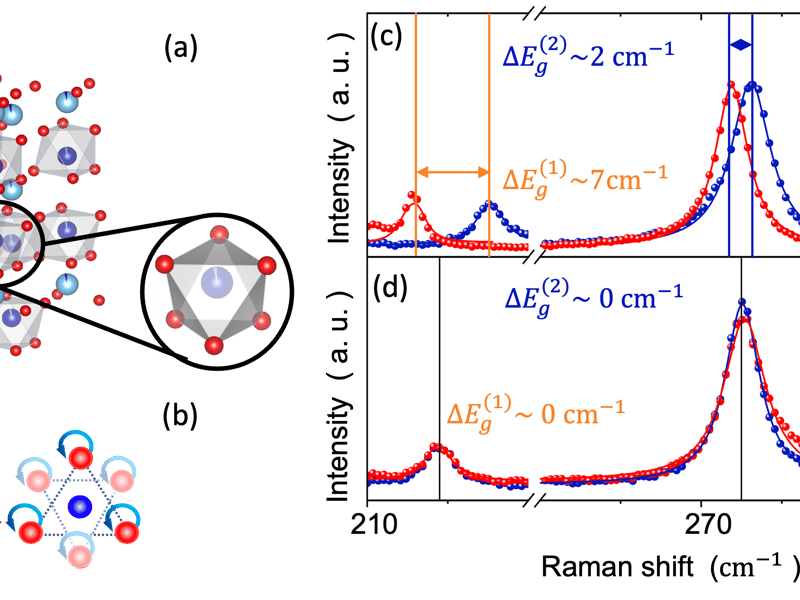
Spin–orbit exciton–induced phonon chirality in a quantum magnet
The interplay of charge, spin, lattice, and orbital degrees of freedom in correlated materials often leads to rich and exotic properties. Recent studies have brought new perspectives to bosonic collective excitations in correlated materials. NSF MRSEC researchers with UT Austin report phonon properties resulting from a combination of strong spin–orbit coupling, large crystal field splitting, and trigonal distortion in CTO.
Jun 13, 2024
University of Texas at Austin
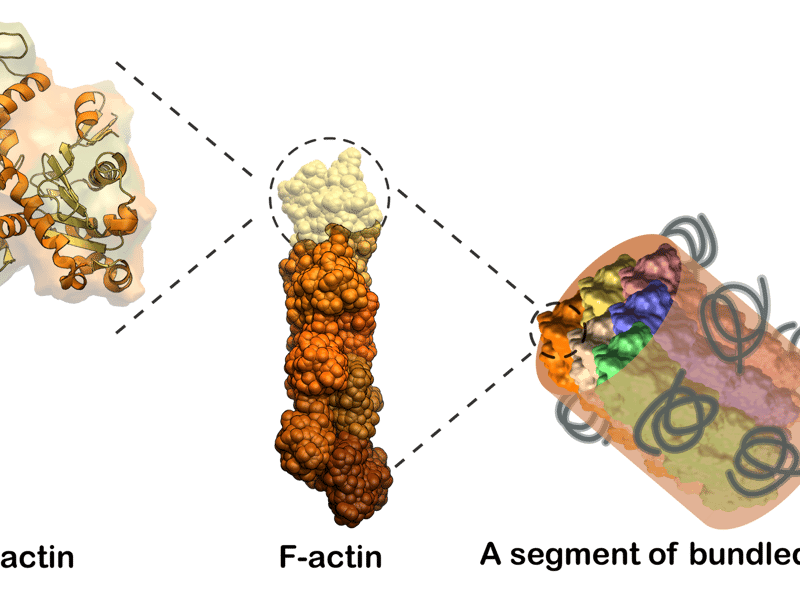
Crowding Alters Secondary Structure in F-actin Bundles
The cytoskeletal component actin plays a crucial role in various cellular functions, including cell shape regulation and intracellular transport, by forming filaments and networks. Despite the current understanding of actin's morphological versatility, the impact of crowded environments—specifically how actin filaments organize into bundles and how this organization changes the protein secondary structure—remains under-explored. Here, we used two-dimensional infrared (2D IR) spectroscopy and structure based spectral calculations to map out structural changes of actin filaments under two degrees of crowding and bundling.
Jun 13, 2024
Ohio State University
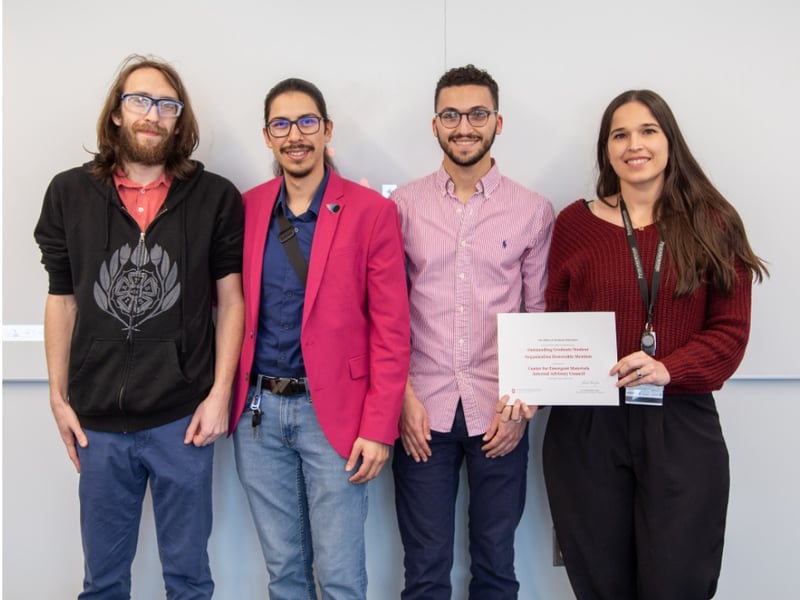
Internal Advisory Council: Promoting the Student Perspective
The CEM Student Internal Advisory Council advises CEM in the interests of students and postdocs and organizes technical and team-building events.
Jun 13, 2024
Ohio State University
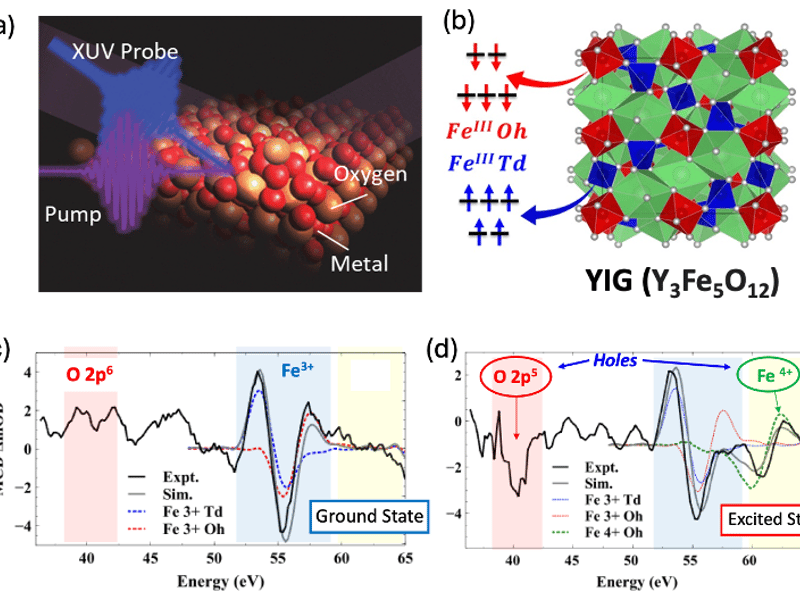
Ultrafast Spin Polarized Electron Dynamics of Magnetic Insulator Yttrium Iron Garnet
Understanding the ultrafast dynamics of charge/spin transitions in magnetic insulators (MI) is crucial for developing new materials interfaces for spin-electronics and quantum information science applications. Supported by CEM, the groups of Yang and Baker reported a femtosecond extreme UV (XUV) spectroscopy of yttrium iron garnet (Y3Fe5O12, YIG), one of the important MI garnets for the NM/MI interfaces in this IRG.
Jun 10, 2024
Princeton University
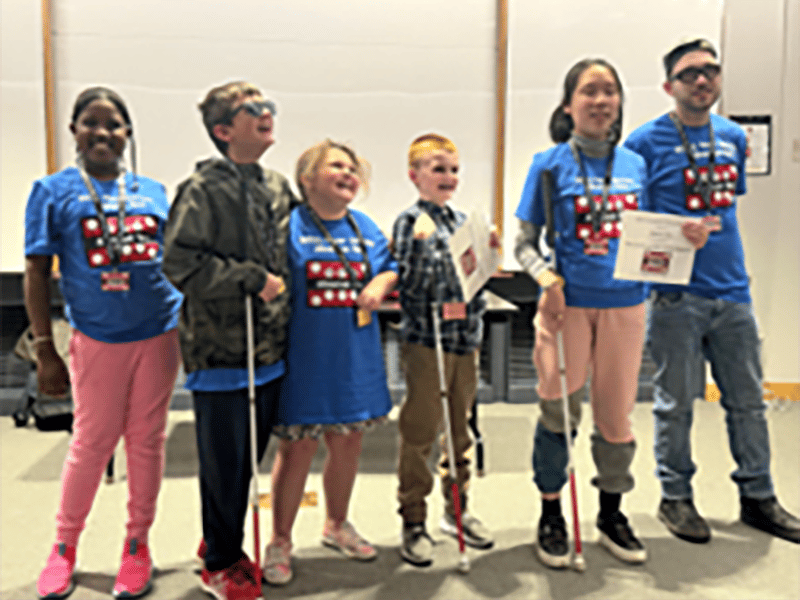
Regional Abacus Bee Math Competition
Princeton co-hosted an inaugural NJ Regional Abacus Bee Math Competition in October 2023 that encourages blind and low vision students to practice their math skills.
Jun 10, 2024
Big Idea: Understanding the Rules of Life
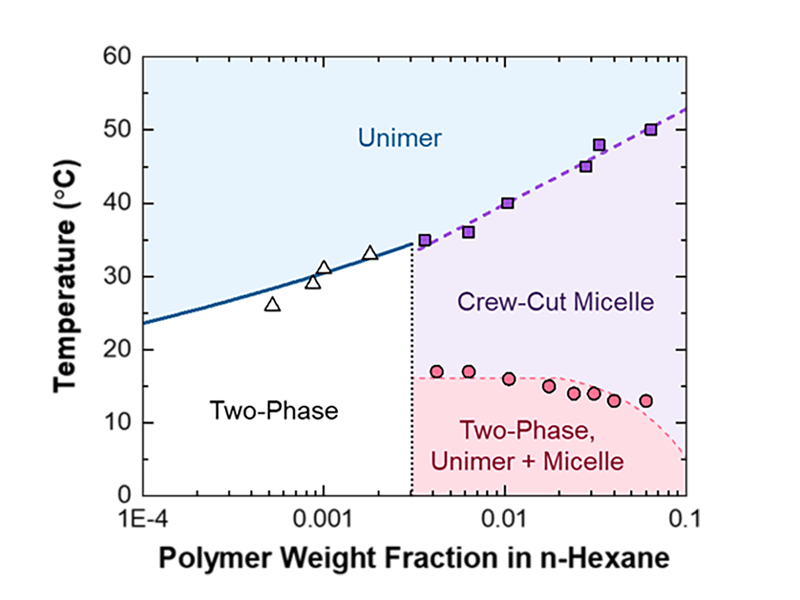
Control of Solution Phase Behavior through Block−Random Copolymer Sequence
L. W. Taylor1, R. D. Priestley1, R. A. Register1 (1Princeton University, USA)
Princeton researchers alter a sequence of random copolymers and provide the first experimental observations of thermoreversible crew-cut micelles, and thermotropic micro- and macrophase separation in a nonaqueous polymer solution.
Jun 7, 2024
Big Idea: Quantum Leap
Novel 2D chemistry and superconducting quantum engineering
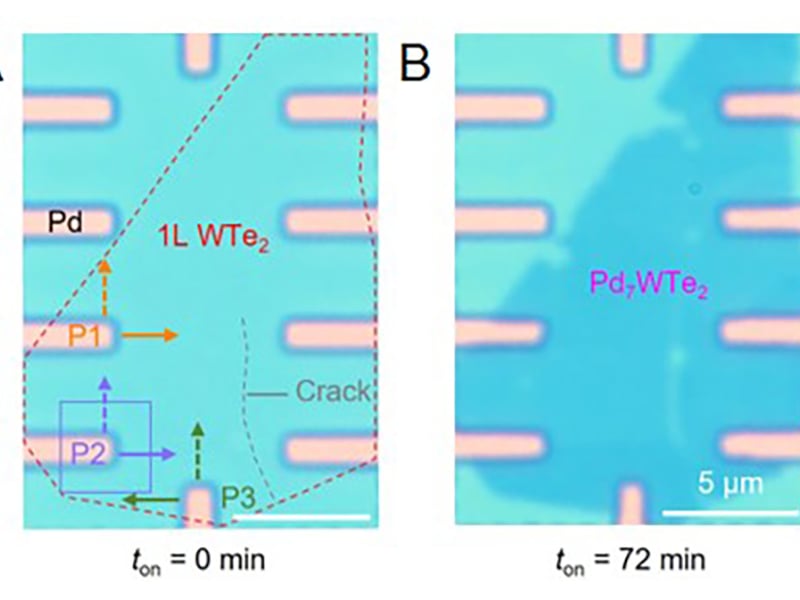
NSF MRSEC researchers from Princeton University have discovered a surprising on-chip process for growing ultrathin superconductors on ultrathin layers of transitionmetal dichalcogenides (TMD).
Showing 111 to 120 of 1452